Did you know that some metal roofs last up to 100 years and come with warranties that stretch as long as 50 years? Many business owners are searching for roofing that offers real longevity, energy savings, and a professional look. Metal roofing delivers a blend of style and practical benefits that stand up to tough conditions and help companies control costs for decades.
Table of Contents
- Metal Roofing for Businesses Explained
- Major Types of Commercial Metal Roofing
- Installation Process and Longevity Factors
- Cost, Maintenance, and Energy Efficiency
- Comparing Metal Roofing to Other Options
Key Takeaways
| Point | Details |
|---|---|
| Durability & Longevity | Metal roofing can last 50-100 years, often coming with warranties up to 50 years, making it a reliable investment for businesses. |
| Energy Efficiency | Metal roofs can reflect heat, potentially reducing cooling costs by up to 15%, leading to significant long-term savings. |
| Sustainability | Many metal roofing options are made from up to 100% recycled materials, aligning with environmentally responsible business practices. |
| Variety of Options | Different types of metal roofing (e.g., standing seam, corrugated) cater to diverse architectural styles and commercial needs, enhancing aesthetic appeal. |
Metal Roofing for Businesses Explained
Metal roofing represents a game-changing solution for commercial buildings seeking durability, efficiency, and long-term performance. According to Wikipedia, these roofing systems can last up to 100 years, with installers often providing 50-year warranties – a testament to their exceptional quality and resilience.
The benefits of metal roofing for businesses extend far beyond simple protection. Energy efficiency stands out as a primary advantage, with metal roofs reflecting heat away from buildings and potentially reducing cooling costs by up to 15%. As RoofedRight notes, metal roofing offers businesses a sleek, modern appearance combined with low maintenance requirements.
Key advantages of metal roofing for commercial enterprises include:
- Sustainability: Can be manufactured from up to 100% recycled materials
- Longevity: Potential lifespan of 50-100 years
- Energy Performance: Reduces heating and cooling expenses
- Aesthetic Flexibility: Available in multiple styles and color options
For businesses looking to make a smart, forward-thinking roofing investment, understanding the comprehensive details of metal roofing systems can help make an informed decision that balances performance, cost-effectiveness, and long-term value.
Major Types of Commercial Metal Roofing
Commercial metal roofing offers businesses multiple innovative options to protect and enhance their buildings. According to SFS, there are several prominent types of metal roofing systems that cater to different commercial needs: standing seam, corrugated, and metal shingle/tile roofing.
Standing Seam Metal Roofs represent a premium solution for businesses seeking a sleek, modern aesthetic. As Roof Crafters explains, these roofs feature interlocking panels with concealed fasteners, providing exceptional durability and a smooth, clean appearance. The raised seaming ensures tight weatherproofing and creates a sophisticated architectural look.
Additional metal roofing types include:
- Corrugated Metal Roofing: Characterized by its wavy, ribbed design
- Trapezoid Panel Roofing: Allows better water drainage and thermal expansion
- Stone-Coated Steel Roofing: Offers ceramic-coated stone granules for enhanced durability
- Metal Shingle/Tile Roofing: Mimics traditional materials while providing metal’s superior performance
Businesses exploring the best roofing systems for commercial buildings will find that each metal roofing type offers unique advantages. The key is selecting a system that matches specific architectural requirements, budget constraints, and long-term performance expectations.
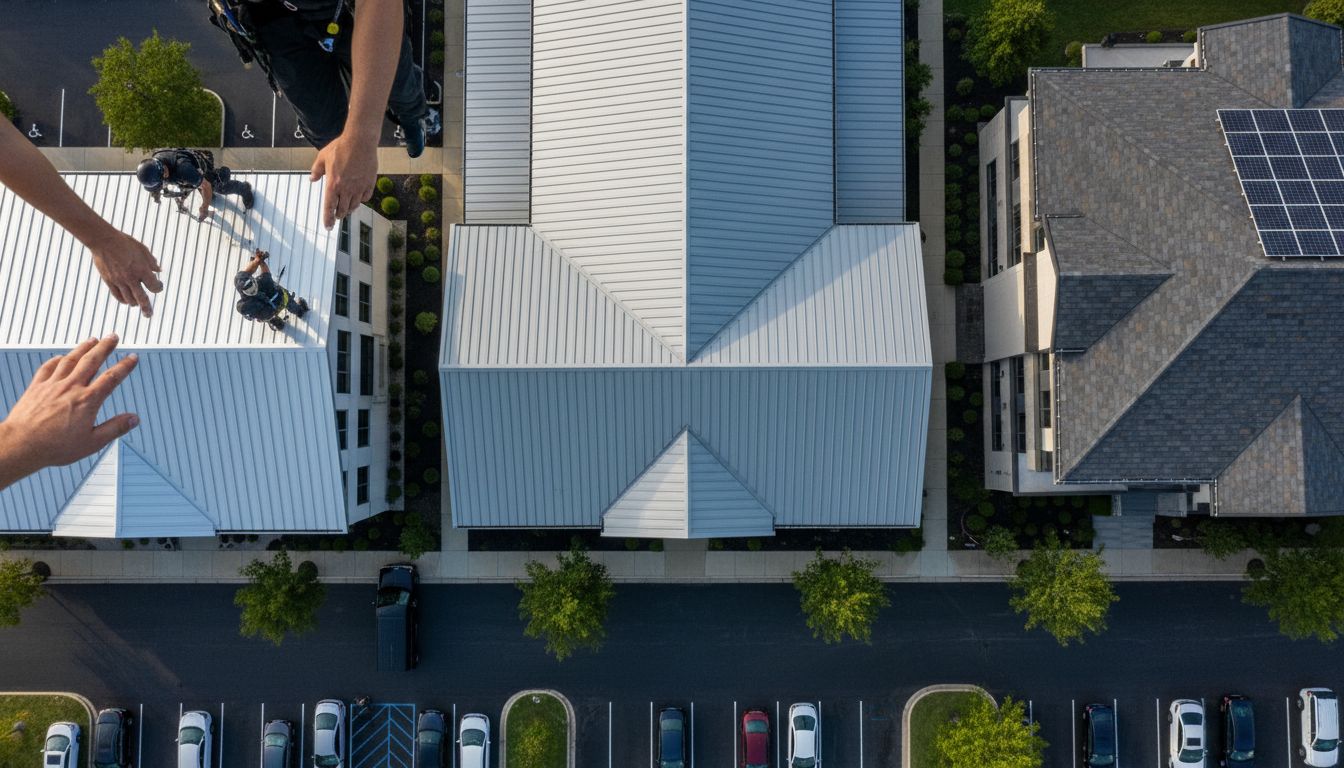
Here’s a comparison of major types of commercial metal roofing:
| Roofing Type | Appearance | Key Benefits | Typical Applications |
|---|---|---|---|
| Standing Seam | Sleek, modern, raised seams | Excellent durability Weather-tight Low maintenance |
Offices Retail stores |
| Corrugated Metal | Wavy, ribbed panels | Affordable Lightweight Easy to install |
Warehouses Industrial buildings |
| Trapezoid Panel | Distinct trapezoid-shaped ribs | Good drainage Thermal expansion |
Manufacturing plants |
| Stone-Coated Steel | Stone-granule textured finish | Enhanced durability Aesthetic options |
Restaurants Churches |
| Metal Shingle/Tile | Imitates shingle or tile look | Curb appeal Impact-resistant |
Hotels Historic properties |
Installation Process and Longevity Factors
Installing a metal roof for a commercial building is a complex process that requires precision, expertise, and careful planning. According to Roof Crafters, while standing seam metal roofs have higher upfront installation costs, they offer exceptional long-term value by lasting significantly longer than traditional roofing materials.
Custom Installation Techniques play a crucial role in maximizing a metal roof’s performance. Roof Crafters notes that standing seam metal roofs can be custom-made and rolled out onsite, eliminating horizontal seams and creating a more seamless, durable roofing solution. This approach ensures better weatherproofing and reduces potential points of structural weakness.
Key longevity factors for commercial metal roofing include:
- Material Quality: High-grade metal materials with corrosion-resistant coatings
- Installation Precision: Professional installation with minimal penetration points
- Regular Maintenance: Annual inspections and prompt repair of minor issues
- Environmental Considerations: Roof design that accounts for local climate conditions
Businesses can further explore the pros and cons of metal roofing for commercial buildings to make an informed decision about their roofing investment, understanding that a well-installed metal roof can provide reliable protection for 30-50 years with minimal maintenance requirements.
Cost, Maintenance, and Energy Efficiency
Business owners considering metal roofing must carefully evaluate the comprehensive financial implications beyond initial installation costs. According to Roof Crafters, while standing seam metal roofs have higher upfront expenses, they demonstrate exceptional long-term economic value by outlasting traditional roofing materials like asphalt shingles.
Energy Efficiency emerges as a critical financial advantage for metal roofing systems. Wikipedia highlights that metal roofing can reflect heat away from buildings, potentially reducing cooling costs by up to 15% during summer months. This heat-reflective capability translates into significant energy savings and reduced operational expenses for businesses over time.
Key financial and efficiency considerations include:
- Lifecycle Cost: Lower long-term expenses compared to traditional roofing
- Maintenance Requirements: Minimal upkeep needed for most metal roofing systems
- Energy Savings: Potential 15% reduction in heating and cooling costs
- Sustainability: 100% recyclable materials with high recycled content
- Durability: Potential lifespan extending up to 50-100 years
Businesses looking to make an informed roofing investment can explore the pros and cons of metal roofing for commercial buildings to understand how these innovative roofing solutions can provide both economic and operational advantages.
Comparing Metal Roofing to Other Options
Choosing the right roofing material is a critical decision for commercial property owners, with each option presenting unique advantages and challenges. According to RoofedRight, metal roofing stands out for its exceptional durability, longevity, and low maintenance, offering a sleek and modern appearance that distinguishes it from traditional roofing materials.
Comparative Analysis reveals significant differences between roofing options. While asphalt shingles remain cost-effective and versatile, Roof Crafters notes that standing seam metal roofs, despite higher upfront costs, ultimately prove more economical over a 50-year lifespan. Alternative materials each bring distinct characteristics to commercial roofing considerations.
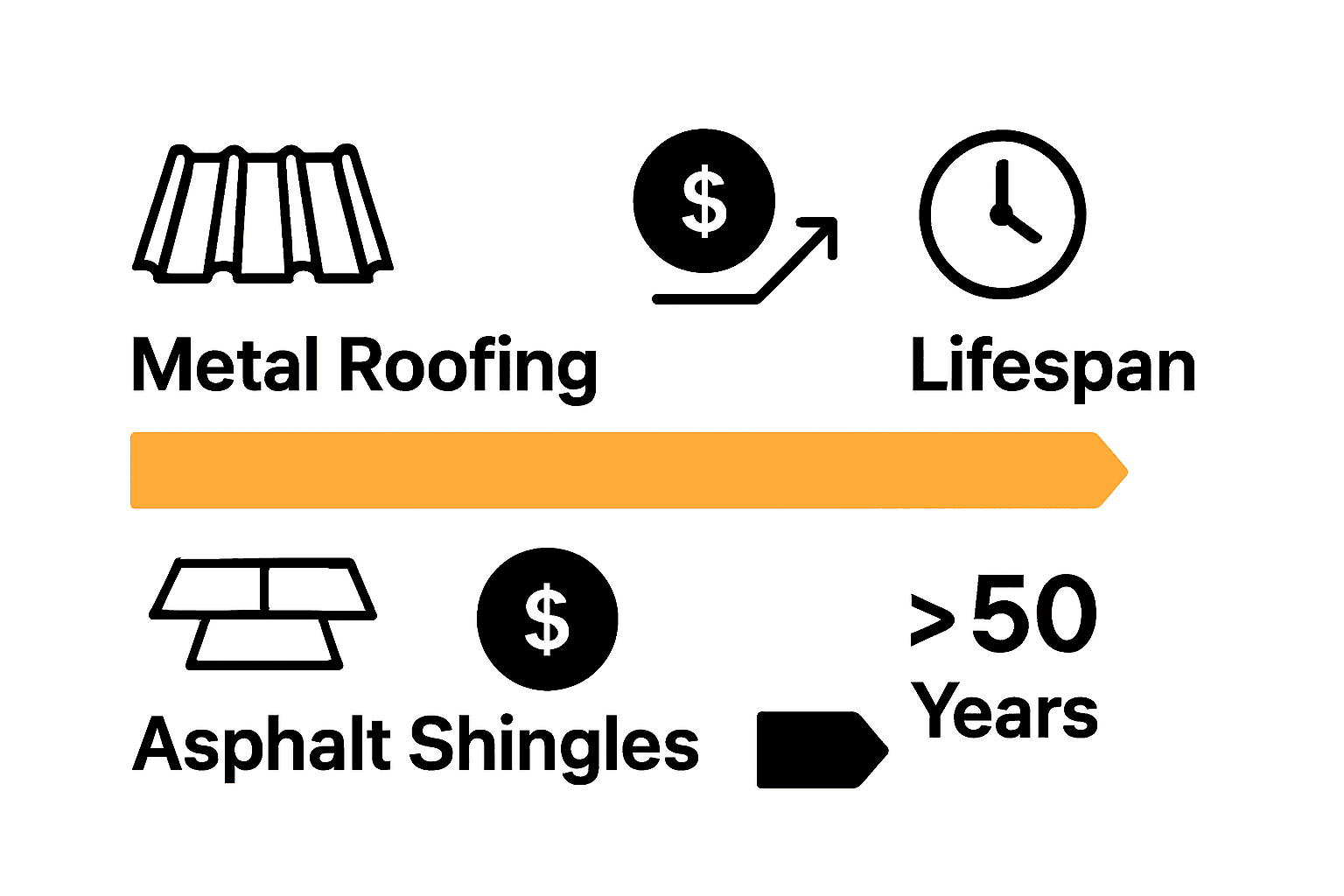
Key comparison points for different roofing materials include:
- Metal Roofing: Durability, energy efficiency, 50-100 year lifespan
- Asphalt Shingles: Lower initial cost, wide color/style range
- Cedar Roofing: Natural aesthetic, excellent insulation, insect resistance
- Slate/Tile: Elegant appearance, fire resistance, premium durability
- Corrugated Metal: Most affordable metal option, lightweight design
Business owners can gain deeper insights by exploring the potential disadvantages of metal roofing to make a fully informed roofing investment decision that balances performance, aesthetics, and long-term value.
Discover Reliable Metal Roofing Solutions for Your Business
If you are seeking a roofing system that offers unmatched durability and energy efficiency, metal roofing is an excellent choice as highlighted in the guide. We understand that businesses like yours need a long-lasting solution that reduces maintenance hassles and lowers energy costs while enhancing building appearance. With challenges like installation precision and selecting the right metal roof type, it is crucial to partner with experts who focus on quality workmanship and tailored results.
At Liberty Roofworks, we specialize in commercial roof installations and repairs designed to meet your specific needs. Our experienced team ensures precise installation of premium metal roofing systems such as standing seam and corrugated panels so your building can withstand the toughest conditions. Don’t risk costly repairs or early replacements from shortcuts. Experience peace of mind with a roof that protects your investment for decades. Visit our commercial roof installations page to learn how we can help enhance your building’s performance today. Ready to get started or need expert advice on metal roofing options? Contact us now through Liberty Roofworks to schedule a consultation and secure your business with the best roofing solution available.
Frequently Asked Questions
What are the main benefits of metal roofing for businesses?
Metal roofing offers several advantages for commercial buildings, including durability, longevity of 50-100 years, energy efficiency with potential cooling cost reductions of up to 15%, and low maintenance requirements. It can also be made from recycled materials, promoting sustainability.
How does the installation process for a metal roof differ from traditional roofing materials?
Installing a metal roof requires precision and expertise, often involving custom techniques like rolling the panels on-site to ensure a seamless application. This reduces horizontal seams and potential structural weaknesses, making the installation more durable and weatherproof.
What are the different types of commercial metal roofing available?
Major types of commercial metal roofing include standing seam roofs, which offer a modern aesthetic and reliable weatherproofing; corrugated metal roofing, known for its affordability and ease of installation; trapezoid panel roofing for improved drainage; stone-coated steel for enhanced durability; and metal shingle/tile roofing that mimics traditional materials.
How do metal roofs compare to other roofing options in terms of cost and efficiency?
While the initial installation cost of metal roofing can be higher than options like asphalt shingles, they provide better long-term value with extended lifespans, reduced maintenance, and energy savings. Metal roofs can last significantly longer than traditional materials, making them a cost-effective choice over time.