Over 80 percent of commercial buildings rely on flat roofs for their design flexibility and cost savings. Despite their widespread use, many people still believe these roofs are trouble-prone or completely flat, which is far from true. Understanding how flat roofs really work can help you choose the right system, avoid expensive surprises, and take full advantage of their unique features.
Table of Contents
- Defining Flat Roofs and Common Misconceptions
- Types of Flat Roofing Materials Explained
- How Flat Roof Systems Work in Practice
- Flat Roof Advantages and Drawbacks
- Maintenance, Costs, and Longevity Factors
Key Takeaways
| Point | Details |
|---|---|
| Understanding Flat Roofs | Flat roofs, while not completely level, possess a slight incline designed for effective water drainage and prevention of water accumulation. |
| Material Selection | Choosing a flat roofing material should be based on durability, energy efficiency, and local climate considerations. |
| Maintenance Importance | Regular inspections and prompt repairs are critical to ensuring the longevity and performance of flat roof systems. |
| Cost-Effectiveness and Usage | Flat roofs can be more cost-effective than pitched roofs, offering additional usable space for gardens or recreational areas. |
Defining Flat Roofs and Common Misconceptions
A flat roof represents a horizontal or near-horizontal roofing structure with minimal pitch, typically characterized by a slope less than 1 in 4. According to the U.S. Forest Service, these roofing systems are commonly utilized in commercial and industrial building designs, offering unique architectural and functional advantages.
Contrary to popular belief, flat roofs are not entirely level. As research from Wikipedia indicates, they actually feature a slight incline, typically up to approximately 10 degrees, which is strategically designed to facilitate water drainage and prevent structural water accumulation. This subtle slope ensures proper runoff and helps maintain the roof’s structural integrity.
Key characteristics of flat roofs include:
- Minimal vertical rise compared to traditional pitched roofs
- Typically used in arid or low-precipitation climates
- Can serve multiple functional purposes like rooftop gardens or additional living spaces
- Constructed with specialized waterproofing membranes
- Often more cost-effective to install than complex pitched roof designs
While many homeowners assume flat roofs are inherently problematic, modern engineering has significantly improved their performance. When properly designed and maintained, flat roofs can offer durability and versatility that rival traditional roofing systems. The key lies in understanding their unique construction requirements and implementing regular professional maintenance.
Types of Flat Roofing Materials Explained
Flat roofing materials have evolved significantly, offering property owners a diverse range of options tailored to specific environmental and functional requirements. According to the General Services Administration, modern flat roofing systems primarily utilize elastomeric and plastomeric membranes that provide exceptional performance characteristics.
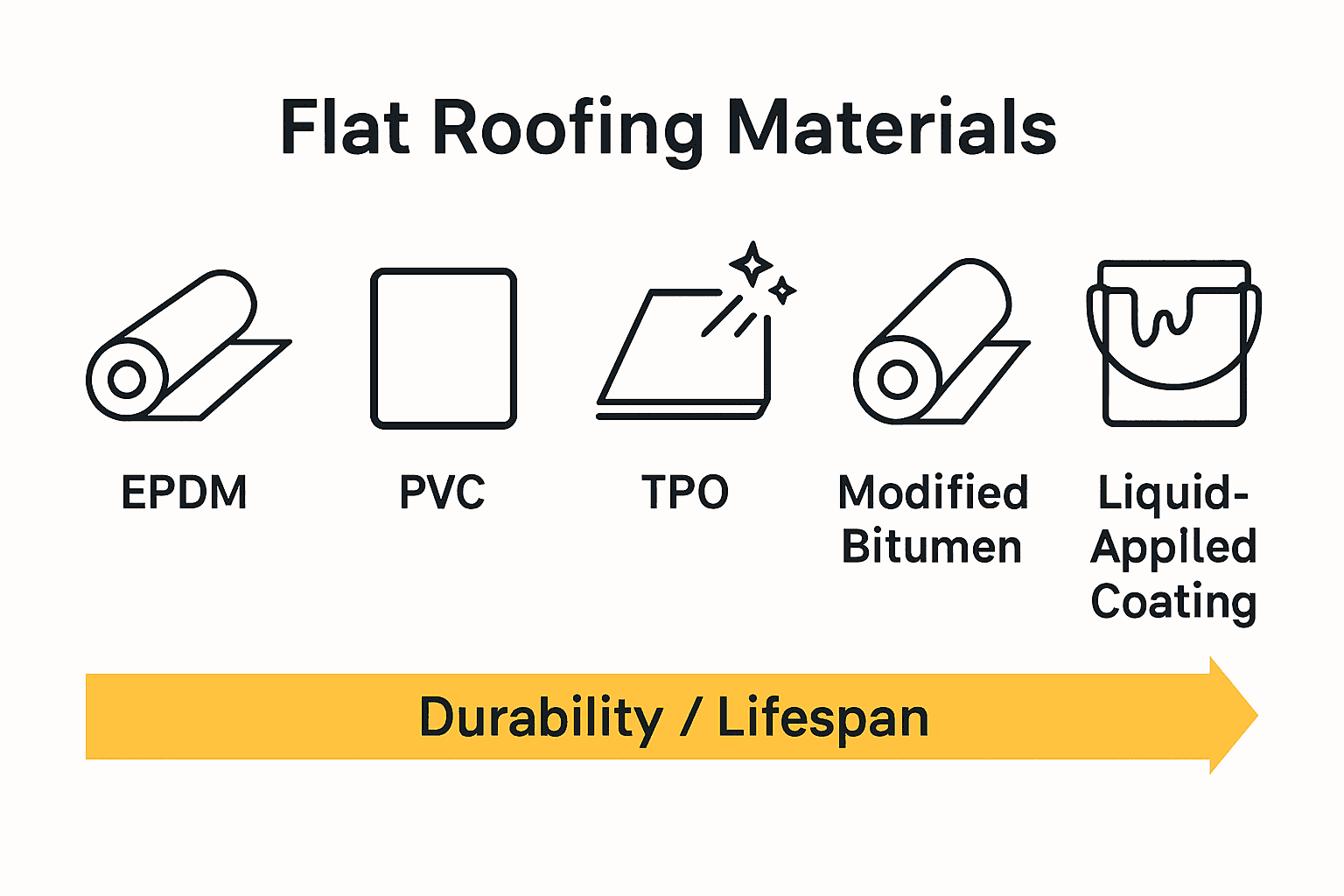
The primary flat roofing materials can be categorized into several key types:
Here’s a comparison of the primary flat roofing materials:
| Material Type | Durability | Energy Efficiency | Typical Lifespan |
|---|---|---|---|
| EPDM | High | Moderate | 20-30 years |
| PVC | High | High | 20-30 years |
| TPO | Moderate-High | High | 15-25 years |
| Modified Bitumen | Moderate | Moderate | 10-20 years |
| Liquid-Applied Coating | Variable | Variable | 10-20 years |
- EPDM (Ethylene Propylene Diene Monomer): A synthetic rubber membrane known for excellent weather resistance
- PVC (Polyvinyl Chloride): A durable plastic-based membrane with strong chemical resistance
- TPO (Thermoplastic Polyolefin): A single-ply reflective membrane that offers energy efficiency
- Modified Bitumen: An advanced asphalt-based material with enhanced flexibility
- Liquid-Applied Coatings: Seamless solutions that provide comprehensive roof protection
Research from IKO Roofing highlights that material selection depends on critical factors like local climate, building usage, and budget constraints. When choosing a flat roofing material, homeowners should consider performance attributes such as durability, thermal efficiency, and maintenance requirements.
For those seeking comprehensive insights into various flat roofing options, our guide on flat roofing types provides an in-depth exploration of each material’s unique advantages. Understanding these nuanced differences can help property owners make informed decisions that balance performance, longevity, and cost-effectiveness.
How Flat Roof Systems Work in Practice
Flat roof systems are sophisticated engineering solutions designed to provide maximum protection and functionality for buildings. According to the U.S. Forest Service, these systems function through a carefully integrated combination of waterproof membranes, insulation, and drainage components that create a comprehensive watertight barrier.
The core mechanics of a flat roof system involve several critical layers:
- Structural Deck: The foundational base that supports the entire roofing system
- Vapor Barrier: Prevents moisture migration from inside the building
- Insulation Layer: Provides thermal efficiency and temperature regulation
- Waterproof Membrane: Primary protection against water infiltration
- Surface Coating: Offers additional protection and reflects solar radiation
Research from Wikipedia reveals that these systems strategically incorporate a slight slope, typically imperceptible to the naked eye, which enables critical water drainage and prevents potential structural damage. This subtle gradient ensures that water naturally flows toward designated drainage points, mitigating the risk of pooling and potential leaks.
For homeowners seeking comprehensive insights into maintaining these complex systems, our guide to flat roof leaks provides essential strategies for identifying and preventing potential issues before they escalate into costly repairs.
Flat Roof Advantages and Drawbacks
Flat roofs represent a unique architectural solution with a compelling set of advantages and potential challenges for property owners. According to Wikipedia, these roofing systems offer significant benefits such as cost-effectiveness, efficient space utilization, and unique design possibilities like integrating green roof technologies.
Key advantages of flat roofs include:
- Cost-Effective Installation: Lower material and labor expenses compared to pitched roofs
- Additional Usable Space: Can be transformed into rooftop gardens, solar panel installations, or recreational areas
- Easy Maintenance Access: Simplified inspection and repair processes
- Modern Aesthetic: Sleek, contemporary architectural appearance
- Energy Efficiency: Potential for enhanced insulation and solar reflective coatings
However, the U.S. Forest Service highlights critical drawbacks that homeowners must carefully consider. These systems require more frequent inspections and are more susceptible to water-related challenges, demanding proactive maintenance to prevent potential structural issues.
Homeowners looking to understand the long-term financial implications of their roofing choices might find our guide on how cheap roof systems can cost more particularly illuminating, offering insights into making cost-effective roofing decisions that balance initial investment with long-term performance.
Maintenance, Costs, and Longevity Factors
Understanding the financial and practical implications of flat roofing requires a comprehensive approach to maintenance and lifecycle management. According to the U.S. Forest Service, maintenance strategies play a critical role in determining both the longevity and overall cost-effectiveness of flat roof systems.
Key maintenance considerations include:
- Regular Inspections: Biannual professional assessments
- Drainage System Monitoring: Ensuring clear and functional water channels
- Prompt Damage Repair: Addressing minor issues before they escalate
- Surface Cleaning: Removing debris and preventing material degradation
- Protective Coating Reapplication: Maintaining waterproof membrane integrity
Research from Wikipedia reveals that a flat roof’s lifespan can vary dramatically, typically ranging from 10 to 30 years depending on material quality, installation precision, and ongoing maintenance commitment. Material costs can fluctuate between $5 to $15 per square foot, with high-performance systems potentially reaching $20 per square foot.
Homeowners seeking deeper insights into optimizing their roofing investment might find valuable guidance in our roofing maintenance guide, which provides comprehensive strategies for maximizing roof performance and minimizing long-term expenses.
Protect Your Flat Roof with Expert Care from Liberty Roofworks
Flat roofs offer unique benefits but demand careful attention to waterproof membranes, drainage, and regular maintenance to avoid costly leaks or damage. If you are concerned about the durability and proper upkeep of your flat roofing system or want to explore the best materials like EPDM or TPO for your home or business, Liberty Roofworks is here to help. We specialize in flat roof repairs, replacements, and new installations tailored to your specific needs.
Don’t wait until a minor leak becomes a major problem. Experience peace of mind knowing our skilled team provides thorough inspections and quality service so your flat roof performs optimally for years to come. Learn more about our trusted residential and commercial roofing services by visiting Liberty Roofworks. Ready to take action now? Contact us for a free consultation and secure your home with the roofing expertise you deserve.
Frequently Asked Questions
What defines a flat roof?
A flat roof is a nearly horizontal roofing structure with a minimal pitch, usually less than 1 in 4, designed to facilitate water drainage while providing architectural and functional benefits.
What are the primary materials used for flat roofing?
Common materials for flat roofing include EPDM, PVC, TPO, Modified Bitumen, and Liquid-Applied Coatings, each offering different durability, energy efficiency, and lifespan ranges.
What are the advantages of having a flat roof on my property?
Flat roofs offer cost-effective installation, additional usable space for gardens or solar panels, easy maintenance access, and a modern aesthetic. They also enhance energy efficiency with proper insulation and reflective coatings.
How can I maintain my flat roof to ensure its longevity?
Regular maintenance includes biannual inspections, monitoring drainage systems, promptly repairing damage, cleaning debris, and reapplying protective coatings to maintain the roof’s integrity and functionality.