Every Charlotte homeowner knows the stress that comes with spring storms and summer downpours in North Carolina. Protecting your home starts with choosing the right roofing materials, especially since the region faces high winds, hail, and even the remnants of hurricanes each year. When you invest in storm-resistant roofing materials engineered for severe weather, you’re not just enhancing your home’s appearance—you’re taking a crucial step toward reducing future storm damage and ensuring lasting safety for your family and property.
Table of Contents
- Defining Storm-Resistant Roofing Materials
- Types of Storm-Resistant Roofing Options
- Essential Features For Charlotte Homeowners
- Cost, Insurance, And Longevity Comparison
- Mistakes To Avoid With Storm-Rated Roofs
Key Takeaways
| Point | Details |
|---|---|
| Invest in Storm-Resistant Materials | Choosing storm-resistant roofing can save long-term costs on repairs and increase home value through enhanced durability. |
| Understand Insurance Benefits | Upgrading to certified roofing can lead to discounts on homeowners insurance, making the investment financiallySmart. |
| Emphasize Proper Installation | Ensure that the roofing contractor uses the correct installation techniques and materials, such as ring-shank nails and sealed decks, for optimal storm protection. |
| Conduct Regular Maintenance | Regular inspections and timely repairs are crucial to prevent hidden damage and maintain the roof’s storm-resistant qualities. |
Defining Storm-Resistant Roofing Materials
Storm-resistant roofing materials are engineered to handle what Charlotte’s weather throws at them. Unlike standard roofing, these materials are specifically designed and tested to withstand severe weather events such as high winds, hail, hurricanes, and tornadoes. When you live in the Piedmont region of North Carolina, you’re dealing with spring storms that can drop hail the size of golf balls, summer downpours that flood gutters, and occasional hurricanes that bring sustained winds exceeding 70 mph. Storm-resistant materials are built for exactly these conditions.
What makes a roofing material “storm-resistant” isn’t just marketing language. These materials must meet rigorous testing standards and comply with national requirements. Manufacturers test storm-resistant roofing against multiple hazards, checking everything from how the material holds up when repeatedly struck by hail to how well it stays attached during extreme wind events. The key features that distinguish storm-resistant materials include stronger reinforced edges that resist tearing, sealed roof decks that prevent water infiltration even when shingles are compromised, and superior attachment mechanisms like ring-shank nails that grip more securely than standard fasteners. Programs like FORTIFIED Home have established certification standards that focus on creating truly resilient homes capable of enduring extreme weather.
When you’re evaluating roofing options for your Charlotte home, understanding how roofing systems provide adequate protection against severe weather requires knowing what you’re actually looking at. A storm-resistant asphalt shingle isn’t just thicker or darker. It has laminated construction that adds structural integrity, fiberglass reinforcement that provides tensile strength, and specialized adhesive strips that bond shingles together during high wind events. Some materials go further, incorporating impact-resistant granules that can withstand hail strikes up to 90 mph without cracking or puncturing. TPO and EPDM membrane systems offer different advantages. TPO roofing provides excellent wind resistance and reflectivity, while EPDM roofing offers durability and flexibility in Charlotte’s temperature swings. Both outperform traditional materials when tested against severe weather.
The Charlotte area experiences unique weather challenges that make storm-resistant roofing more than just a nice-to-have upgrade. Between March and September, severe thunderstorms are common, and when hail forms, it often affects a corridor that runs directly through Mecklenburg and surrounding counties. Your roof is your first line of defense against this. A storm-resistant roof might cost 15 to 20 percent more upfront than standard roofing, but when you’re facing replacement after hail damage or wind damage, you quickly see the value. Insurance companies have started offering discounts on premiums for homes with impact-resistant roofing rated by FORTIFIED or similar certifications. Beyond cost savings, you’re also getting peace of mind that your home and family are genuinely protected during severe weather rather than hoping standard materials survive the next big storm.
Pro tip: When comparing storm-resistant roofing materials for your Charlotte home, ask your contractor about the specific wind and impact ratings for each option, as materials rated for 90+ mph winds and Class 4 impact resistance will provide the strongest protection during severe weather events.
Types of Storm-Resistant Roofing Options
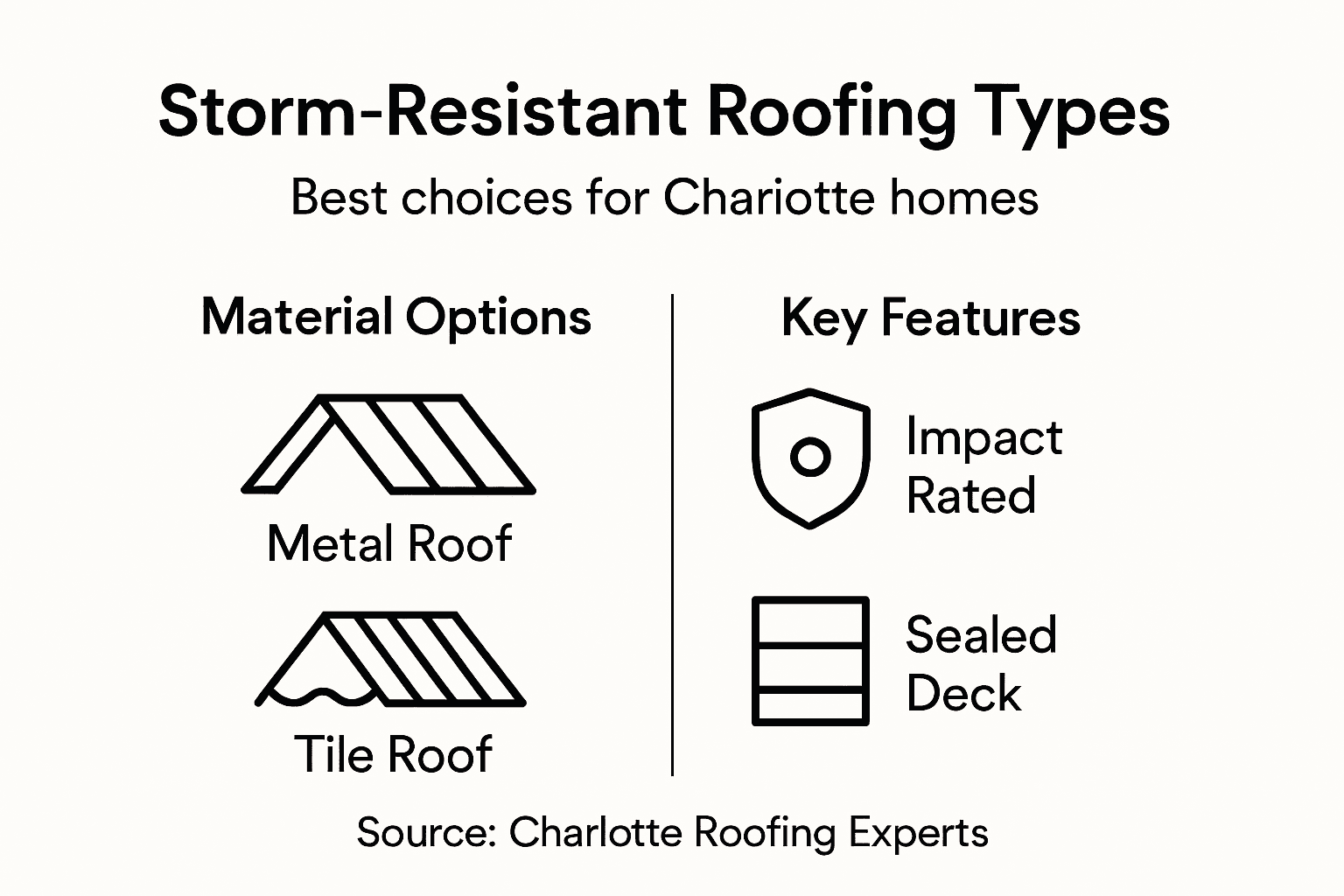
Charlotte homeowners have several proven storm-resistant roofing materials to choose from, each with distinct advantages and tradeoffs. The good news is that you’re not limited to one option. Your choice depends on your budget, your home’s architecture, and how much protection you want. Let’s walk through the main storm-resistant options available today.
Asphalt Shingles with Impact Resistance
Asphalt shingles remain the most popular roofing choice in Charlotte, and for good reason. They’re affordable, relatively easy to install, and come in countless color options that match virtually any home style. But not all asphalt shingles are created equal when it comes to storm resistance. Impact-resistant asphalt shingles are engineered with reinforced fiberglass layers and specialized granules that can withstand hail strikes up to 90 mph without cracking. Look for shingles rated UL 2218 Class 4, which means they’ve passed rigorous hail impact testing. These shingles typically cost 10 to 15 percent more than standard asphalt shingles, but many insurance companies offer premium discounts that offset the additional expense. They also last 25 to 30 years with proper maintenance, giving you solid long-term value.
Metal Roofing
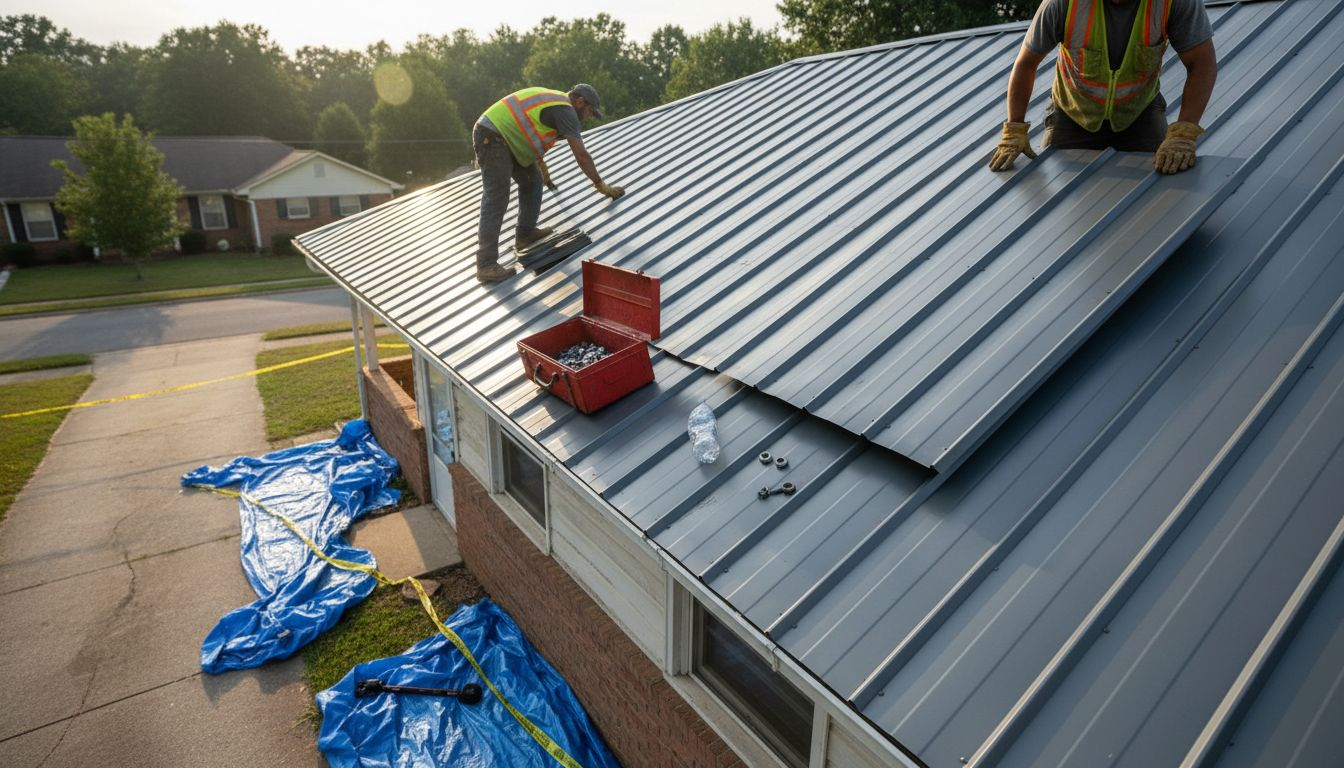
Metal roofing has become increasingly popular in Charlotte and for storm protection, it’s hard to beat. Metal panels are incredibly durable against high winds, hail, and debris impact. They won’t puncture or crack from hail strikes that would damage other materials, and they’re virtually impossible to tear off in extreme wind events. Metal roofing typically includes a factory-applied sealant and interlocking panels that create a weather-tight system. The main drawback is cost. Metal roofing runs 40 to 60 percent more than asphalt shingles, and installation requires specialized expertise. However, metal roofs can last 40 to 70 years, meaning you might never need to replace your roof again. For homeowners planning to stay in their Charlotte home long-term, the longevity and storm protection make metal roofing a strong investment.
Tile Roofing
Clay and concrete tiles offer another storm-resistant option, though they’re less common in Charlotte than in other regions. Tiles are extremely durable, fire-resistant, and can withstand significant impact from hail and wind-blown debris. They’re also beautiful, adding architectural character that complements certain home styles. The challenge with tile roofing is weight and cost. Tiles are heavy, sometimes requiring roof structure reinforcement before installation. They’re also expensive, costing 50 to 100 percent more than asphalt shingles. Installation is specialized work, and if a single tile breaks, replacement requires removing surrounding tiles to access it. Various roofing materials each present unique advantages when evaluating storm resistance, installation complexity, and weight considerations. Tiles work best for homes with strong structural support and homeowners who prioritize durability and aesthetics over initial cost.
TPO and EPDM Membrane Systems
Thermoplastic polyolefin (TPO) and ethylene propylene diene monomer (EPDM) membranes are typically used on flat or low-slope roofs, which are less common on Charlotte residential homes. However, if your home has a flat roof section or you’re considering a roof replacement that includes flat areas, these materials offer solid storm protection. TPO provides excellent wind resistance and reflects sunlight, reducing cooling costs. EPDM offers exceptional flexibility in temperature fluctuations and maintains durability over decades. Both systems feature sealed seams that prevent water infiltration even during severe storms. They’re also more affordable than metal or tile options. The main consideration is that membrane systems require proper installation by trained professionals, as seam quality directly impacts performance.
Making Your Selection
When choosing between these options, consider three factors. First, your climate exposure. Charlotte’s hail corridor and spring storm season make impact-resistant materials particularly valuable. Second, your budget. Impact-resistant asphalt shingles offer the best cost-to-protection ratio for most homeowners. Third, your long-term plans. If you’re staying in your home 20+ years, metal roofing justifies its higher cost through longevity and durability.
Here is a quick comparison of main storm-resistant roofing materials available to Charlotte homeowners:
| Roofing Material | Impact Resistance | Typical Lifespan | Installation Complexity |
|---|---|---|---|
| Impact Asphalt Shingle | Withstands hail up to 90 mph | 25-30 years | Moderate (common option) |
| Metal Panels | Highly resistant to wind and debris | 40-70 years | High (special expertise needed) |
| Clay or Concrete Tile | Strong against impact, fire-resistant | 50-100 years | High (requires reinforcement) |
| TPO/EPDM Membrane | Superior water & wind protection | 20-35 years | Moderate (for flat roofs) |
Pro tip: Ask your contractor which materials they recommend specifically for your neighborhood’s exposure to hail and high winds, and verify that any material you choose meets UL 2218 Class 4 or equivalent impact ratings for maximum storm protection.
Essential Features for Charlotte Homeowners
Not all storm-resistant roofing is created equal. The material you choose matters, but how it’s installed and integrated with your home’s structure matters just as much. Charlotte homeowners need to understand the critical features that transform a good roof into a truly protective one during severe weather. When you’re evaluating roofing options, you should be asking about much more than just the shingles or panels.
Roof Deck and Sealed Protection
Your roof deck is the foundation everything else sits on. A sealed roof deck prevents water from seeping into your attic and walls if shingles are damaged or blown off during a storm. Think of it as a safety net beneath your shingles. Standard roofing just nails shingles to the deck and calls it done. Storm-resistant systems add a layer of protection by sealing the entire deck before installation. This extra step costs money upfront, but it can be the difference between minor storm damage and catastrophic water infiltration that compromises your entire home’s structure.
Beyond the deck itself, proper fastening techniques are essential. Ring-shank nails grip the roof deck more securely than smooth nails, providing superior resistance to wind uplift. These nails have rings cut into the shaft that create mechanical locks within the wood, preventing them from pulling out during high wind events. Your contractor should be using ring-shank nails specifically rated for your roofing material, not generic fasteners. Ask about this specifically. This small detail makes a measurable difference when 70 mph winds are trying to tear your roof apart.
Hurricane Straps and Structural Connection
Here’s something many homeowners don’t realize. Your roof can be perfectly attached to your home’s walls, but if those walls aren’t tied to the foundation, wind can still push your entire roof structure sideways. Hurricane straps (also called roof straps or tension straps) create what engineers call a “continuous load path” from your roof all the way down to your foundation. These metal brackets transfer the enormous upward and sideways forces that wind creates, distributing the stress throughout your home’s structure instead of concentrating it at weak connection points.
Charlotte’s building codes now require hurricane straps on new construction and major roof replacements, but many older homes don’t have them. If you’re replacing your roof, this is the perfect time to add straps if they don’t exist. Installation involves bolting metal brackets to your roof trusses and securing them to the exterior walls and foundation. It’s not glamorous, but it’s one of the most important upgrades you can make for storm protection.
Roof Design and Shape
The shape of your roof affects how it handles wind. Hip roofs (where all four sides slope down toward the walls) perform better in storms than gable roofs (where two triangular ends face outward). Hip roofs present less flat surface for wind to push against and are naturally more aerodynamic. If you’re considering a new roof or major redesign, a hip design provides genuine storm protection advantages. That said, most Charlotte homes have gable roofs, and you’re not going to reshape your entire roof structure just to add storm resistance.
What you can do is minimize roof penetrations. Every hole in your roof for vents, pipes, skylights, or antennas is a potential water entry point during storms. Baffled ridge and soffit vents reduce the number of penetrations needed while maintaining proper attic ventilation. They’re designed to prevent wind-driven rain from entering even during torrential downpours. Proper overhang design with drip edges creates a protective lip that channels water away from walls and foundation, preventing wind-driven rain intrusion at the weakest points of your roof system.
Putting It Together
When you’re getting quotes from roofing contractors, ask about all these features. Does the material come with a sealed deck system? Will they use ring-shank nails? Can they add or upgrade hurricane straps? Do they install baffled vents? These questions separate contractors who understand storm-resistant roofing from those just replacing shingles. Understanding roofing trends in Charlotte helps you identify which features are most critical for your specific neighborhood and exposure level.
Pro tip: Request a written specification sheet from your contractor listing all materials and installation details including fastener types, sealed deck specifications, hurricane strap locations, and vent styles, then verify each feature meets current Charlotte building codes before any work begins.
The following table summarizes key features that make a roofing system truly storm-resistant:
| Feature | Primary Benefit | Business Impact | Upgrade Priority |
|---|---|---|---|
| Sealed Roof Deck | Stops water infiltration | Prevents structural rot & mold | Very high priority |
| Ring-Shank Nails | Secure roof during wind uplift | Reduces risk of roof loss | High priority |
| Hurricane Straps | Strengthens roof-to-foundation tie | Minimizes wind damage risk | Critical in new installs |
| Baffled Ridge Vents | Keeps attic ventilated, deters rain | Extends roof lifespan | Useful addition |
| Drip Edge Overhangs | Moves water away from walls | Protects foundation | Recommended enhancement |
Cost, Insurance, and Longevity Comparison
Let’s talk money. Storm-resistant roofing costs more upfront than standard materials, and that’s a real concern for Charlotte homeowners managing tight budgets. But the complete financial picture is more complicated and more favorable than the sticker price alone suggests. Once you factor in insurance savings, longevity, and avoided repair costs, storm-resistant roofing often makes strong financial sense.
Understanding the Upfront Costs
Asphalt shingles are the most budget-friendly storm-resistant option. A full roof replacement with impact-resistant asphalt shingles typically runs between $5,900 and $13,200, depending on your roof size and installation complexity. That’s higher than standard asphalt shingles, but not dramatically so. You’re paying roughly 10 to 20 percent more for impact-resistant variants that include reinforced fiberglass, specialized granules, and better adhesive systems.
Metal roofing costs significantly more. Expect to pay $40,000 to $60,000 for a typical Charlotte home, which works out to roughly 40 to 60 percent higher than impact-resistant asphalt shingles. Tile roofing costs even more, often exceeding $70,000 for a full replacement. These higher prices reflect both material costs and specialized installation requirements. TPO and EPDM membrane systems fall in the middle, typically $15,000 to $25,000 for a full roof depending on complexity.
These numbers sound daunting when you’re getting the estimate. But here’s what many homeowners miss.
Insurance Discounts That Actually Matter
This is where storm-resistant roofing becomes financially smart. Insurance companies recognize that storm-resistant roofing reduces claims, so they offer meaningful discounts on homeowners insurance. Insurance discounts for storm-rated roofs can offset a significant portion of your upfront investment. Some insurers offer discounts ranging from 10 to 25 percent on your annual premium for homes with FORTIFIED-certified roofing or equivalent impact-resistant systems.
Here’s the math on a typical Charlotte home. Assume your homeowners insurance runs $1,200 annually. A 15 percent discount saves you $180 per year. Over 20 years, that’s $3,600 in savings. If you invested $2,000 extra in impact-resistant asphalt shingles compared to standard shingles, you recover that investment in about 11 years through insurance discounts alone. Everything after that is pure savings.
Some insurance companies offer even larger discounts or credits for homes that meet multiple storm-resistance criteria, including proper roof installation, sealed decks, hurricane straps, and impact-resistant materials. When you combine roofing discounts with savings from other wind mitigation upgrades, some homeowners see 25 to 30 percent reductions on total insurance premiums. Get quotes from your insurance company before and after upgrading your roof. The discount is often larger than you expect.
Longevity and Replacement Cycles
Standard asphalt shingles last about 20 to 25 years in Charlotte’s climate. Impact-resistant asphalt shingles last 25 to 30 years because the reinforced construction resists the UV degradation and thermal stress that breaks down standard shingles faster. Metal roofing lasts 40 to 70 years, meaning you might never replace it again. Tile roofing lasts 50 to 100 years or more.
This matters enormously when calculating lifetime costs. If you live in your Charlotte home for 30 years, you might need to replace standard asphalt shingles once and impact-resistant shingles never. That’s one expensive replacement you avoid. If you install metal roofing now, you’re potentially done with roof replacements for the rest of your ownership.
Consider this: Your first roof replacement costs $8,000 with standard asphalt shingles, and you’ll need it around year 22. Your second replacement costs $9,500 with inflation factored in, needed around year 44. You’ll never live there that long, but if you sell before year 22, that deferred replacement becomes a major negotiating point. Buyers factor replacement costs into their offers. A storm-resistant roof with decades of remaining life is a genuine sales advantage.
Damage Avoidance and Repair Costs
Perhaps the most important financial benefit is damage prevention. When a severe hail storm hits Charlotte, unprotected roofs suffer thousands of dollars in damage. Insurance claims mean deductibles out of your pocket, not to mention the hassle of dealing with contractors and adjusters. Some homeowners face uninsured damage if their policy has exclusions or if damage falls below their deductible.
A storm-resistant roof might absorb that same hail impact with zero damage. No claim needed. No deductible. No stress. The peace of mind alone is worth something, but the financial protection is concrete.
Making the Investment Decision
Here’s the practical approach. If you’re replacing your roof anyway, upgrade to impact-resistant materials. The additional cost is modest compared to the total project, and you gain insurance savings plus the security of genuine storm protection. If your roof isn’t currently failing but you live in the hail corridor between Fort Mill and Harrisburg, consider a proactive upgrade. The insurance savings might justify it over 10 to 15 years, plus you eliminate vulnerability to the storm that might hit next month.
| Material | Upfront Cost | Lifespan | Annual Insurance Discount | 20-Year Total Cost |
|---|---|---|---|---|
| Standard Asphalt | $5,500 | 20 years | None | $11,000 plus replacement |
| Impact-Resistant Asphalt | $7,000 | 30 years | $150-200 | $4,000 to $1,000 savings |
| Metal | $50,000 | 50 years | $200-300 | $30,000 to $20,000 savings |
| Tile | $75,000 | 75 years | $250-350 | $45,000 to $25,000 savings |
Pro tip: Call your insurance agent before getting roofing estimates and ask specifically what discount they offer for impact-resistant roofing rated UL 2218 Class 4 or FORTIFIED Home certification, then factor that annual savings into your replacement decision.
Mistakes to Avoid with Storm-Rated Roofs
Installing a storm-resistant roof is only half the battle. The real protection comes from proper maintenance, timely repairs, and making smart decisions about contractors and materials. Charlotte homeowners spend significant money on storm-rated roofing, then inadvertently undermine that investment through preventable mistakes. Let’s walk through what NOT to do.
Skipping Post-Storm Inspections
This is the most common and costly mistake. After severe weather hits Charlotte, most homeowners assume their roof is fine if they don’t see obvious damage from the ground. That’s dangerously wrong. Hail damage, wind damage, and impact damage often aren’t visible from below. A shingle might be cracked internally but look fine from the street. A seal might be compromised without visible separation. Water might be entering through a tiny gap you can’t see from inside your attic.
Missing or damaged shingles after storms frequently go unnoticed until water damage becomes obvious inside your home. By then, you’re dealing with mold, structural rot, and damage that extends far beyond the roof itself. The fix costs thousands instead of hundreds. Professional post-storm inspections cost $300 to $500 and take a couple hours. Skip that inspection and you’re gambling with tens of thousands in potential damage.
After any significant storm, contact a roofing contractor for inspection. Take photos of any visible damage. Document everything. If your inspector finds damage, get it repaired immediately. Water infiltration accelerates exponentially once it starts.
Neglecting Timely Repairs
Here’s what happens when Charlotte homeowners find roof damage but procrastinate on repairs. A single damaged shingle allows water into the roof deck. That water sits there, seeping into framing and insulation. In warm weather, it creates a perfect environment for mold growth. In winter, it freezes and expands, cracking wood and creating larger gaps. Six months of delay turns a $500 repair into a $5,000 problem.
The psychology is understandable. You have insurance. You’re busy. The damage isn’t causing obvious problems yet. But that’s not how water damage works. It’s silent and cumulative. Structural damage that takes six months to develop might take years to repair. Addressing water leaks and damaged roof components promptly prevents cascading damage that compromises your roof’s ability to function in future storms.
Set a rule for yourself: If your inspector identifies damage, schedule repairs within two weeks. If your roof is leaking, emergency repair is needed within 24 to 48 hours. This isn’t about being obsessive. It’s about protecting a major investment in your home.
Choosing the Wrong Contractor
This mistake happens before installation even begins. Some roofing contractors understand storm-resistant installation requirements. Many don’t. They’ll install your expensive impact-resistant shingles using standard smooth nails instead of ring-shank nails. They’ll skip the sealed deck. They’ll use improper fastening patterns. Your roof looks correct but lacks the actual storm resistance you paid for.
Worse contractors cut corners to increase profits. They hire inexperienced workers. They rush installation. They use uncertified materials or substitute cheaper products for what you specified. Your warranty becomes nearly worthless because the installation was improper from the start.
How do you avoid this? Ask contractors specific questions about installation practices. Will they use ring-shank fasteners? Are they installing a sealed deck? Will they provide a detailed specification sheet before work begins? Do they carry liability insurance and workers compensation? Are they licensed in North Carolina? Can they provide references from recent Charlotte jobs? Bad contractors struggle to answer these questions clearly.
Improper Material Selection
Not all materials labeled “storm-resistant” actually meet rigorous standards. Some manufacturers claim wind resistance or impact resistance without third-party certification. You could install roofing that looks impressive but fails when you actually need it. This is why UL 2218 Class 4 ratings and FORTIFIED Home certification matter. These aren’t marketing terms. They’re independent testing standards that mean something.
Another material mistake is mixing certified and non-certified components. You install Class 4 impact-resistant shingles but use standard nails. You seal the deck but use uncertified sealant. These mismatches create weak points that compromise the entire system. The roof performs inconsistently, failing where you thought it was strong.
Missing Proper Documentation
When storm damage occurs, insurance claims are complicated. Adjusters need documentation of what you had before and what happened afterward. Homeowners without detailed records of their roofing system often receive lower claim payouts. They can’t prove what materials were installed or how recently the roof was replaced.
Create a comprehensive file immediately after installation. Keep the original contract, warranty documentation, material specifications, photos of installation, and maintenance records. Store this digitally and physically. If damage occurs, photograph everything. Document the storm conditions. Get detailed contractor estimates for repairs. This documentation protects your claim and ensures you receive fair compensation.
Ignoring Maintenance Between Storms
Storm-resistant roofing isn’t maintenance-free. Gutters clog with debris, preventing proper water drainage and forcing water under shingles. Branches hang over your roof, causing damage from falling limbs. Moss or algae growth holds moisture against shingles, accelerating degradation. Annual inspections and cleaning prevent most of these problems.
Schedule professional gutter cleaning twice yearly, in late spring and early fall. Trim tree branches that hang over your roof. Have your contractor inspect the roof annually for developing issues. These routine tasks cost a few hundred dollars annually but prevent problems that cost thousands to repair.
Pro tip: After any storm, contact a certified roofing inspector within 48 hours rather than waiting to see if problems develop, and get all recommended repairs completed within two weeks to prevent water infiltration and secondary damage.
Protect Your Charlotte Home with Expert Storm-Resistant Roofing Solutions
Facing the challenges of Charlotte’s severe weather means investing in a roofing system designed to fight back against hail, high winds, and heavy rains. If you are searching for reliable storm-resistant roofing materials like impact-resistant asphalt shingles, metal panels, or TPO and EPDM membranes discussed in the article, Liberty Roofworks delivers craftsmanship that exceeds expectations. We understand the importance of proper installation techniques such as sealed roof decks and ring-shank nails to maximize your roof’s defense during storms.
Don’t wait until the next storm puts your home at risk. Whether you need a residential roof repair or replacement, or require specialized storm damage repair, trust Liberty Roofworks to protect your investment with proven materials and expert installation. Visit Liberty Roofworks now and schedule your inspection to ensure your roof will stand strong against Charlotte’s toughest weather.
Frequently Asked Questions
What are storm-resistant roofing materials?
Storm-resistant roofing materials are specially engineered to withstand severe weather events such as high winds, hail, and heavy rain. They undergo rigorous testing to ensure they can handle conditions like those often experienced during storms.
How do I know if my shingles are impact-resistant?
Look for shingles labeled with UL 2218 Class 4 ratings. This indicates that they have passed specific impact testing and can withstand hail strikes up to 90 mph without cracking.
What are the advantages of metal roofing compared to asphalt shingles?
Metal roofing offers superior durability against high winds and hail, often lasting 40 to 70 years. While it is more expensive than asphalt shingles, it can save you money in the long run due to its longevity and reduced maintenance needs.
Why is it important to use ring-shank nails for installation?
Ring-shank nails provide superior grip compared to smooth nails, enhancing the roof’s resistance to wind uplift. This feature is crucial for maintaining roof integrity during severe storms.
Recommended