Every American business owner knows that the right roof can mean the difference between costly repairs and years of trouble-free protection. With commercial properties facing intense weather, high energy demands, and strict local codes, the pressure to choose a reliable roof system is real. More than 60 percent of American commercial buildings use specialized roofing engineered for durability and energy savings. This guide reveals what sets commercial roof systems apart and helps you uncover the critical factors for smart, long-term investment.
Table of Contents
- Commercial Roof Systems Defined and Explained
- Major Types of Commercial Roof Systems
- Key Materials and Construction Features
- Maintenance, Lifespan, and Common Issues
- Cost, Liability, and Insurance Considerations
Key Takeaways
| Point | Details |
|---|---|
| Commercial Roof Systems are Complex | These systems combine multiple layers and materials to provide durability, energy efficiency, and long-term protection for commercial buildings. |
| Types of Roof Membranes Matter | Built-Up Roofing, EPDM, PVC, and TPO each have unique characteristics that should be aligned with specific environmental and structural requirements. |
| Maintenance is Crucial for Longevity | Regular inspections and timely maintenance can significantly extend the lifespan and performance of commercial roof systems. |
| Financial Considerations are Key | Effective budgeting for installation, maintenance, and insurance can mitigate risks and enhance the overall return on investment for roofing systems. |
Commercial Roof Systems Defined and Explained
A commercial roof system represents a comprehensive structural solution designed to protect and shield commercial buildings from environmental elements while providing critical performance characteristics. According to Architecture Courses, these systems go far beyond simple overhead coverings, incorporating complex engineering principles that ensure durability, energy efficiency, and long-term structural integrity.
Commercial roof systems typically encompass multiple layers and components that work synergistically to create a robust protective barrier.
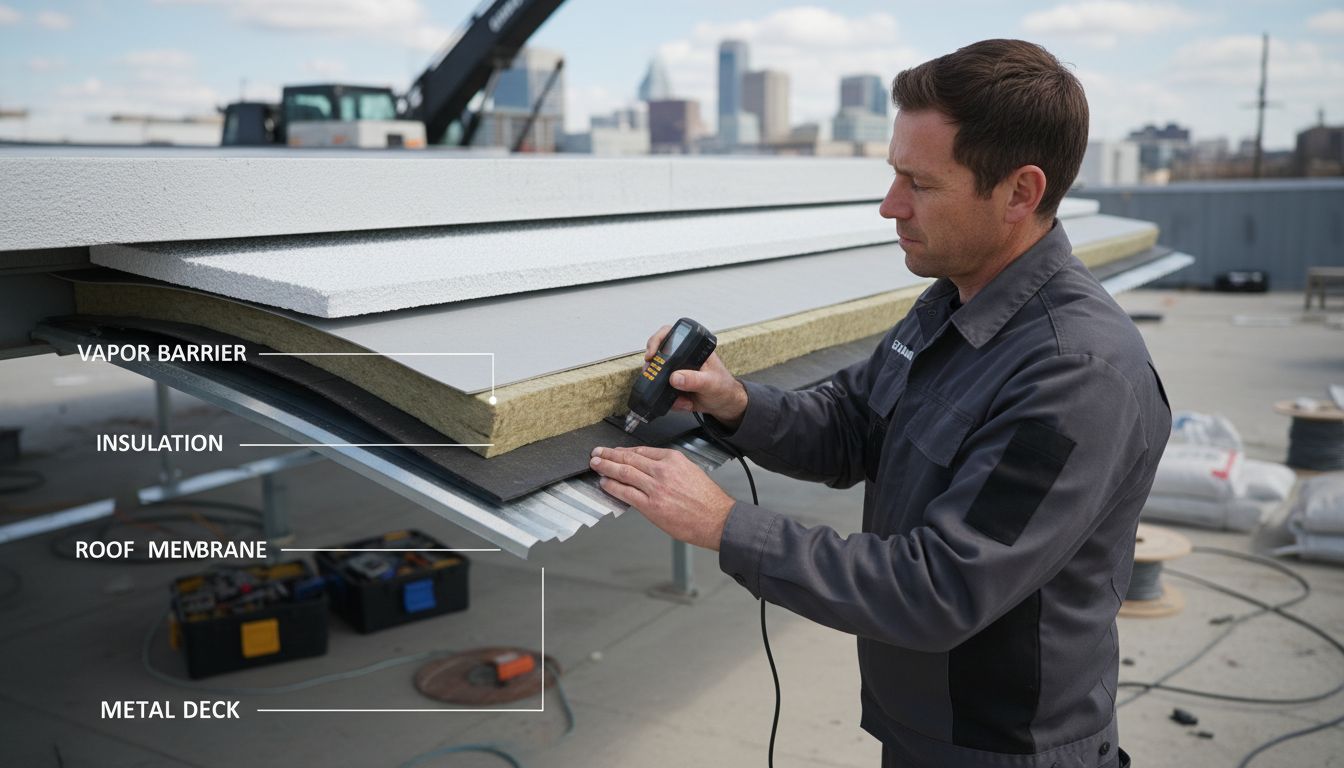 Forest Service research highlights that these systems generally include key elements such as:
- Roof Deck: The foundational structural surface supporting all other layers
- Vapor Barrier: Prevents moisture infiltration and condensation
- Insulation Layer: Regulates thermal performance and energy efficiency
- Waterproofing Membrane: Primary defense against water penetration
- Surface Coating: Provides additional protection and reflects solar radiation
The primary classifications of commercial roof systems include flat, low-slope, and pitched configurations, each designed to address specific architectural and environmental requirements. Flat roofs, most common in commercial settings, offer unique advantages like additional usable space, easier maintenance access, and more efficient installation of mechanical equipment. Low-slope roofs provide enhanced water drainage capabilities while maintaining a relatively horizontal profile, making them ideal for larger commercial and industrial buildings.
Understanding the nuanced characteristics of commercial roof systems requires recognizing their role as complex engineering solutions. When properly designed and installed, these systems not only protect the building’s interior but also contribute to overall energy efficiency, structural longevity, and operational performance. For businesses seeking comprehensive insights into their roofing options, understanding types of roofing systems can provide critical guidance in making informed decisions about this significant architectural investment.
Major Types of Commercial Roof Systems
Commercial roof systems represent complex architectural solutions with diverse configurations designed to meet specific building requirements. Canary Report research highlights five primary membrane types that dominate the commercial roofing landscape, each offering unique performance characteristics and installation advantages.
Built-Up Roofing (BUR) remains a traditional and reliable system consisting of multiple layers of bitumen and reinforcing fabrics. According to Construction Roofing & Contractors Association, these systems provide exceptional durability and are particularly effective for low-slope commercial structures. Key characteristics of BUR systems include:
- Multiple protective layers
- High resistance to foot traffic
- Excellent waterproofing capabilities
- Cost-effective long-term performance
Other prominent commercial roof membrane types include EPDM (Ethylene Propylene Diene Monomer), PVC (Polyvinyl Chloride), and TPO (Thermoplastic Polyolefin) systems. Each membrane offers distinct advantages: EPDM provides superior weather resistance, PVC delivers exceptional chemical stability, and TPO combines energy efficiency with remarkable durability.
Selecting the appropriate commercial roof system requires careful evaluation of factors like climate conditions, building usage, budget constraints, and long-term maintenance requirements. For businesses seeking expert guidance in navigating these complex choices, our guide on the best roofing systems for commercial buildings can provide invaluable insights into making an informed roofing investment.
Key Materials and Construction Features
Commercial roof systems rely on a sophisticated combination of materials and construction techniques that ensure maximum performance and longevity. Forest Service research highlights the critical importance of material selection and precise installation methods in creating robust roofing solutions that can withstand diverse environmental challenges.
The fundamental components of commercial roof systems typically include several key materials:
- Substrate/Deck: Structural base layer providing foundational support
- Insulation: Thermal regulation and energy efficiency layer
- Vapor Barrier: Prevents moisture penetration and condensation
- Membrane: Primary waterproofing and protective covering
- Surface Coating: Additional protection against UV radiation and environmental stress
According to Construction Roofing & Contractors Association, modern commercial roofing construction emphasizes layered approaches that enhance durability and performance. Different membrane materials like Modified Bitumen, EPDM, and TPO require specialized installation techniques that account for factors such as thermal expansion, structural load, and environmental conditions.
Advanced construction features now incorporate innovative technologies like reflective coatings, enhanced drainage systems, and integrated waterproofing solutions. These developments not only extend roof lifespan but also improve overall building energy efficiency. For businesses seeking comprehensive insights into selecting the right roofing system, our guide on the best roofing systems for commercial buildings offers expert recommendations tailored to diverse architectural needs.
Maintenance, Lifespan, and Common Issues
Commercial roof systems demand strategic maintenance and proactive management to maximize their operational longevity and performance. Construction Roofing & Contractors Association research emphasizes that systematic maintenance is crucial for preserving the structural integrity and functional capabilities of commercial roofing systems.
Typical maintenance requirements and potential issues include:
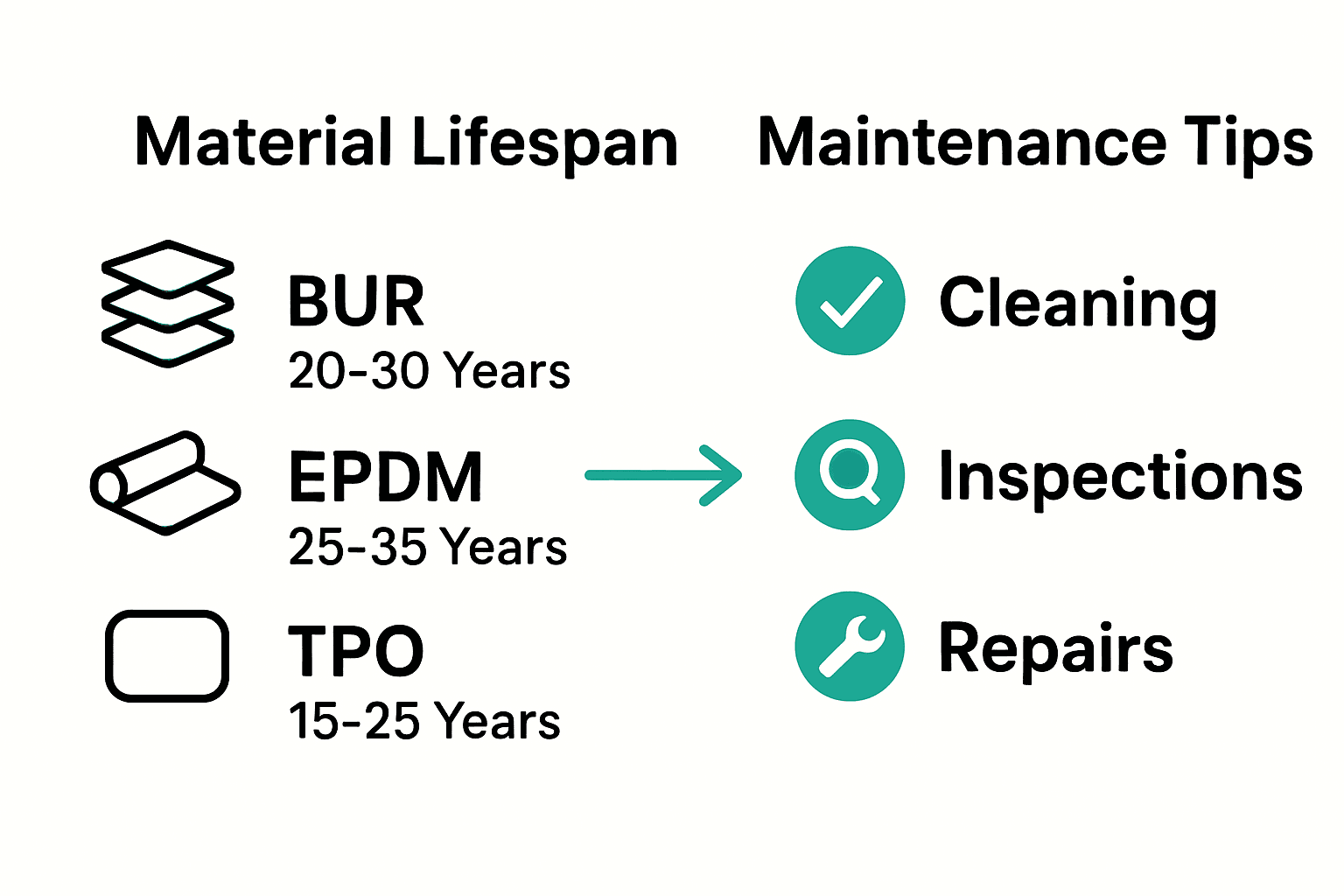
- Regular Inspections: Biannual professional assessments
- Debris Removal: Clearing leaves, branches, and accumulated materials
- Drainage System Check: Ensuring proper water flow and preventing ponding
- Seam and Membrane Evaluation: Detecting early signs of wear or damage
- Coating and Sealant Maintenance: Reapplying protective layers as needed
Forest Service publications highlight that the average lifespan of commercial roofing systems varies significantly based on material type, installation quality, and maintenance frequency. While EPDM and TPO membranes can last 20-30 years, Built-Up Roofing (BUR) systems might require more frequent interventions and have slightly shorter operational lifespans.
Common issues that can compromise roof performance include moisture infiltration, thermal expansion damage, membrane punctures, and UV-related degradation. Proactive businesses can mitigate these risks through consistent professional maintenance and timely repairs. For comprehensive strategies on extending roof lifespan and preventing potential problems, our guide on how to extend roof lifespan naturally offers detailed insights and practical recommendations.
Cost, Liability, and Insurance Considerations
Commercial roof systems represent significant financial investments that require comprehensive strategic planning around cost management, risk mitigation, and insurance protection. Colorado Roofing emphasizes that selecting the right roofing contractor is fundamental to controlling long-term expenses and minimizing potential liability risks.
Key financial considerations for commercial roof systems include:
- Initial Installation Costs: Vary by material and complexity
- Maintenance Expenses: Ongoing professional inspection and repair budgets
- Replacement Reserves: Long-term financial planning for eventual system renewal
- Energy Efficiency Savings: Potential reduction in operational costs
- Insurance Premium Implications: Impact of roof quality on coverage rates
Construction Roofing & Contractors Association research indicates that comprehensive insurance coverage should address multiple risk factors, including:
- Structural damage protection
- Moisture and water infiltration coverage
- Professional liability for installation errors
- Environmental damage mitigation
- Potential business interruption expenses
Businesses must carefully evaluate their specific risk profile and select insurance products that provide robust protection tailored to their unique roofing system. For comprehensive guidance on navigating these complex financial considerations, our guide on understanding roof lifespan factors offers valuable insights into making informed roofing investment decisions.
Secure Your Commercial Roof With Expert Care from Liberty Roofworks
Managing the complex needs of a commercial roof system can feel overwhelming. From choosing the right membrane material to ensuring reliable waterproofing and insulation, the challenges are significant. The article highlights key pain points such as moisture infiltration, maintenance demands, energy efficiency, and long-term durability. If your goal is a roofing solution that protects your investment, reduces costly repairs, and extends lifespan, understanding these elements is critical.
At Liberty Roofworks, we specialize in tackling these exact challenges. Whether you need expert commercial roof repair or a full-scale installation of TPO, EPDM, or asphalt roofing, you can trust our experienced team to deliver outstanding results. We go above and beyond to offer customized solutions that address thermal regulation, seamless waterproofing, and resilient surface coatings. Explore our full range of services at Liberty Roofworks and discover why businesses across Charlotte, NC rely on us for their commercial roofing needs.
Don’t wait for roofing issues to escalate. Protect your building with professional care that ensures longevity and peace of mind. Visit our page on Commercial Roof Repair to schedule your consultation today and take the first step toward a secure and energy-efficient roof system.
Frequently Asked Questions
What are the main types of commercial roof systems?
The primary types of commercial roof systems include Built-Up Roofing (BUR), EPDM (Ethylene Propylene Diene Monomer), PVC (Polyvinyl Chloride), and TPO (Thermoplastic Polyolefin). Each type has unique performance characteristics and is suited to different building needs.
How do I choose the right roofing system for my commercial building?
Selecting the appropriate commercial roof system requires evaluating factors like climate conditions, building usage, budget, and long-term maintenance requirements. Consulting with a roofing professional can also provide valuable guidance based on your specific needs.
What is the average lifespan of a commercial roofing system?
The lifespan of commercial roofing systems varies based on material type, installation quality, and maintenance frequency. Typically, EPDM and TPO membranes can last 20-30 years, while Built-Up Roofing (BUR) systems might require more frequent interventions and have a slightly shorter lifespan.
What maintenance is required for commercial roof systems?
Regular maintenance for commercial roof systems includes biannual professional inspections, debris removal, drainage system checks, seam and membrane evaluations, and reapplication of coatings or sealants as needed to protect the roof and extend its lifespan.