Heavy rain and strong winds can turn a quiet Charlotte evening into a stressful scramble for roof repairs. Knowing what each part of your roof actually does helps you discuss storm damage and choose repair or replacement options wisely. From the framework that supports your roof to the underlayment and flashing that keep water out, these components all work together to protect your property. Learning the key terms used by contractors puts you in control when storms hit Charlotte, North Carolina.
Table of Contents
- Roof Anatomy Basics Every Owner Needs
- Essential Materials and Roof Types Defined
- Key Terms in Roof Installations and Repairs
- Crucial Roofing Components for Storm Damage
- Contractor Lingo: What to Ask and Avoid
Key Takeaways
| Point | Details |
|---|---|
| Roof layers are crucial for protection | A roof consists of several layers, including the framework, sheathing, underlayment, and covering. Understanding these components helps in effective maintenance and repair decisions. |
| Material choices impact longevity | Different roofing materials have varying lifespans and durability, influencing overall costs and maintenance. Homeowners should consider long-term impacts when choosing materials. |
| Contractor communication is key | Knowing roofing terminology enables homeowners to communicate effectively with contractors, ensuring clarity in repair needs vs. a replacement. A clear understanding leads to better decision-making. |
| Post-storm inspections are essential | After severe weather, it’s vital to inspect not only visible shingle damage but also underlying components like flashing and underlayment for hidden issues that require attention. |
Roof Anatomy Basics Every Owner Needs
Your roof is far more complex than just the shingles you see from the street. Charlotte homeowners dealing with storm damage or considering replacements need to understand what’s actually protecting their homes. Think of your roof like a multilayered defense system, where each component plays a specific role in keeping water out and maintaining structural integrity. The framework forms the foundation, typically consisting of wooden rafters or prefabricated trusses spaced at standard intervals that support everything above them. These structural elements carry the weight of the entire roof system and must be properly installed to handle Charlotte’s occasional high winds and heavy rains.
Next comes the sheathing, usually plywood or oriented strand board that covers the rafters and creates a solid base. Above this sits the roof underlayment, a protective waterproof barrier that acts as a second line of defense against water penetration. This is critical because water will eventually reach this layer, and the underlayment prevents it from soaking into your attic. The visible component everyone recognizes is the roof covering, which in Charlotte typically means asphalt shingles, though TPO and EPDM options are increasingly popular for commercial properties. Beyond these main layers, flashing and proper ventilation systems work together to direct water away from vulnerable areas like chimneys, skylights, and where walls meet the roof. Flashing uses impervious materials to channel water safely off your roof rather than letting it pool in dangerous spots. Ventilation prevents moisture and heat buildup in your attic, which extends your roof’s lifespan significantly. When a storm damages your roof, it’s often not just the shingles that suffer, but potentially the underlayment or flashing, which is why proper inspection after severe weather matters so much.
Understanding roof system components helps you communicate better with contractors and make informed decisions about repairs versus replacement. If you’re only replacing shingles but the underlayment or flashing is compromised, you’re not truly solving the problem. Conversely, if storm damage is limited to surface shingles, a full replacement would be unnecessary. Charlotte homeowners should know that proper drainage design, where your roof’s slope and shape shed water effectively, prevents standing water that leads to leaks. Insulation and air sealing in the attic also play roles in the overall roof system’s performance, affecting both energy efficiency and moisture control.
Pro tip: After any significant storm, have a professional inspect not just the visible shingles but also the flashing, underlayment, and roof structure for hidden damage that could cause problems months later.
Essential Materials and Roof Types Defined
When you start shopping for a roof replacement or repair, you’ll quickly discover that not all roofs are created equal. The materials you choose and the type of roof structure you have dramatically affect durability, cost, maintenance requirements, and how well your home withstands Charlotte weather. Asphalt shingles remain the most common choice for residential properties because they balance affordability with decent performance. However, Charlotte homeowners increasingly explore metal roofing for superior durability and wind resistance, TPO membranes for commercial properties, or EPDM rubber systems that offer excellent longevity. Each material has different lifespans, ranging from 15 years for basic asphalt to 50+ years for metal or slate. Beyond the surface material, the complete system includes the underlayment (that waterproof barrier we discussed), flashing to direct water away from vulnerable areas, and proper ventilation through soffit and ridge vents that manage heat and moisture to extend your roof’s life.
The shape of your roof matters just as much as the materials covering it. Different roof types offer distinct advantages and challenges. Gable roofs, the classic peaked design you see on many Charlotte homes, excel at shedding water and snow but can be vulnerable to wind damage if not properly braced. Hip roofs, which slope on all four sides, provide superior wind resistance and structural stability, making them excellent for storm-prone areas. Flat roofs are becoming popular for commercial buildings and modern residential designs because they create usable outdoor space, but they require meticulous waterproofing to prevent leaks since water doesn’t naturally run off. Mansard roofs create additional attic or living space with their dual pitches but demand careful drainage planning. Charlotte’s humid climate and occasional severe storms mean your roof type and materials must work together effectively. If you live in an area prone to high winds, a hip roof with metal panels offers superior protection. If aesthetics matter and you want traditional charm, architectural shingles or tile might justify the higher cost.
Three key factors should guide your decision. First, consider your climate and environmental stresses. Charlotte experiences summer heat, humidity, and occasional severe thunderstorms with hail and wind, so durability and water shedding are critical. Second, evaluate your budget not just for installation but for maintenance and eventual replacement. A cheaper asphalt roof installed today might cost more over 20 years if you factor in replacements compared to a pricier metal option. Third, think about your home’s architectural style and your neighborhood. Some communities have aesthetic guidelines, and certain materials simply look better on specific home designs. When choosing materials and roof types, work with contractors who understand local building codes and insurance requirements specific to storm damage in North Carolina.
Here’s a quick comparison of common roofing materials and their advantages for Charlotte homeowners:
| Material Type | Typical Lifespan | Key Benefit | Considerations |
|---|---|---|---|
| Asphalt Shingles | 15-25 years | Affordable, easy repair | May need frequent upkeep |
| Metal Panels | 40-70 years | Superior wind resistance | Higher upfront cost |
| EPDM Rubber | 30-50 years | Excellent longevity | Used mainly on flat roofs |
| TPO Membrane | 20-30 years | Energy efficient | Best for commercial spaces |
| Slate/Tile | 50+ years | Outstanding durability | Heavy, expensive |
Pro tip: Ask your contractor which roofing materials qualify for wind and hail resistance ratings that might lower your homeowner’s insurance premiums, potentially offsetting the cost of upgrading from basic asphalt shingles.
Key Terms in Roof Installations and Repairs
When contractors talk about your roof, they’re using specific terminology that describes exactly what they’re doing and what needs fixing. Understanding these terms prevents confusion and helps you make informed decisions about whether your situation calls for a simple repair or a complete replacement. Roof repair means fixing specific damaged areas, like replacing a few missing shingles or patching a leak around flashing. This is different from reroofing, which means installing new roofing material directly over your existing roof without removing it first. Then there’s roof replacement, the most extensive option where contractors remove the entire old roof system down to the decking and install everything new from scratch. For Charlotte homeowners dealing with storm damage, contractors will determine which option makes sense based on the extent of damage and your roof’s age. If only 15 percent of your roof has storm damage and the rest is still in good shape, repair is probably sufficient. But if your roof is already 20 years old with asphalt shingles nearing their lifespan, replacement might be smarter financially even if current damage is limited.
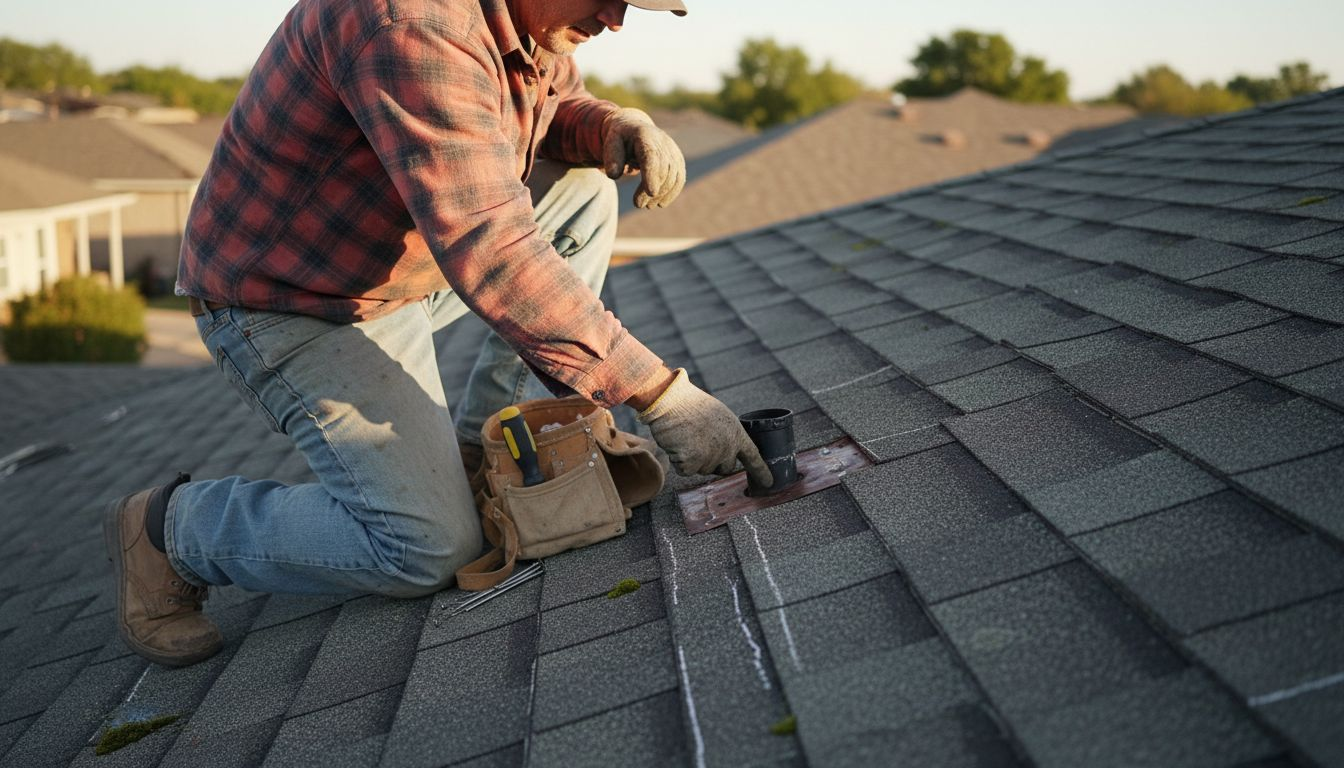
The physical structure uses its own terminology too. Your roof assembly is the complete layered system we discussed earlier, and the roof deck or sheathing is the solid wood surface (usually plywood or oriented strand board) that everything sits on top of. Rafters are the diagonal timber framing members that support the decking, while hip and valley rafters are the specialized diagonal members at roof corners and where two roof planes meet. Flashing is the critical metal or membrane barrier installed around penetrations like chimneys, vents, and skylights to prevent water from sneaking in around these vulnerable spots. The ridge is the peak of your roof where two sloping planes meet, while hips are the sloped ridges where roof sections intersect on all-sided roofs. These areas typically need special cap materials or ridge shingles to seal them properly. Proper flashing installation and ridge capping are absolutely critical because water will find its way into any gaps or improperly sealed joints.
Ventilation terms matter too, especially in humid North Carolina. Ridge vents run along the peak of your roof, allowing hot air and moisture to escape from your attic. Soffit vents are installed underneath the eaves and allow cooler air to enter. Together, they create proper roof ventilation, which keeps moisture levels down and heat from building up, extending your roof’s life significantly. You might also hear contractors mention roof penetrations, which are simply openings like chimneys, plumbing vents, or skylights that break through the roofing surface. Each penetration needs proper flashing to work correctly. When a contractor gives you an estimate, they should itemize which repairs involve flashing, ventilation improvements, or structural work. This specificity helps you understand exactly what they’re fixing and why it costs what it does.
Pro tip: When getting repair estimates after storm damage, ask contractors to specify whether they’re doing repairs, reroofing, or recommending replacement, then ask them to explain the condition of your flashing and ventilation systems separately from shingle damage.
Crucial Roofing Components for Storm Damage
When a storm rolls through Charlotte, not all roof components suffer equally. Some parts of your roof are far more vulnerable to wind, hail, and water damage than others, and understanding which components need the most attention helps you prioritize repairs and protect your investment. The roof edges, including the eaves and rakes, are the first places to fail during high-wind events. During storms, air pressure changes create suction forces that pull upward on roof edges with tremendous force. If your roof edge is not properly reinforced with fully adhered underlayment membranes, wind can get underneath your shingles and peel them back like opening a can. Single-ply membranes like TPO and EPDM, when properly adhered to the entire underlayment rather than just mechanically fastened, provide significantly better protection. This is why contractors specifically inspect edge conditions after storms and why upgrading to fully adhered systems is worth the investment if you live in a wind-prone area.
Your flashing and roof to wall connections are equally critical during severe weather. Water-resistant flashing materials around chimneys, vents, and skylights must be properly sealed and secured to prevent wind-driven rain from sneaking behind them. More important structurally, roof to wall connections like hurricane ties physically secure your roof to the walls below, preventing complete roof uplift during extreme winds. Charlotte homeowners in areas prone to severe storms should verify that their roof has proper reinforced connections. The roof sheathing underneath your shingles also matters tremendously. If the plywood or OSB has aged and weakened, high winds can break through it rather than just tearing off shingles. After a major storm, if your roof sheathing is compromised, you might need more extensive repairs than just replacing shingles. The underside of your roof at eaves is also vulnerable because this area experiences both positive and negative air pressures that can force water up into your attic if protection is inadequate.
Hail damage presents a different challenge than wind damage. Impact-resistant shingles and materials are specifically designed to absorb hail strikes without tearing or splitting. Standard asphalt shingles, while affordable, offer minimal hail protection, which is why insurance companies sometimes offer premium discounts for impact-resistant upgrades. If you’ve had hail storms damage your roof previously or live in an area with frequent hail, upgrading to impact-resistant materials during replacement is smart planning. Additionally, proper drainage design prevents water from pooling in valleys and low spots where it can eventually work its way through minor cracks or worn spots. Standing water accelerates shingle deterioration and can cause leaks months after a storm when you might not realize the damage occurred.
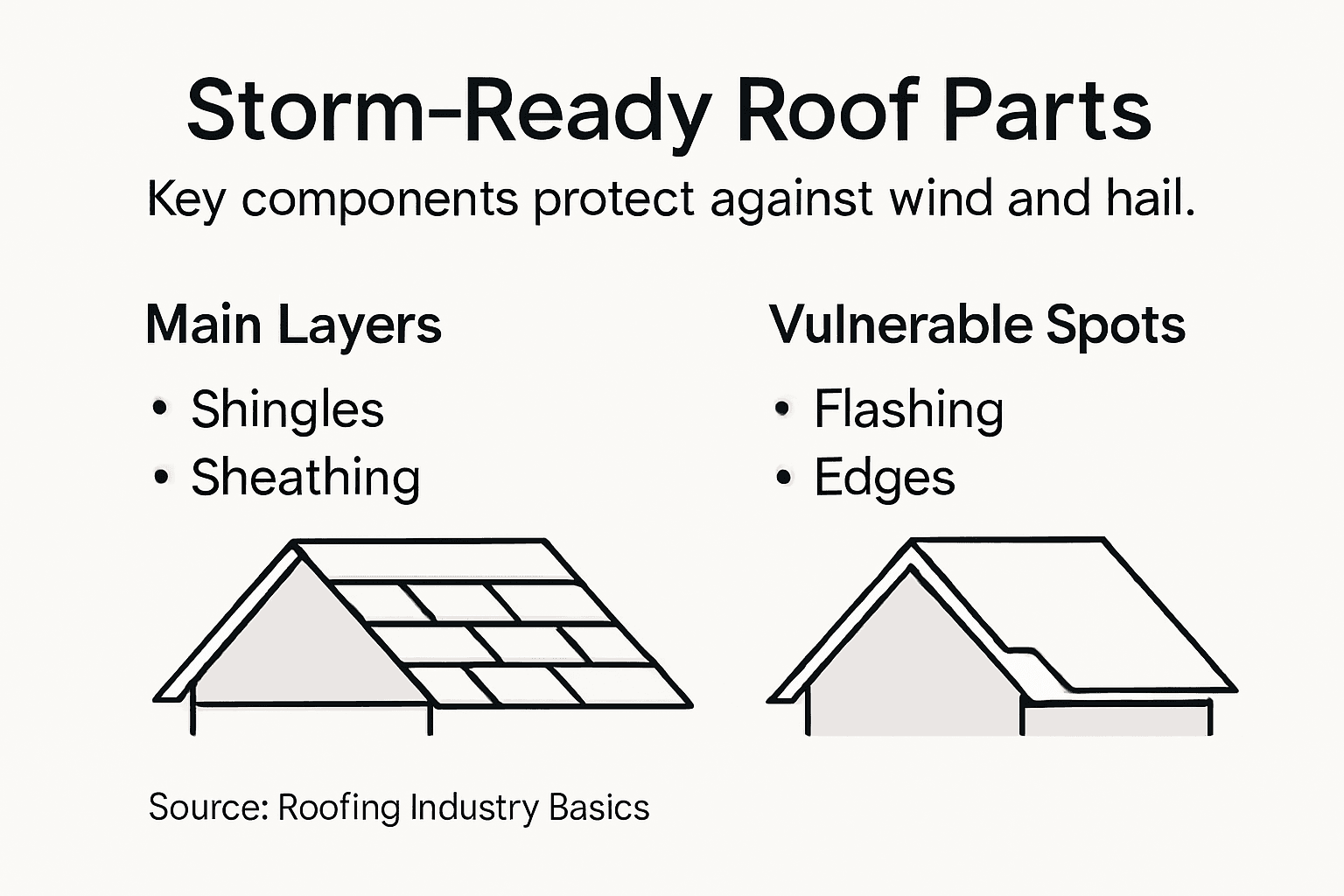
After any significant storm, Charlotte homeowners should understand that visible shingle damage is often just the tip of the iceberg. You need contractors who will inspect those vulnerable edge areas, flashing connections, and sheathing integrity, not just count missing shingles. Asking whether your roof meets current building codes for your wind zone is also wise, since code requirements have become stricter as storm data improves.
Pro tip: After a storm, specifically ask your inspector to check the condition of roof edges, flashing seals, sheathing integrity, and roof-to-wall connections before accepting any repair estimate that only addresses surface shingles.
Contractor Lingo: What to Ask and Avoid
When you call roofing contractors for estimates after storm damage, you’ll hear terminology that can either clarify what needs fixing or confuse you into making poor decisions. Learning contractor lingo helps you ask intelligent questions and spot red flags that indicate you’re dealing with someone more interested in maximizing profit than solving your problem. One phrase to be cautious about is when contractors say they’ll “work directly with your insurance company” or mention “assignment of benefits.” This means they’ll bill your insurance company directly instead of you paying them and getting reimbursed. While this sounds convenient, be cautious signing assignments of benefits because it can create situations where contractors inflate estimates or perform work beyond what insurance approved. A reputable contractor will work with your insurance adjuster transparently but won’t pressure you into signing away your ability to manage the claim yourself.
Another term you’ll hear is “depreciation,” which insurance companies use when they won’t pay the full replacement cost of materials because your roof has aged and lost value. Contractors might use this to justify why they can’t do everything you want within your insurance settlement. This is legitimate, but you should understand that depreciation is an insurance concept, not a contractor decision. If a contractor says they can “waive depreciation,” that’s not their choice to make, and claims that they can often signal problems. When reviewing estimates, insist on detailed written contracts that specify exactly what work is being done, which materials are being used, the timeline, and the payment schedule. Vague language like “repair roof as needed” or “fix damaged areas” without specifics is a warning sign. A quality home improvement contract details every task, product, who obtains permits, start dates, completion dates, and how payments align with work completed.
Listen carefully for pressure tactics. If a contractor says “I can only hold this price for 24 hours” or “we’re in the area today and can start tomorrow,” that’s high-pressure sales, not professional service. Legitimate contractors have full schedules and won’t pressure you. Similarly, avoid any contractor who asks for large upfront payments before work begins. Standard practice is paying deposits once a contract is signed, paying draws as work progresses, and paying the final balance upon completion. If someone wants 50 percent or more upfront, walk away. Ask every contractor these specific questions: Are you licensed in North Carolina? Can you provide proof of liability insurance and workers compensation? Do you carry a warranty on your work, and what does it cover? Can you provide three references from recent Charlotte projects? Will you get all necessary permits, or am I responsible? What happens if I discover additional damage during the project? Their answers reveal professionalism and confidence in their work.
Use this reference sheet to decode key contractor terms during roof repairs:
| Contractor Term | What It Means | What to Watch For | Benefit to Homeowner |
|---|---|---|---|
| Assignment of Benefits | Contractor bills insurer directly | Risk of inflated estimates | Potential convenience, risk of abuse |
| Depreciation | Insurance pays less for aged roof | Contractors may overpromise | Helps you understand payout reality |
| Reroofing | New material over old roof | May not fix underlying issues | Faster, often lower cost |
| Roof Replacement | Old roof removed, rebuilt | Higher upfront cost | Full system reset, longer lifespan |
Pro tip: Before signing any contract or estimate, run the contractor’s name through the North Carolina Better Business Bureau and your state attorney general’s office for complaints, and always request a detailed written contract specifying materials, timelines, costs, and payment schedules before any work begins.
Understand Your Roof Terms and Choose the Best Solution with Liberty Roofworks
Navigating roofing terminology can be confusing when you want to protect your home or business from storm damage or aging materials. This article breaks down key terms like roof repair, reroofing, flashing, and underlayment so you can make informed decisions. If you feel overwhelmed by what contractors say or unsure about whether to repair or replace your roof, you are not alone. Understanding these terms is the first step to avoiding costly mistakes and ensuring your roof lasts for years to come.
At Liberty Roofworks, we specialize in helping Charlotte homeowners and commercial clients cut through the confusion. Whether you need storm damage repair or a complete roof replacement, our experienced team explains every step clearly and offers honest advice. Don’t wait until small issues become major headaches. Contact us today to get a transparent estimate and professional guidance that matches your roof’s unique needs. Visit Liberty Roofworks now and make smart roofing choices with confidence.
Frequently Asked Questions
What is the difference between roof repair and roof replacement?
Roof repair involves fixing specific damaged areas of the roof, such as replacing missing shingles or sealing leaks, while roof replacement means removing the entire old roof system and installing a new one from scratch.
What should I look for in roof flashing?
Roof flashing should be made of high-quality, water-resistant materials and be properly sealed around vulnerable areas like chimneys and vents to prevent water infiltration.
How do roof types affect durability?
Different roof types, like gable or hip roofs, offer distinct advantages in terms of durability and wind resistance. For example, hip roofs provide superior stability, while gable roofs may be more vulnerable to wind damage.
Why is proper roof ventilation important?
Proper roof ventilation helps maintain air circulation in the attic, reducing moisture buildup and heat accumulation. This can significantly extend the lifespan of your roof and improve overall energy efficiency.
Recommended