After a major storm, the right roofing solution can mean the difference between ongoing repairs and lasting protection for your Charlotte commercial property. Local business owners face tough choices when weighing the durability and cost benefits of EPDM and modified bitumen membranes. By understanding their unique lifespans, installation methods, and climate resilience, you can confidently select a system that fits your budget and shields your building from future damage.
Table of Contents
- Defining EPDM and Modified Bitumen Roofing
- Key Material Differences and Lifespans
- Installation Methods and Maintenance Needs
- Weather Resistance and Charlotte Climate Performance
- Costs, Mistakes, and Choosing the Right System
Key Takeaways
| Point | Details |
|---|---|
| Material Selection is Key | Choose between EPDM and modified bitumen based on specific building requirements and local weather challenges in Charlotte. |
| Long-Term Performance | EPDM generally offers a lifespan of 30-40 years, while modified bitumen lasts 15-25 years, impacting long-term cost efficiency. |
| Installation and Maintenance | Proper installation is crucial for durability; EPDM requires less frequent maintenance compared to modified bitumen, which needs regular attention. |
| Cost Considerations | EPDM typically has lower initial costs and maintenance expenses, but modified bitumen may offer quicker repair advantages under certain conditions. |
Defining EPDM and Modified Bitumen Roofing
When evaluating commercial roofing options in Charlotte, understanding the nuanced characteristics of EPDM and modified bitumen becomes crucial for making an informed decision. These two roofing materials represent distinctly different approaches to protecting low-slope and flat commercial buildings from the region’s challenging weather conditions.
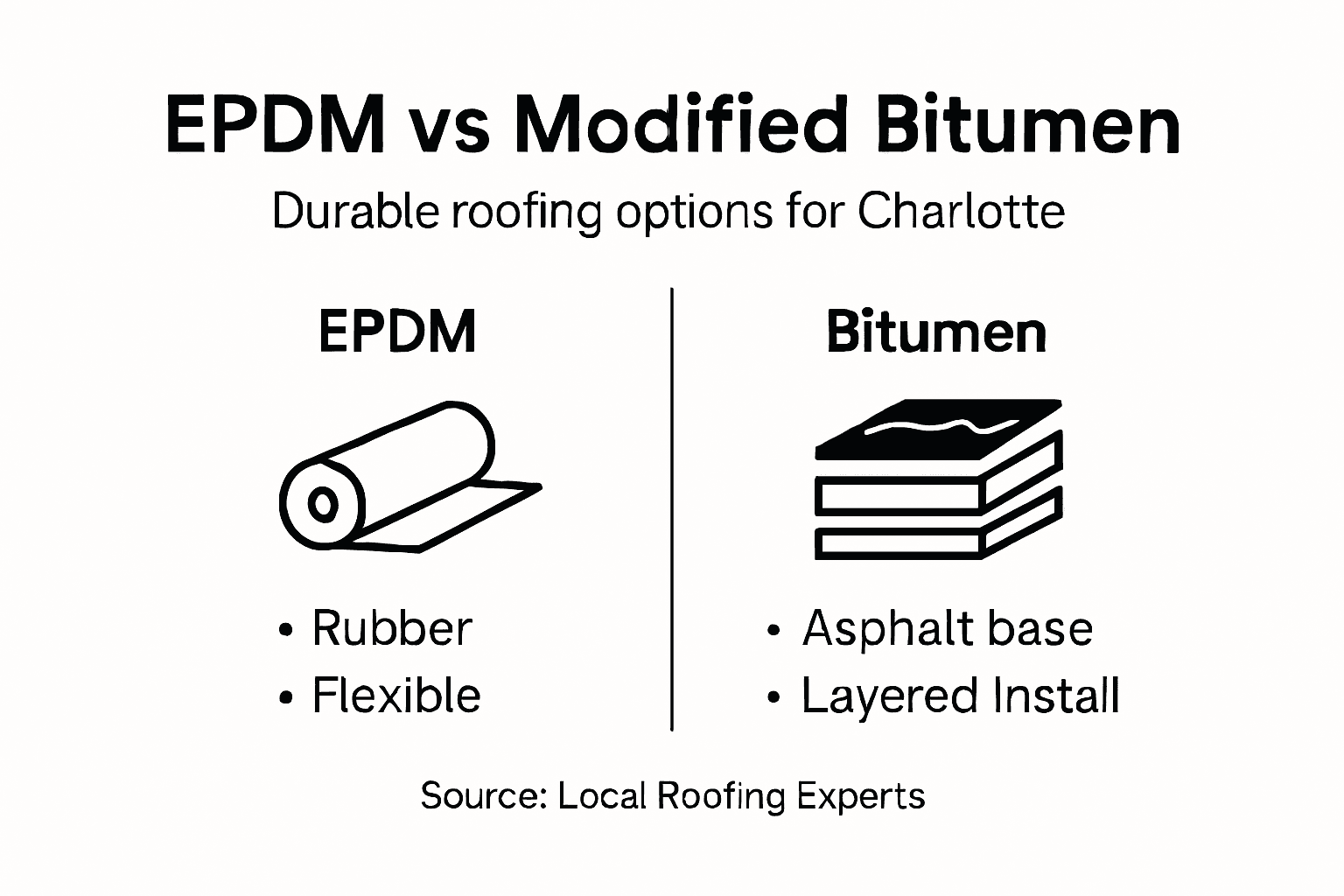
EPDM (ethylene propylene diene terpolymer) is a synthetic rubber roofing membrane that has gained significant popularity in commercial roofing applications. Synthetic rubber membrane technology offers remarkable durability and flexibility, making it an excellent choice for buildings experiencing temperature fluctuations. Key characteristics of EPDM include:
- Available in black, white, and gray color options
- Manufactured in various thicknesses
- Can be installed through three primary methods:
- Fully adhered
- Mechanically attached
- Ballasted
Modified bitumen, by contrast, represents a more traditional roofing approach that combines asphalt with advanced polymer technologies. Modified bituminous membrane systems provide robust protection through multiple installation techniques. Its composition typically includes:
- Asphalt base reinforced with fiberglass or polyester
- Polymer-enhanced flexibility
- Surface treatments like mineral granules
- Installation methods including:
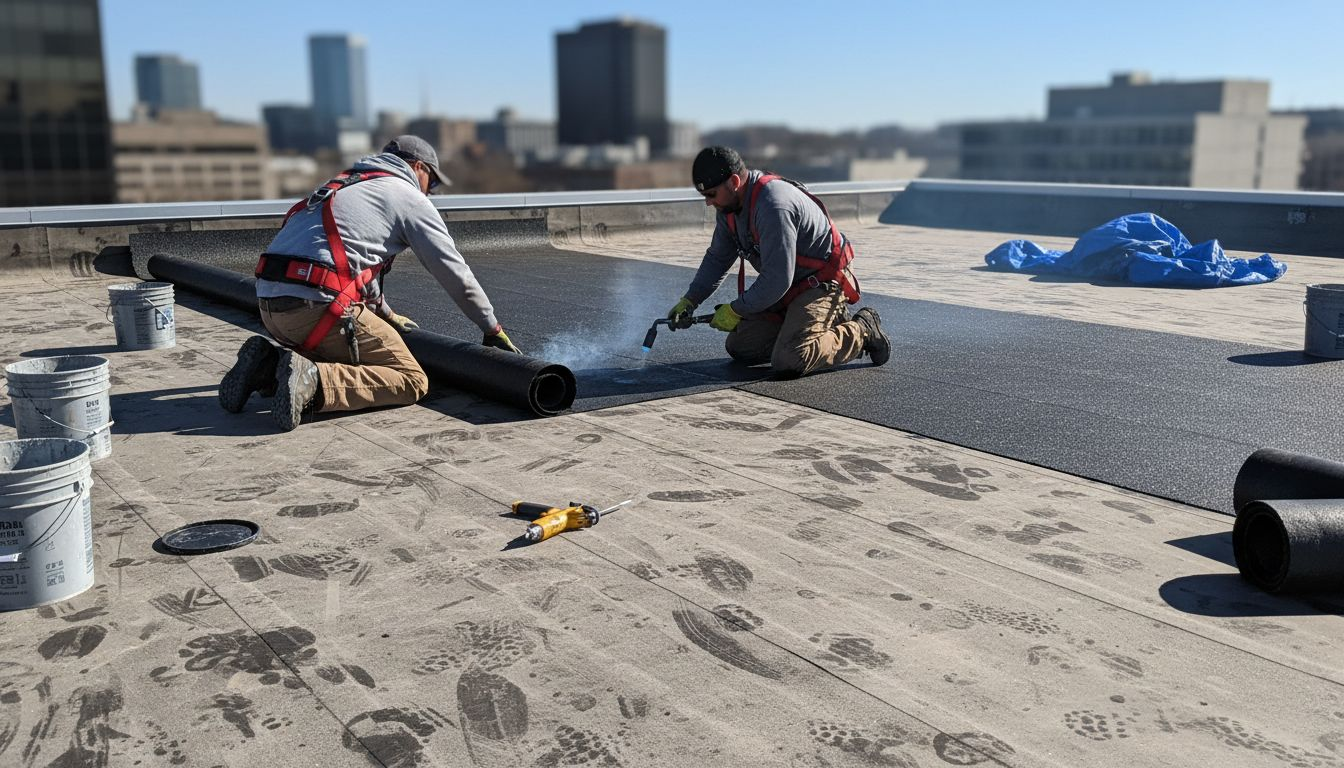
- Torch application
- Cold liquid adhesives
- Hot mopping techniques
Both roofing materials offer unique advantages for commercial properties in the Charlotte market, with selection depending on specific building requirements, budget constraints, and environmental conditions. EPDM tends to excel in lightweight applications and areas with significant temperature variations, while modified bitumen provides superior puncture resistance and traditional waterproofing performance.
Here’s a concise comparison of EPDM and modified bitumen roofing impact factors for Charlotte properties:
| Factor | EPDM Impact | Modified Bitumen Impact |
|---|---|---|
| Urban Heat Management | White variants reduce cooling load | Mineral surface reflects sunlight |
| Hail Resistance | High flexibility, absorbs impact | Reinforced, puncture resistant |
| Repair Difficulty | Simple membrane patching | Requires skilled labor |
| Cold Weather | Maintains flexibility | SBS version adapts better |
| UV Stability | Consistent, long-term durability | APP version resists sunlight |
Pro tip: Always consult a professional roofing contractor who understands local Charlotte climate challenges to determine the most suitable roofing membrane for your specific commercial property needs.
Key Material Differences and Lifespans
Understanding the material differences and longevity of EPDM and modified bitumen roofing is critical for Charlotte business owners making long-term investment decisions. Each roofing material brings unique characteristics that directly impact performance, durability, and overall lifecycle costs.
Long-term roofing performance reveals significant distinctions in expected lifespans between these two roofing technologies. EPDM demonstrates exceptional endurance, with documented performance spanning 30 to 40 years when properly maintained. Its remarkable resilience stems from several key attributes:
- Outstanding resistance to heat and ozone
- Superior weathering capabilities
- Minimal degradation over extended periods
- Consistent performance across diverse climate conditions
Modified bitumen roofing, by comparison, offers a more traditional approach with a slightly shorter expected lifespan. Bitumen roof durability factors indicate an average service life between 15 to 25 years, contingent upon specific polymer modifications and installation quality. The two primary polymer types significantly influence performance:
- SBS (Styrene-Butadiene-Styrene) modified membranes:
- Greater elasticity
- Enhanced cold-weather performance
- More flexible under temperature variations
- APP (Atactic Polypropylene) modified membranes:
- Superior UV resistance
- Better heat stability
- Ideal for sunny, high-temperature environments
Climate adaptation and installation precision play crucial roles in maximizing the lifespan of either roofing system.
While EPDM provides longer-term performance, modified bitumen offers more installation flexibility and potentially better immediate waterproofing characteristics. The choice depends on specific building requirements, local weather patterns, and budget considerations specific to Charlotte’s unique environmental conditions.
Pro tip: Invest in professional installation and regular maintenance to extend your chosen roofing membrane’s lifespan by 25-40%, regardless of material selection.
Installation Methods and Maintenance Needs
Choosing the right installation method is crucial for maximizing the performance and longevity of commercial roofing systems in Charlotte. Each EPDM and modified bitumen membrane offers distinct installation approaches that directly impact long-term durability and maintenance requirements.
EPDM roof installation techniques provide commercial property owners with three primary application methods, each offering unique benefits:
- Fully Adhered Method:
- Complete membrane adhesion to the roof substrate
- Exceptional wind uplift resistance
- Smooth, uniform surface finish
- Ideal for buildings in high-wind regions
- Mechanically Attached System:
- Uses fasteners and metal plates
- Faster installation process
- Cost-effective for budget-conscious projects
- Allows for easier membrane replacement
- Ballasted Installation:
- Membrane held in place by aggregate or stone
- Provides additional roof protection
- Allows for easier future modifications
- Works well in specific climate conditions
Modified bitumen roofing presents its own set of installation techniques, typically involving more specialized application methods:
- Torch Application:
- Direct heat application
- Creates strong, seamless bonds
- Requires skilled professional installation
- Cold Liquid Adhesive:
- Environmentally friendly option
- Less labor-intensive
- Suitable for temperature-sensitive environments
Proper installation is 70% of a roof’s long-term performance and durability.
Maintenance requirements differ significantly between these roofing systems. EPDM typically requires less frequent interventions, with primarily visual inspections and minor seam repairs. Modified bitumen may need more regular attention to maintain its protective characteristics.
Pro tip: Schedule professional roof inspections twice annually to catch potential issues early and extend your roofing system’s overall lifespan.
Weather Resistance and Charlotte Climate Performance
The unique climate of Charlotte demands roofing solutions that can withstand dramatic temperature variations, intense summer heat, occasional severe storms, and potential winter temperature drops. Charlotte EPDM roofing performance reveals critical insights into how different roofing membranes respond to local environmental challenges.
EPDM roofing offers exceptional versatility in Charlotte’s variable climate, with distinct advantages across different color variations:
- Black EPDM Membranes:
- Superior heat absorption
- Better performance in cooler temperatures
- Enhanced thermal retention
- Ideal for winter months
- White EPDM Membranes:
- Significant heat reflection
- Reduced cooling costs
- Lower surface temperature
- Excellent for summer heat management
Modified bitumen roofing demonstrates remarkable resilience in addressing Charlotte’s specific weather challenges:
- Exceptional water resistance
- High wind uplift protection
- Flexibility during temperature fluctuations
- Strong resistance to UV radiation
- Ability to withstand hail and storm impacts
Charlotte’s complex climate requires roofing materials that can adapt to rapid and unpredictable weather changes.
The primary difference in weather performance lies in material composition and thermal properties. EPDM’s synthetic rubber composition provides outstanding flexibility, while modified bitumen’s polymer-enhanced asphalt delivers robust protection against environmental stress.
Pro tip: Consider consulting a local roofing professional who understands Charlotte’s specific microclimate to determine the most suitable membrane for your specific building location.
Costs, Mistakes, and Choosing the Right System
Selecting the ideal roofing system for Charlotte commercial properties requires a strategic approach that balances upfront investment, long-term performance, and potential maintenance expenses. Roofing system selection strategies reveal critical considerations that extend beyond initial material costs.
Common mistakes in commercial roofing selection can lead to significant financial consequences:
- Overlooking Climate Compatibility:
- Choosing materials unsuited to Charlotte’s temperature variations
- Ignoring local weather stress factors
- Failing to consider thermal expansion characteristics
- Budget-Only Decision Making:
- Selecting cheapest option without long-term value assessment
- Neglecting lifecycle cost analysis
- Underestimating maintenance and repair expenses
Cost comparison between EPDM and modified bitumen requires comprehensive evaluation:
- EPDM Roofing Cost Factors:
- Lower initial installation expenses
- Minimal maintenance requirements
- Longer potential lifespan
- Easier repair processes
- Modified Bitumen Cost Considerations:
- Higher initial installation costs
- More complex repair procedures
- Shorter overall lifecycle
- Requires specialized installation skills
Choosing the right roofing system is an investment in your building’s long-term protection and performance.
The critical decision factors include building structure, budget constraints, expected maintenance capabilities, and specific environmental challenges unique to Charlotte’s commercial landscape.
Below is a summary table of typical cost lifecycle differences to assist in decision-making:
| Aspect | EPDM Roofing | Modified Bitumen Roofing |
|---|---|---|
| Initial Cost | Generally lower | Higher, labor-intensive |
| Maintenance | Minimal, basic repairs | Frequent, specialized care |
| Lifespan | 30–40 years possible | 15–25 years typical |
| ROI Potential | Higher over long term | Good for rapid repairs |
Pro tip: Request detailed lifecycle cost projections from professional roofing contractors to understand true long-term financial implications beyond initial installation expenses.
Take Control of Your Commercial Roof with Expert Solutions in Charlotte
Choosing the right roofing system for your commercial property in Charlotte means balancing durability, climate adaptability, and long-term costs. Whether you are considering an EPDM solution known for its remarkable flexibility and lifespan or a modified bitumen system offering superior puncture resistance, Liberty Roofworks is here to guide you. We understand the challenges of extreme temperature swings, storm exposure, and maintenance demands outlined in the article. Our experienced team specializes in EPDM Roofing and Repair and commercial roof installations that withstand Charlotte’s unique weather conditions.
Don’t let roofing uncertainty risk your property’s protection and value. Act now to benefit from skilled craftsmanship, personalized material recommendations, and reliable upkeep tailored to your budget and building needs. Visit Liberty Roofworks to explore how our commercial roofing services deliver peace of mind with quality results. Reach out today for a professional consultation and start securing your investment with a roof built to last.
Frequently Asked Questions
What are the main differences between EPDM and modified bitumen roofing?
EPDM is a synthetic rubber membrane known for its flexibility and durability, while modified bitumen combines asphalt with polymers for enhanced waterproofing and puncture resistance. EPDM generally excels in harsh temperature fluctuations, whereas modified bitumen is recognized for its traditional waterproofing performance.
How long do EPDM and modified bitumen roofs typically last?
EPDM roofs can last between 30 to 40 years with proper maintenance, while modified bitumen roofs usually have a lifespan of 15 to 25 years, depending on their composition and the quality of installation.
What are the installation methods for EPDM and modified bitumen roofing?
EPDM can be installed via fully adhered, mechanically attached, or ballasted methods. Modified bitumen installation methods include torch application, cold liquid adhesives, and hot mopping, often requiring skilled professionals.
What should I consider when choosing between EPDM and modified bitumen roofing?
Consider your building’s specific needs, local climate conditions, long-term maintenance requirements, and budget. EPDM is better for lightweight applications and significant temperature variations, while modified bitumen offers excellent puncture resistance and traditional waterproofing capabilities.