Roof damage causes nearly six billion dollars in property losses every year across the United States. Protecting your home starts with a solid maintenance routine, but many homeowners overlook simple steps that could prevent major repairs. Learning how to properly assess, clean, and repair your roof not only saves money but also keeps your family safe and dry. Follow these proven strategies to give your roof the care it needs for lasting protection.
Table of Contents
- Step 1: Assess Roof Condition And Identify Issues
- Step 2: Clear Debris And Clean Roofing Surfaces
- Step 3: Repair Minor Damages And Leaks Promptly
- Step 4: Inspect And Maintain Gutters And Flashing
- Step 5: Verify Repairs And Schedule Regular Maintenance
Quick Summary
| Key Point | Explanation |
|---|---|
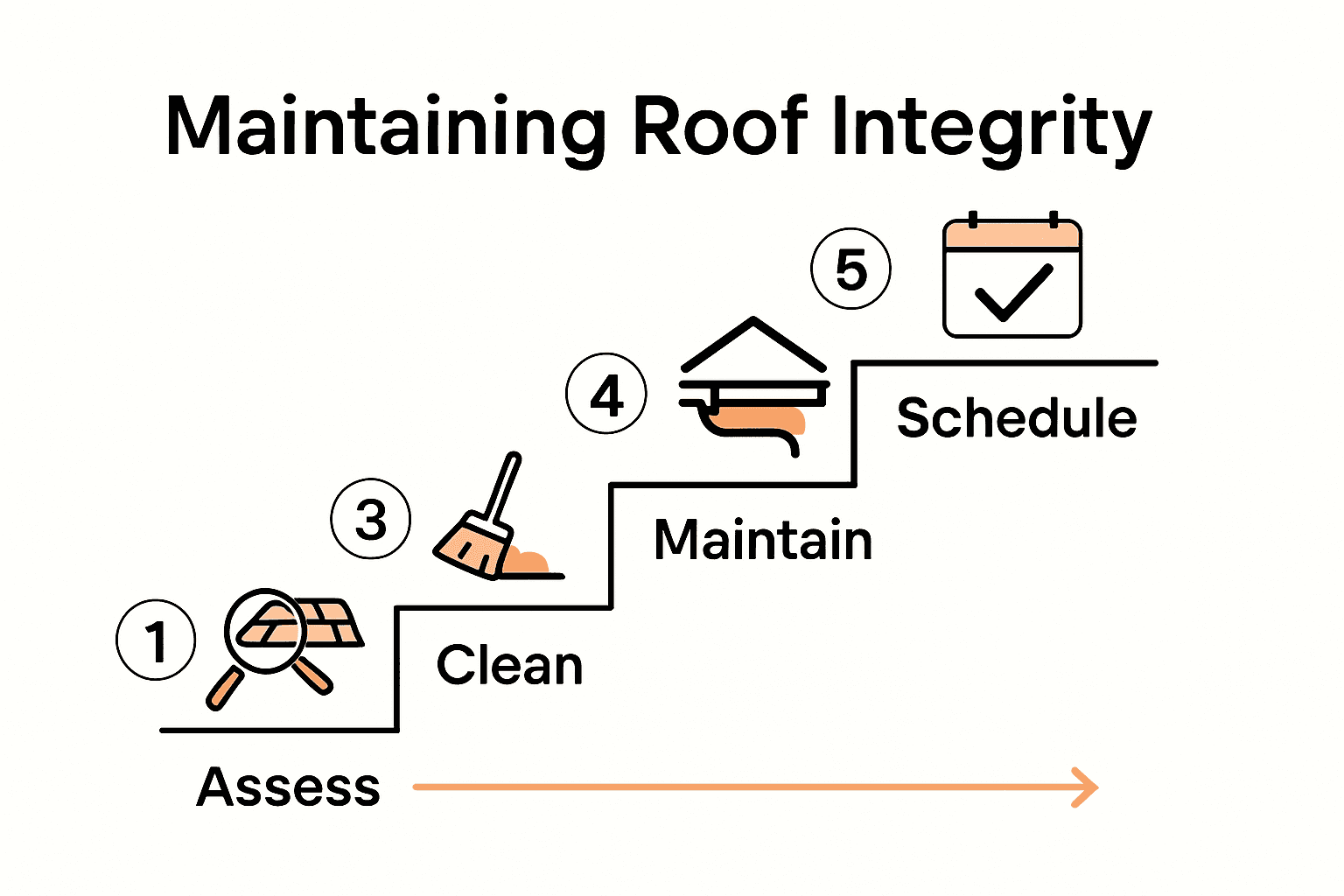
| 1. Assess roof condition thoroughly | Conduct a visual inspection and look for damage like missing shingles or sagging areas to catch problems early. |
| 2. Clear debris for maintenance | Remove leaves and branches to prevent water pooling and protect roofing materials’ integrity during cleaning. |
| 3. Repair minor damages promptly | Address small cracks or missing shingles quickly using appropriate materials to avoid costly extensive repairs later. |
| 4. Maintain gutters and flashing | Regularly inspect gutters and flashing to prevent water damage from poor drainage and fix any signs of wear. |
| 5. Schedule regular maintenance checks | Establish a plan for biannual inspections and document repairs to monitor the roof’s health and longevity. |
Step 1: Assess Roof Condition and Identify Issues
Knowing how to assess your roof’s condition is the first critical step in preventing potential damage and maintaining your home’s structural integrity. In this section, you’ll learn a systematic approach to evaluating your roof’s health and identifying potential issues before they become expensive problems.
According to NRCIA, a thorough roof inspection involves carefully examining multiple aspects of your roofing system. Start by conducting a visual inspection from ground level first. Look for obvious signs of damage such as missing shingles, visible sagging, or areas where roofing materials appear discolored or worn. Binoculars can help you get a closer view without risking personal safety.
Professional inspectors recommend checking specific areas that often indicate underlying problems. Pay close attention to roof slopes where water might accumulate, inspect around chimneys and vents for potential leak points, and examine the edges of your roof for signs of material degradation. APA Associates emphasizes that early detection of wear corrosion and abnormalities can prevent major repair expenses down the line.
Pro Tip: When assessing your roof, safety comes first. If you are uncomfortable with heights or your roof has a steep pitch, always hire a professional roofing inspector to conduct a comprehensive evaluation.
After your initial assessment, you’ll be ready to determine whether minor repairs are needed or if a more comprehensive inspection by professionals is necessary. Your next step will involve documenting any observed issues and preparing for potential repair strategies.
Step 2: Clear Debris and Clean Roofing Surfaces
Clearing debris and cleaning your roofing surfaces is a critical maintenance step that protects your roof from potential damage and extends its overall lifespan. This process helps prevent water pooling, stops organic material from causing decay, and maintains your roof’s structural integrity.
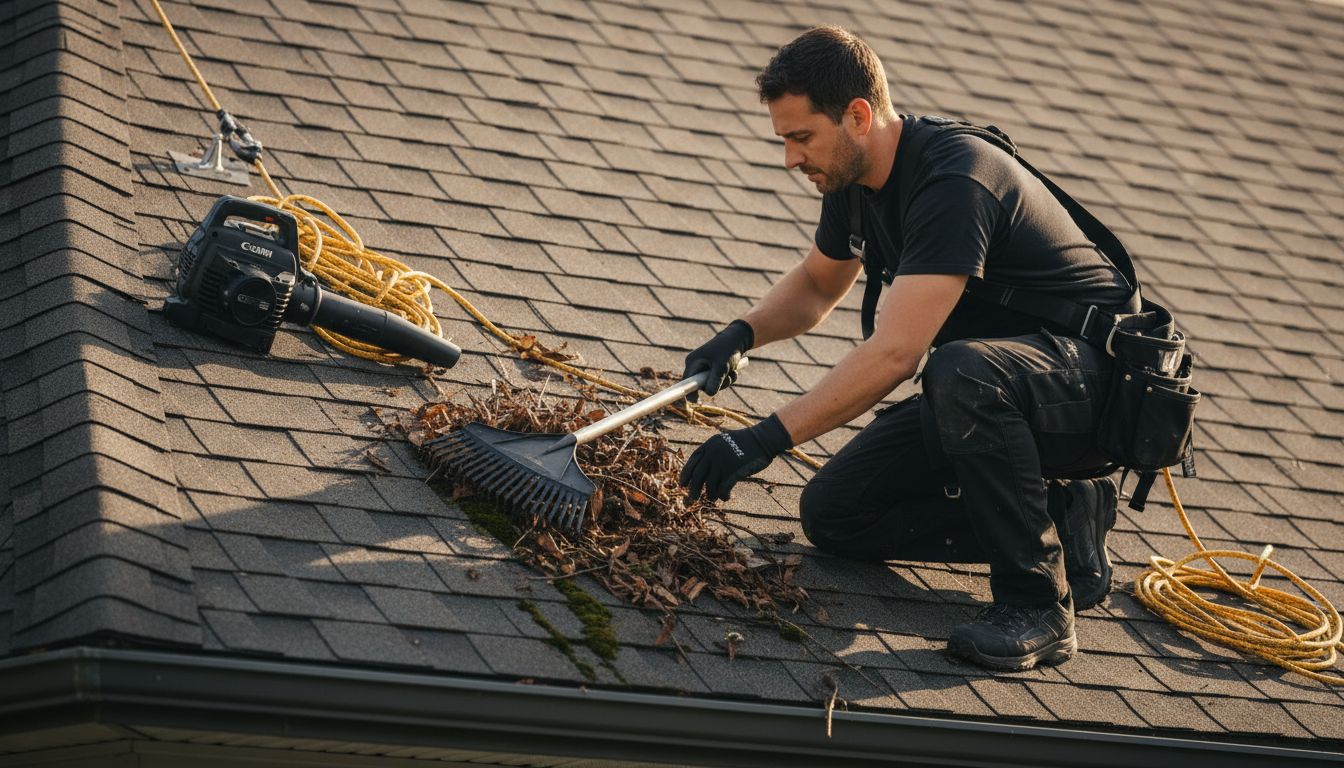
According to Architectural Services Department, proper cleaning requires careful consideration of technique and approach. Start by removing large debris like fallen branches, leaves, and twigs using a soft plastic rake or leaf blower. Work systematically across your roof surface, being careful not to damage shingles or roofing materials. Pay special attention to areas around chimneys, vents, and valleys where debris tends to accumulate.
When cleaning your roof, avoid using high pressure water systems that can damage roofing substrates. Instead, use gentle cleaning methods with soft brushes or low pressure water sprayers. For more stubborn dirt or moss growth, consider specialized roof cleaning solutions designed to safely remove contaminants without compromising your roofing materials.
Pro Tip: If your roof has steep slopes or you feel uncomfortable performing this maintenance, hire a professional roofing service to ensure safe and thorough debris removal.
Once you have cleared and cleaned your roof surfaces, you will be ready to inspect for any potential damage or wear that might have been hidden by accumulated debris.
 Your next step involves conducting a detailed examination of the cleaned surfaces to identify any necessary repairs.
Step 3: Repair Minor Damages and Leaks Promptly
Addressing minor roof damages and leaks quickly is crucial to preventing extensive and expensive structural problems. This step focuses on identifying and repairing small issues before they transform into major, costly repairs that could compromise your home’s integrity.
According to the Government of Northwest Territories, promptly addressing roof damages is essential for maintaining long term roof performance. Begin by thoroughly examining areas where you noticed potential issues during your initial inspection. Look for signs like small cracks, loose or missing shingles, minor punctures, or slight water stains. For minor shingle damages, you can often use roofing cement or specialized patch kits to seal small gaps and prevent water infiltration.
GoReport emphasizes that neglecting these seemingly minor problems can lead to significant structural risks. When repairing, ensure you match replacement materials precisely with your existing roofing. For asphalt shingles, this means using matching color and style to maintain a uniform appearance. Always wear appropriate safety gear like non slip shoes, and use a sturdy ladder with someone spotting you.
Pro Tip: If you are unsure about the extent of damage or feel uncomfortable performing repairs, consult a professional roofing contractor who can assess and fix issues safely.
After completing your repairs, you will be ready to apply protective treatments and conduct a final inspection to ensure your roof remains in optimal condition.
The next step involves implementing preventative measures to extend your roof’s overall lifespan.
Step 4: Inspect and Maintain Gutters and Flashing
Maintaining your gutters and flashing is a critical step in protecting your roof from water damage and ensuring proper drainage. This process helps prevent moisture buildup and potential structural issues that can compromise your home’s integrity.
GoReport highlights the significance of drainage system maintenance, emphasizing that neglected gutters can lead to serious structural problems. Begin by thoroughly inspecting your gutters for signs of damage such as rust, holes, sagging sections, or loose connections. Remove any debris like leaves, twigs, and sediment that might obstruct water flow. Pay special attention to downspouts and ensure they direct water at least three to four feet away from your home’s foundation.
When examining flashing areas around chimneys, vents, and roof intersections, look for signs of cracking, lifting, or separation. These vulnerable points are prime locations for water infiltration. Use roofing cement or specialized flashing sealant to repair small gaps or minor damage. For more extensive issues, you might need to replace sections of flashing to maintain a watertight seal.
Pro Tip: Consider installing gutter guards to reduce debris accumulation and minimize the frequency of manual cleaning.
After completing your gutter and flashing maintenance, you will have significantly reduced the risk of water damage and extended your roof’s overall protective capabilities. Your next step involves applying protective treatments to further enhance your roof’s resilience.
Step 5: Verify Repairs and Schedule Regular Maintenance
Verifying your recent roof repairs and establishing a consistent maintenance schedule is the final crucial step in protecting your roof’s long term performance and durability. This process ensures that all previous maintenance efforts have been effective and sets a proactive strategy for future roof care.
According to Western Carolina University, verifying roof repairs requires a systematic and thorough approach. Carefully inspect each repaired area under different lighting conditions and weather scenarios to confirm the effectiveness of your repairs. Look for signs of proper sealing, check that patch materials blend seamlessly with existing roofing, and ensure no gaps or potential water entry points remain.
The Government of Northwest Territories recommends developing a structured maintenance schedule that includes biannual professional inspections and quarterly self assessments. Create a detailed log documenting each repair, inspection date, and observed conditions. This record will help you track your roof’s health over time and identify potential developing issues before they become significant problems.
Pro Tip: Take clear photographs during each inspection to create a visual history of your roof’s condition and track changes over time.
By completing this final verification step, you have now established a comprehensive approach to roof maintenance that will help protect your home and extend your roof’s functional lifespan.
 Moving forward, consistent attention and proactive care will be your best defense against potential roofing challenges.
Protect Your Home with Expert Roof Care from Liberty Roofworks
The article highlights the importance of regular roof maintenance to prevent costly damages like leaks, debris buildup, and failing gutters. You want peace of mind knowing your roof will stand strong against storms and time. Common challenges include identifying minor damages early, safely cleaning roofing surfaces, and ensuring gutters and flashing work properly. These steps are essential to avoid expensive repairs and maintain your home’s safety.
At Liberty Roofworks, we understand how overwhelming roof upkeep can be. That is why we offer comprehensive services ranging from Residential Roof Repair & Replacements to storm damage fix and new installations. Our expert team in Charlotte, NC uses proven techniques and quality materials to handle everything from minor repairs mentioned in the guide to full roof replacements. Do not wait until small problems turn into big headaches. Act now to protect your investment and enjoy lasting roof protection. Visit Liberty Roofworks today and schedule a professional inspection or repair to keep your roof in top shape.
Frequently Asked Questions
How do I assess my roof’s condition effectively?
Begin your roof assessment with a visual inspection from the ground. Look for missing shingles, sagging areas, or discoloration. For a closer view, use binoculars to ensure safety.
What should I do to clean and maintain my roof surfaces?
Clear debris using a soft rake or leaf blower, being careful to avoid damaging shingles. Follow up by cleaning with low-pressure water or a soft brush to prevent dirt buildup and moss growth.
How can I repair minor roof damages and leaks?
To repair minor damages, examine areas for cracks or loose shingles and use roofing cement or patch kits to seal gaps. Address these repairs promptly to prevent them from becoming major issues that could worsen within a few weeks.
Why is it important to maintain gutters and flashing?
Regular maintenance of gutters and flashing prevents water pooling and potential structural damage. Inspect for rust or damage and clean any debris to ensure proper water flow away from your home.
How often should I schedule roof maintenance?
Establish a biannual schedule for professional inspections and conduct quarterly self-assessments. Keeping a detailed log of inspections and repairs helps track the roof’s health and identify problems early.
What steps should I take after completing roof repairs?
After repairs, verify their effectiveness by inspecting each area under various conditions. Create a visual record of these areas with photos to monitor changes and set reminders for future maintenance.