Flat roofs may look simple, but they demand a special kind of care. In fact, poor maintenance is the leading cause of premature flat roof failure, costing property owners thousands each year. With unique vulnerabilities from sun, water, and debris, these roofs require more attention than traditional styles. Understanding the basics can mean the difference between years of trouble-free protection and expensive repairs. Learn how to keep your flat roof strong with the right materials, proven upkeep routines, and smart professional choices.
Table of Contents
- Understanding Flat Roof Maintenance Basics
- Primary Types of Flat Roofing Materials
- Key Steps in Routine Roof Upkeep
- Common Flat Roof Problems and Solutions
- Costs, Risks, and Hiring Professionals
Key Takeaways
| Point | Details |
|---|---|
| Specialized Maintenance | Flat roofs need tailored maintenance strategies due to their unique characteristics and vulnerabilities. Regular inspections and prompt repairs are essential for longevity. |
| Material Options | Various materials like EPDM, TPO, and BUR offer different advantages, which should be selected based on factors like climate and building type. |
| Drainage is Critical | Proper drainage systems must be installed to prevent ponding water, which can lead to severe structural issues. Regular cleaning and inspections help mitigate risks. |
| Cost Considerations | Anticipate significant costs for materials and labor, and always verify contractor qualifications to minimize financial risks when hiring professionals. |
Understanding Flat Roof Maintenance Basics
Flat roofs require specialized maintenance strategies different from traditional pitched roofing systems. According to the U.S. Forest Service, understanding the specific characteristics of flat roof systems is crucial for long-term performance and durability.
Most flat roofs utilize single-ply membrane systems like EPDM (ethylene propylene diene monomer) or TPO (thermoplastic polyolefin), which have unique installation and maintenance requirements. GSA research highlights that these roofing materials are particularly susceptible to environmental factors such as:
- Direct sun exposure leading to material brittleness
- Water infiltration causing potential structural damage
- Temperature fluctuations causing membrane stress
- Accumulation of debris and standing water
Proper maintenance involves regular inspections, prompt repair of minor issues, and understanding the specific vulnerabilities of your flat roof system. By implementing a strategic maintenance approach, property owners can significantly extend their roof’s lifespan and prevent costly replacements. For more detailed insights, check out our 7 Essential Flat Roof Maintenance Tips guide to help you stay ahead of potential roofing challenges.
Primary Types of Flat Roofing Materials
Flat roofing materials have evolved significantly, offering property owners multiple options to protect their buildings. According to the Chicago Roofing Contractors Association, there are several primary types of flat roofing materials that provide unique advantages for different architectural needs.
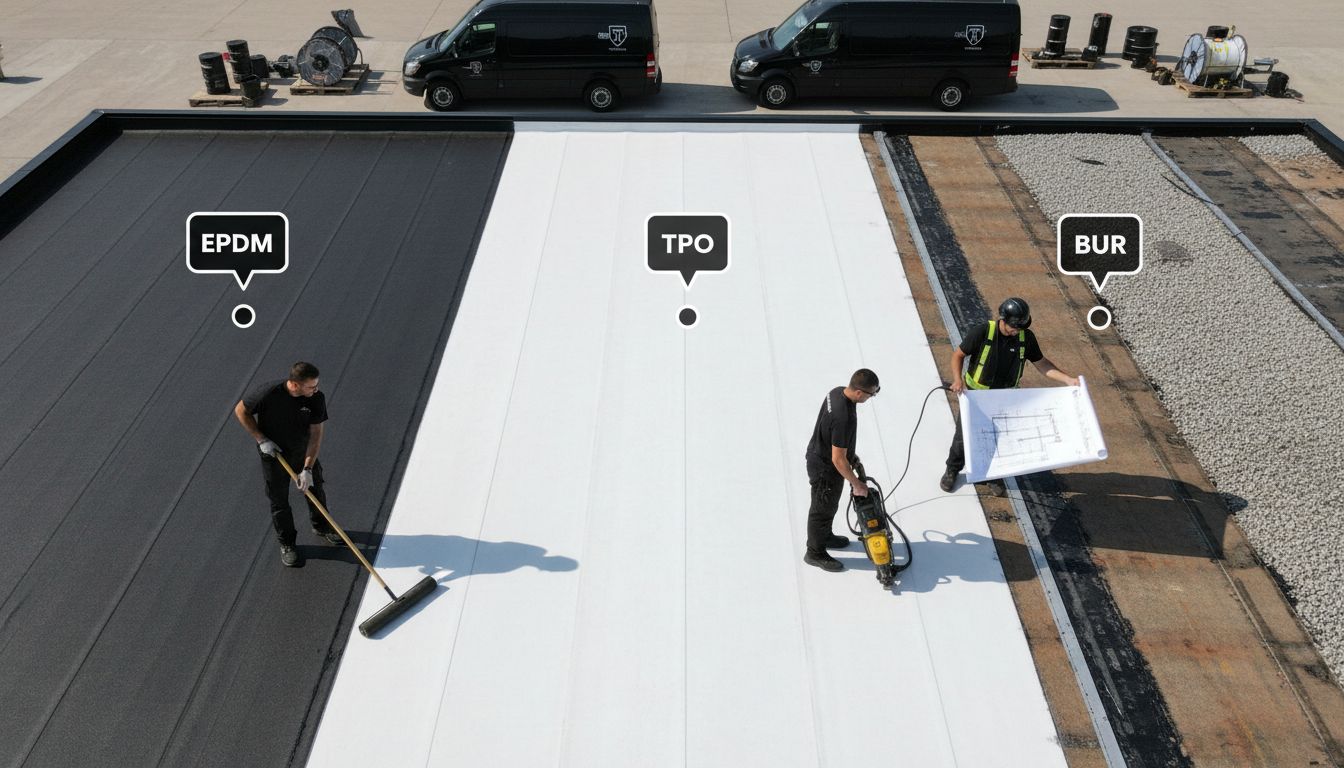
Built-Up Roofing (BUR) remains one of the most traditional flat roofing systems. This method involves layering multiple waterproof materials, typically alternating bitumen and reinforcing fabrics, to create a durable protective membrane. Cool Roof Rating Council research highlights that these systems are particularly effective for buildings requiring robust weather resistance.
Other prominent flat roofing materials include:
- Single-Ply Membranes: Including EPDM, TPO, and PVC
- Modified Bitumen: A more modern evolution of traditional BUR
- Fluid-Applied Roofing: Seamless systems providing excellent waterproofing
- Metal Roofing: Increasingly popular for commercial and industrial applications
Choosing the right roofing material depends on factors like climate, building usage, budget, and long-term performance expectations.
 For a comprehensive breakdown of your options, check out our 7 Essential Flat Roofing Types for Your Property guide, which can help you make an informed decision tailored to your specific needs.
Key Steps in Routine Roof Upkeep
Maintaining a flat roof requires a proactive and systematic approach to prevent potential damage and extend its lifespan. According to the U.S. Forest Service, routine maintenance is crucial for preserving the integrity of your roofing system and avoiding costly repairs.
Regular inspections form the cornerstone of effective flat roof maintenance. InterNACHI recommends conducting thorough visual examinations at least twice a year, with additional checks after severe weather events. During these inspections, property owners should look for key indicators of potential issues:
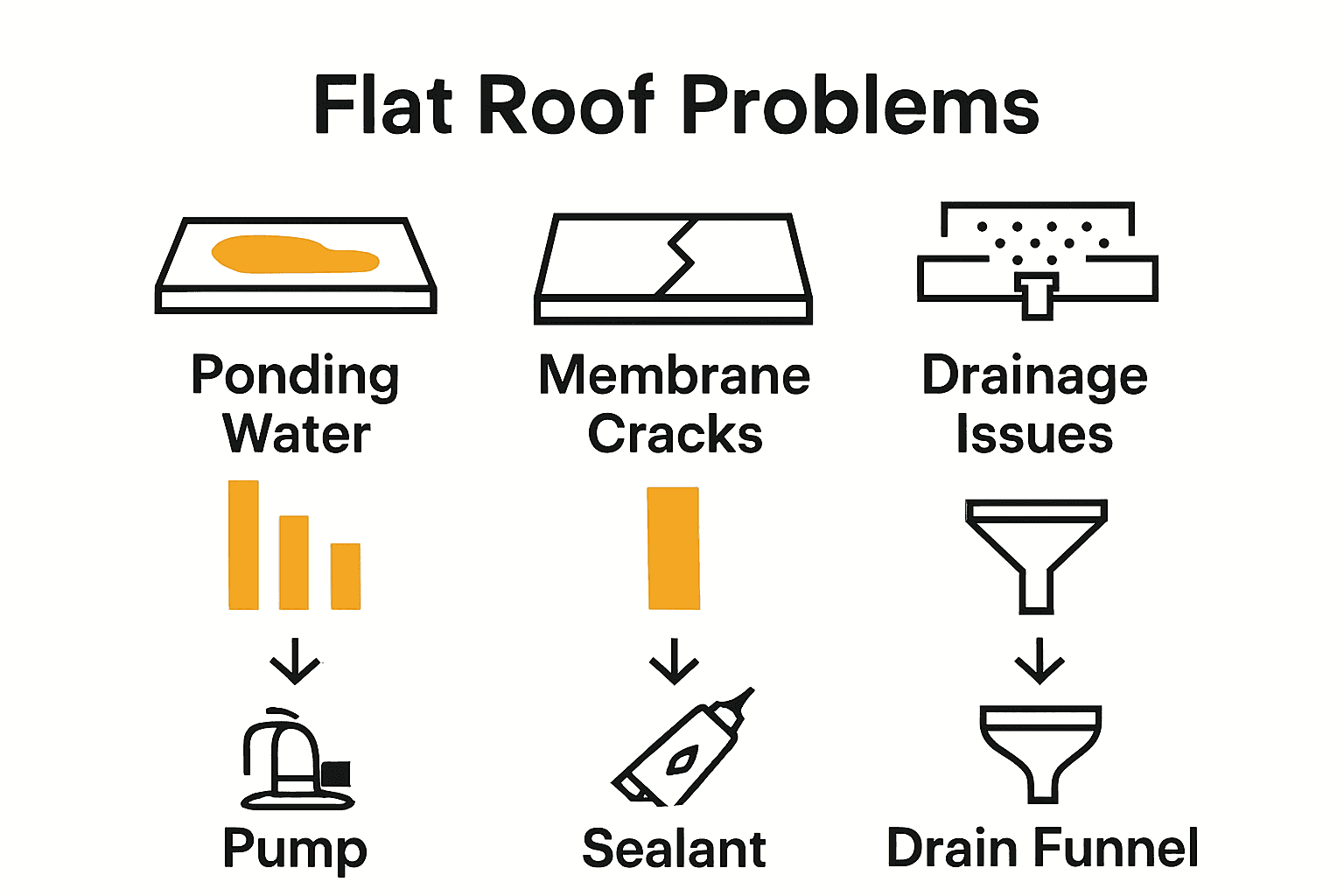
- Ponding water or unusual moisture accumulation
- Membrane cracks or surface deterioration
- Loose or damaged flashing
- Debris buildup that could impede drainage
- Signs of material shrinkage or separation
Cleaning and debris removal are equally critical components of routine maintenance.
Removing leaves, branches, and other organic materials prevents water retention and potential structural damage. For comprehensive guidance on extending your roof’s longevity, explore our how to extend roof lifespan guide, which offers detailed insights into professional maintenance strategies.
Common Flat Roof Problems and Solutions
Flat roofs are susceptible to a variety of challenges that can compromise their structural integrity and performance. According to the General Services Administration, environmental factors play a significant role in roof deterioration, with sun exposure and water infiltration being primary culprits of potential damage.
Drainage issues represent one of the most critical problems for flat roofing systems. InterNACHI highlights that improper drainage can lead to ponding water, which causes multiple complications:
- Accelerated material degradation
- Increased risk of membrane punctures
- Structural stress and potential leaks
- Potential roof collapse under extreme weight
- Faster aging of roofing materials
Mitigating these challenges requires proactive solutions such as installing proper drainage systems, applying protective coatings, and conducting regular inspections.
 Property owners can prevent extensive damage by addressing minor issues early. For a comprehensive breakdown of leak prevention and repair strategies, check out our guide to why flat roofs leak, which provides in-depth insights into managing and preventing common roofing problems.
Costs, Risks, and Hiring Professionals
Flat roof maintenance and replacement involve significant financial considerations and potential risks that property owners must carefully evaluate. According to Remodeling Costs, the expenses associated with flat roof projects can vary dramatically based on multiple factors, including materials, roof size, and complexity of installation.
Cost Breakdown typically encompasses several key elements. Remodeling Calculator suggests that property owners should anticipate expenses across different categories:
- Material Costs: Ranging from $4 to $15 per square foot
- Labor Expenses: Often 50-70% of total project budget
- Additional Repairs: Potential structural reinforcement costs
- Removal of Existing Roofing: Extra charges for debris disposal
- Warranty and Professional Services: Long-term protection investments
Minimizing risks requires strategic decision-making, particularly when selecting roofing professionals. Critical considerations include verifying contractor credentials, checking comprehensive insurance coverage, and requesting detailed written estimates. For those seeking expert guidance through this complex process, our Flat Roof Repair 101 guide offers invaluable insights into making informed roofing decisions.
Protect Your Flat Roof with Expert Care from Liberty Roofworks
Flat roofs face unique challenges like ponding water, membrane cracks, and damage from temperature changes. These issues can lead to costly repairs or even premature roof replacement if not addressed early. The article highlights how regular inspections and proper maintenance are vital for extending your roof’s lifespan and preventing leaks. We understand that worrying about your commercial or residential flat roof can be stressful—your property deserves reliable protection you can trust.
At Liberty Roofworks, we specialize in flat roof repair and installation services using materials like TPO and EPDM to ensure your roof stays durable and weather-resistant. Whether you need help with routine maintenance or a full roof replacement, our experienced team in Charlotte, NC is ready to provide top quality service tailored to your needs. Don’t wait until small problems become big expenses. Visit Liberty Roofworks today, explore our Flat Roof Repair 101 guide, and get expert assistance that keeps your flat roof performing at its best.
Frequently Asked Questions
What are the main types of flat roofing materials?
The primary types of flat roofing materials include Built-Up Roofing (BUR), Single-Ply Membranes (such as EPDM, TPO, and PVC), Modified Bitumen, Fluid-Applied Roofing, and Metal Roofing. Each material offers unique advantages based on climate, building usage, and budget.
How often should I inspect my flat roof?
It is recommended to conduct routine inspections at least twice a year and after severe weather events to check for signs of damage, such as ponding water, membrane cracks, and debris buildup.
What are common problems associated with flat roofs?
Common problems include drainage issues leading to ponding water, membrane punctures, structural stress from debris accumulation, and deterioration from environmental factors like sun exposure and water infiltration.
How can I extend the lifespan of my flat roof?
To extend your flat roof’s lifespan, implement regular inspections, promptly repair minor issues, keep the roof clean by removing debris, and ensure proper drainage systems are installed to prevent standing water.
Recommended