Over 40 percent of flat roofs in American commercial buildings face serious issues within just one year of installation, showing how widespread roof leaks have become. Addressing leaks is not just about stopping a drip above your head. These hidden problems jeopardize both your property’s safety and your family’s comfort, with moisture traveling quietly across insulation and beams before you ever see a stain. Understanding the real risks and misconceptions means you can spot early warning signs and protect your investment before water damage takes over.
Table of Contents
- Defining Roof Leaks And Common Misconceptions
- Major Causes Of Residential Roof Leaks
- Roof Leaks In Commercial Buildings Explained
- How Weather And Environment Affect Roof Integrity
- Warning Signs And Early Detection Methods
- Preventing And Managing Roof Leak Issues
Key Takeaways
| Point | Details |
|---|---|
| Understanding Roof Leaks | Roof leaks can be complex, often not immediately visible, requiring proactive maintenance to prevent significant damage. |
| Causes of Roof Leaks | Common causes include defective flashing, clogged downspouts, and extreme weather conditions, which exacerbate existing vulnerabilities. |
| Environmental Impact | Weather and environmental factors, such as persistent moisture and temperature fluctuations, contribute to roof deterioration over time. |
| Preventative Strategies | Regular inspections, timely repairs, and a comprehensive maintenance plan are crucial for safeguarding against potential leaks and structural damage. |
Defining Roof Leaks and Common Misconceptions
A roof leak represents any unintended water penetration through your home’s roofing system, compromising its structural integrity and potentially causing significant damage. According to research from the University of Wisconsin Extension, roof leaks are complex issues that extend far beyond simple water dripping from a ceiling.
Contrary to popular belief, roof leaks are not always immediately visible or located directly above the water stain. As University of Wisconsin Extension researchers explain, water can travel considerable distances through roofing materials, insulation, and structural elements before manifesting as a noticeable interior water spot. This unpredictable water migration means homeowners might discover leak damage long after the initial water intrusion begins.
The International Journal of Engineering Research & Technology highlights that roof leaks represent more than mere structural problems. These vulnerabilities can lead to multiple consequential issues, including:
- Increased energy consumption
- Potential mold and mildew growth
- Compromised building structural integrity
- Health risks associated with moisture-related environmental changes
- Potential electrical hazards from water infiltration
Understanding these nuanced aspects of roof leaks requires homeowners to adopt a proactive approach to roof maintenance and inspection. Understanding Why Repair Roof Leaks is Essential for Your Home provides comprehensive insights into recognizing and addressing potential roofing vulnerabilities before they escalate into significant problems.
Major Causes of Residential Roof Leaks
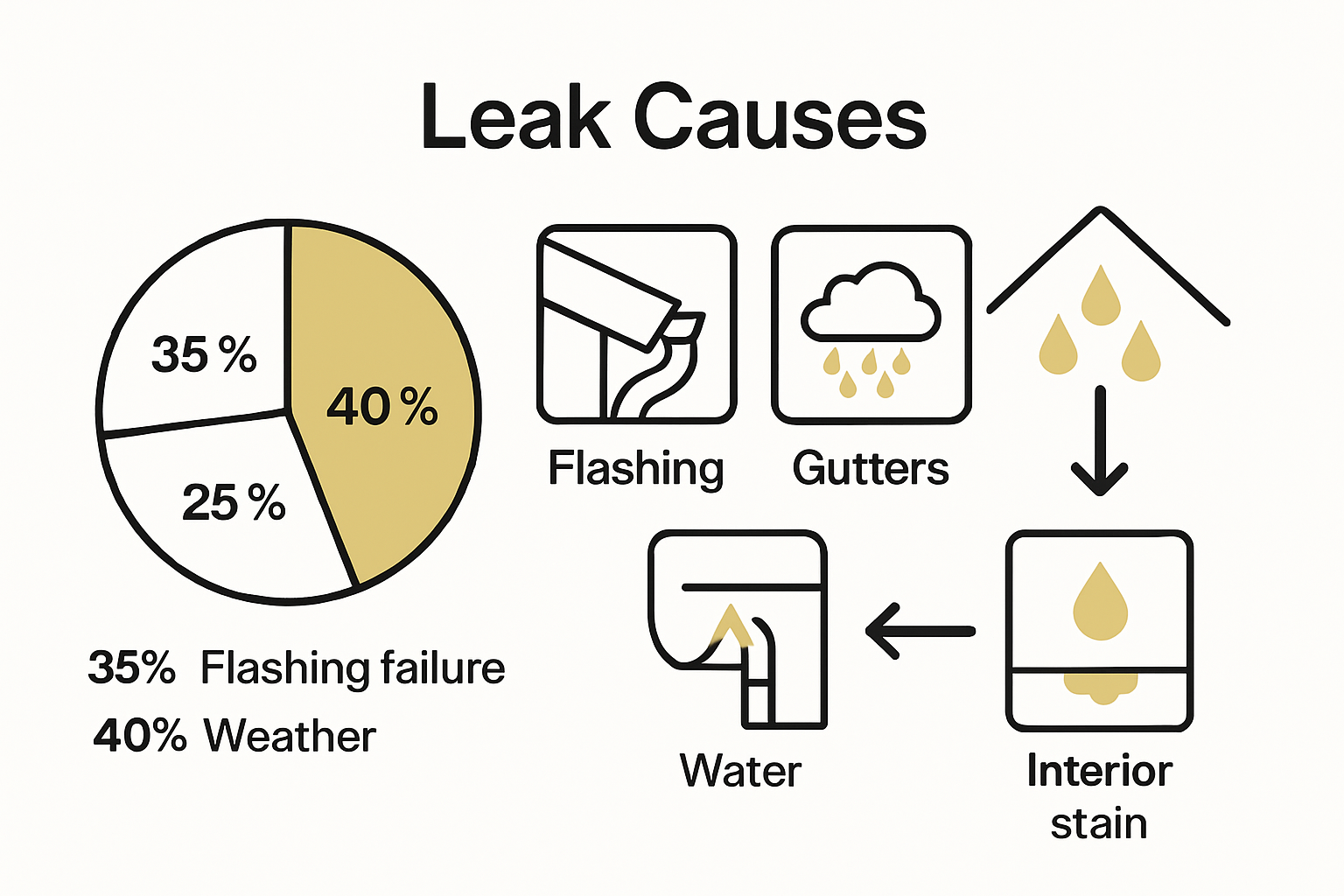
Residential roof leaks are complex problems with multiple potential origins. According to University of Wisconsin Extension, several primary factors contribute to water intrusion, including defective flashing, clogged downspouts, and deteriorated roofing materials. These vulnerabilities can transform a minor issue into a significant structural challenge if left unaddressed.
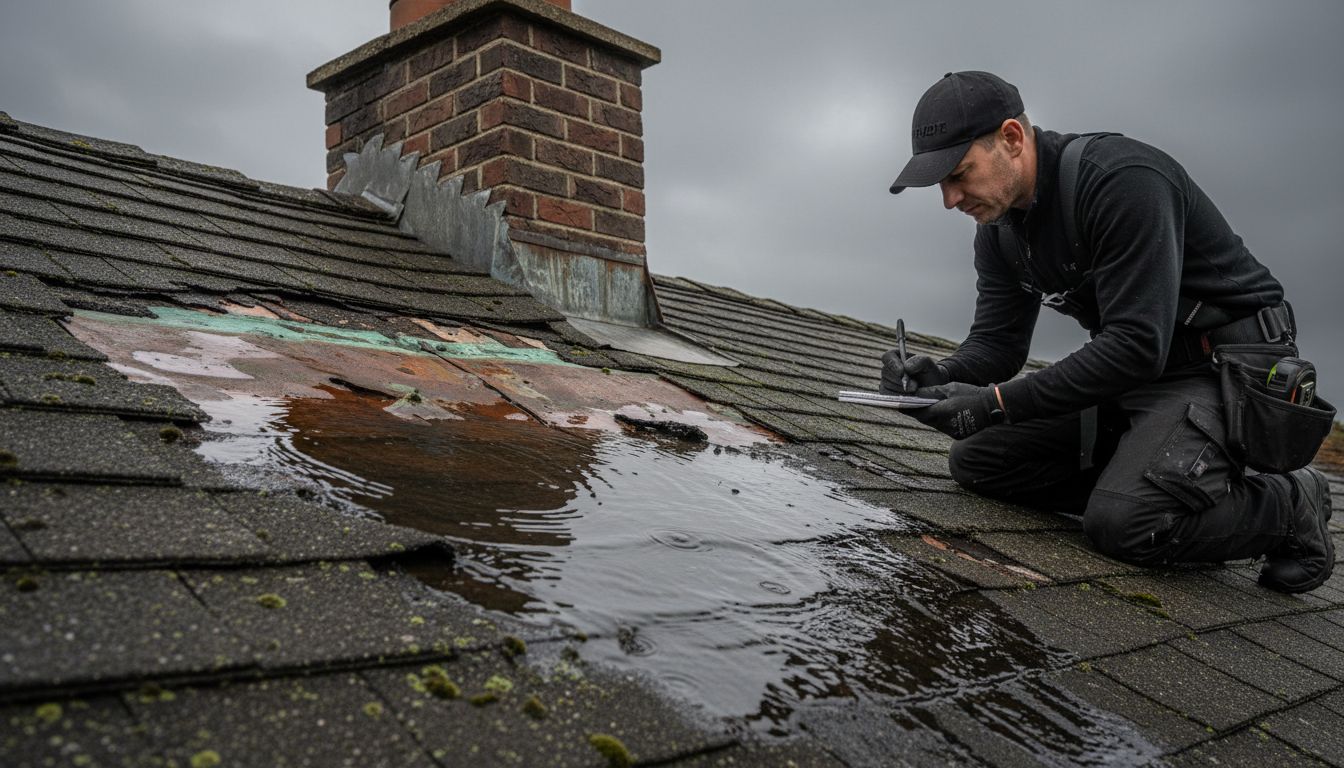
Wind and storm damage play a substantial role in roof leak development. University of Wisconsin Extension research indicates that extreme weather conditions can exacerbate existing roofing weaknesses, creating pathways for water penetration. Homeowners in regions with frequent severe weather must pay extra attention to their roof’s condition and conduct regular inspections.
The International Journal of Innovative Environmental Studies Research highlights additional critical causes of residential roof leaks:
- Damp external walls
- Failed gutters and downspouts
- Structural failures in roof infrastructure
- Defective flat roof designs
- Poor overall roof maintenance
Understanding these potential issues is crucial for proactive home maintenance.
The 7 Most Common Roof Leaks | Causes & How to Repair can provide homeowners with deeper insights into identifying and addressing these common roofing challenges before they escalate into costly repairs.
Roof Leaks in Commercial Buildings Explained
Commercial buildings face unique challenges when it comes to roof leaks, with complex structural systems that demand specialized understanding. According to the International Journal of Engineering Research & Technology, flat roofs are particularly vulnerable, with an alarming statistic revealing that 40% of flat roofs develop serious problems within just one year of installation. These issues often stem from improper installation, inadequate maintenance, and challenging environmental conditions.
Research from the Journal of the Faculty of Architecture, Silpakorn University emphasizes that roof leak risks in commercial settings are significantly influenced by several critical factors:
- Overall roof age
- Quality of initial workmanship
- Consistency of maintenance practices
- Environmental exposure
- Structural design integrity
Proactive maintenance emerges as a key strategy for mitigating potential roof leak risks. The study highlights that businesses implementing rigorous, systematic maintenance policies can dramatically reduce the likelihood of water intrusion and subsequent structural damage. Understanding these nuanced risk factors allows building managers to develop targeted prevention strategies.
For businesses seeking comprehensive insights into managing commercial roof challenges, Understanding Common Commercial Roof Problems Explained offers an in-depth exploration of potential issues and strategic solutions tailored to commercial property needs.
How Weather and Environment Affect Roof Integrity
Weather conditions represent a significant and often underestimated threat to roof structural integrity. According to the University of Wisconsin-Extension, storms and wind can cause extensive roof damage, creating vulnerable entry points for water intrusion. One particularly insidious winter phenomenon involves ice accumulations on roof eaves, which can form rigid ridges that force melting snow to back up underneath shingles, compromising the roof’s protective barrier.
The International Journal of Innovative Environmental Studies Research highlights additional environmental factors that contribute to roof deterioration:
- Persistent moisture exposure
- Extreme temperature fluctuations
- Damp external wall conditions
- Inadequate drainage systems
- Prolonged UV radiation
Environmental stress compounds over time, gradually weakening roofing materials and creating microscopic vulnerabilities. Homeowners must recognize that environmental conditions do not simply damage roofs overnight, but through a cumulative process of gradual degradation. Regular inspections and proactive maintenance become crucial strategies for mitigating these long-term environmental challenges.
For homeowners seeking deeper insights into protecting their roofs from environmental threats, 7 Common Causes of Roof Damage Every Homeowner Should Know provides comprehensive guidance on identifying and preventing potential roof vulnerabilities before they escalate into significant structural issues.
Warning Signs and Early Detection Methods
Detecting roof leaks early can save homeowners thousands in potential repair costs. University of Wisconsin-Extension recommends vigilant monitoring, specifically highlighting critical areas prone to water intrusion such as wet spots near chimneys, outside walls, and areas around flashing. These seemingly minor indicators often signal more significant underlying structural vulnerabilities that demand immediate attention.
Advanced detection technologies offer homeowners sophisticated methods for identifying potential roof issues. The International Journal of Engineering Research & Technology recommends non-destructive leakage detection techniques, including:
- Infrared sensor scanning
- Moisture mapping technologies
- Thermal imaging analysis
- Acoustic emission testing
- Digital roof surface evaluation
Homeowners should conduct systematic visual inspections to catch potential problems before they escalate. Watch for warning signs like discolored ceiling patches, musty odors, peeling paint near roofline edges, and unexplained water stains. These subtle indicators often precede more extensive water damage and can help prevent costly structural repairs.
For comprehensive guidance on identifying and addressing potential roof vulnerabilities, Understanding Why Storm Damage Repairs Are Essential provides homeowners with actionable insights into protecting their most significant investment.
Preventing and Managing Roof Leak Issues
Preventative maintenance stands as the most effective strategy for protecting your home from potential roof damage. University of Wisconsin-Extension strongly recommends proactive roof care, which includes systematically replacing missing shingles, repairing small holes, and addressing cracks before they develop into significant structural vulnerabilities. Timely interventions can mean the difference between minor repairs and extensive, costly roof replacements.
Research from the Journal of the Faculty of Architecture, Silpakorn University emphasizes that consistent maintenance policies dramatically reduce the likelihood of roof leaks. Homeowners should implement a comprehensive roof management strategy that includes:
- Biannual professional roof inspections
- Prompt repair of identified damage
- Clearing debris from roof surfaces
- Checking and maintaining proper attic ventilation
- Monitoring and addressing potential water drainage issues
Understanding that prevention requires both vigilance and strategic action, homeowners must approach roof maintenance as an ongoing process. Small investments in regular maintenance can prevent exponentially more expensive repairs and protect the overall structural integrity of your home.
For homeowners seeking comprehensive guidance on maintaining their roof’s health, Understanding Preventative Roofing Maintenance for Your Home offers detailed insights into creating an effective, long-term roof care strategy.
Protect Your Home by Tackling Roof Leaks Early
Roof leaks can cause far more damage than just a simple drip. As the article explains, unseen water intrusion risks your home’s structure, energy efficiency, and even your health. If you are noticing warning signs like ceiling stains or musty odors, you cannot afford to wait. Whether your roof needs a minor repair or a full replacement, addressing leaks quickly is essential to avoid costly, extensive damage.
At Liberty Roofworks, we specialize in both Residential Roof Repair and Storm Damage Repair ensuring your home stays safe, dry, and protected. Our expert team in Charlotte, NC, is ready to help you with proactive maintenance and reliable repairs using top-quality materials. Don’t let small leaks turn into serious problems. Visit Liberty Roofworks today to schedule your inspection and keep your roof in excellent condition before the next storm arrives.
Frequently Asked Questions
What are the common causes of roof leaks?
Common causes of roof leaks include defective flashing, clogged downspouts, deteriorated roofing materials, wind and storm damage, damp external walls, failed gutters, structural failures, defective flat roof designs, and inadequate maintenance.
How can I detect a roof leak early?
To detect a roof leak early, monitor critical areas prone to water intrusion such as near chimneys, outside walls, and around flashing. Look for warning signs like wet spots, discolored ceiling patches, musty odors, and peeling paint near the roofline.
What preventive measures can I take to avoid roof leaks?
Preventive measures include conducting systematic maintenance like replacing missing shingles, repairing small holes, clearing debris, performing regular inspections, ensuring proper attic ventilation, and monitoring drainage issues.
How does weather contribute to roof leaks?
Weather conditions, such as storms and wind, can create entry points for water intrusion. Ice accumulations in winter and persistent moisture exposure can gradually weaken roofing materials and lead to leaks over time.