Over 70 percent of roof damage claims are linked to water accumulation, yet many property owners underestimate the risks of roof ponding. When water lingers on your roof, it weakens materials and can threaten the entire structure of your building. Separating fact from myth about roof ponding helps you avoid expensive repairs and ongoing maintenance headaches while protecting the long-term value of your property.
Table of Contents
- Defining Roof Ponding And Common Misconceptions
- Causes And Types Of Roof Ponding Issues
- How Roof Ponding Affects Residential And Commercial Roofs
- Identifying Signs And Assessing Ponding Damage
- Risks, Safety Concerns, And Financial Impact
- Prevention Strategies And Repair Solutions
Key Takeaways
| Point | Details |
|---|---|
| Understanding Roof Ponding | Roof ponding is the prolonged accumulation of water on flat or low-slope roofs, leading to material deterioration and structural issues. |
| Common Misconceptions | Standing water does not simply evaporate, and consistent ponding indicates serious underlying drainage problems. |
| Impact on Roof Integrity | Ponding can result in increased structural stress, accelerated material deterioration, and higher repair costs for both residential and commercial roofs. |
| Prevention and Repair Strategies | Effective prevention involves maintaining proper roof slope, regular debris removal, and conducting professional assessments for long-term solutions. |
Defining Roof Ponding and Common Misconceptions
Roof ponding is the unwanted accumulation of water on a roof surface, typically occurring on flat or low-slope roofing systems. According to Wikipedia, ponding is a serious issue that accelerates material deterioration and can lead to significant structural problems.
Contrary to popular belief, roof ponding is not just a temporary inconvenience. Water that remains stagnant on a roof for extended periods creates multiple risks. Some homeowners mistakenly think that water will simply evaporate without causing damage. However, as research indicates, even brief periods of water pooling can compromise roof integrity. The persistent moisture breaks down roofing materials, creates additional weight stress, and increases the likelihood of leaks.
Several key misconceptions exist about roof ponding that property owners should understand:
- Water Will Eventually Evaporate: This myth is dangerous. Standing water doesn’t quickly disappear and can cause permanent damage.
- All Roofs Handle Water Equally: Different roofing materials respond differently to prolonged water exposure.
- Ponding is Normal: While some water retention might seem typical, consistent ponding signals serious drainage problems.
Understanding these nuances is crucial for protecting your property. What is Ponding Water? Understanding Its Impact provides more in-depth insights into recognizing and addressing roof ponding challenges before they escalate into expensive repairs.
Causes and Types of Roof Ponding Issues
Roof ponding occurs through multiple complex mechanisms that can compromise your roofing system’s structural integrity. According to Deschutes Roofing, primary causes include improper roof slope, clogged drainage systems, damaged roofing materials, and debris accumulation.
The types of roof ponding are diverse and often interconnected. New England Metal Roof highlights that chronic ponding typically results from a combination of factors rather than a single issue. These can range from structural problems like deck movement to more manageable concerns like inadequate drainage design.
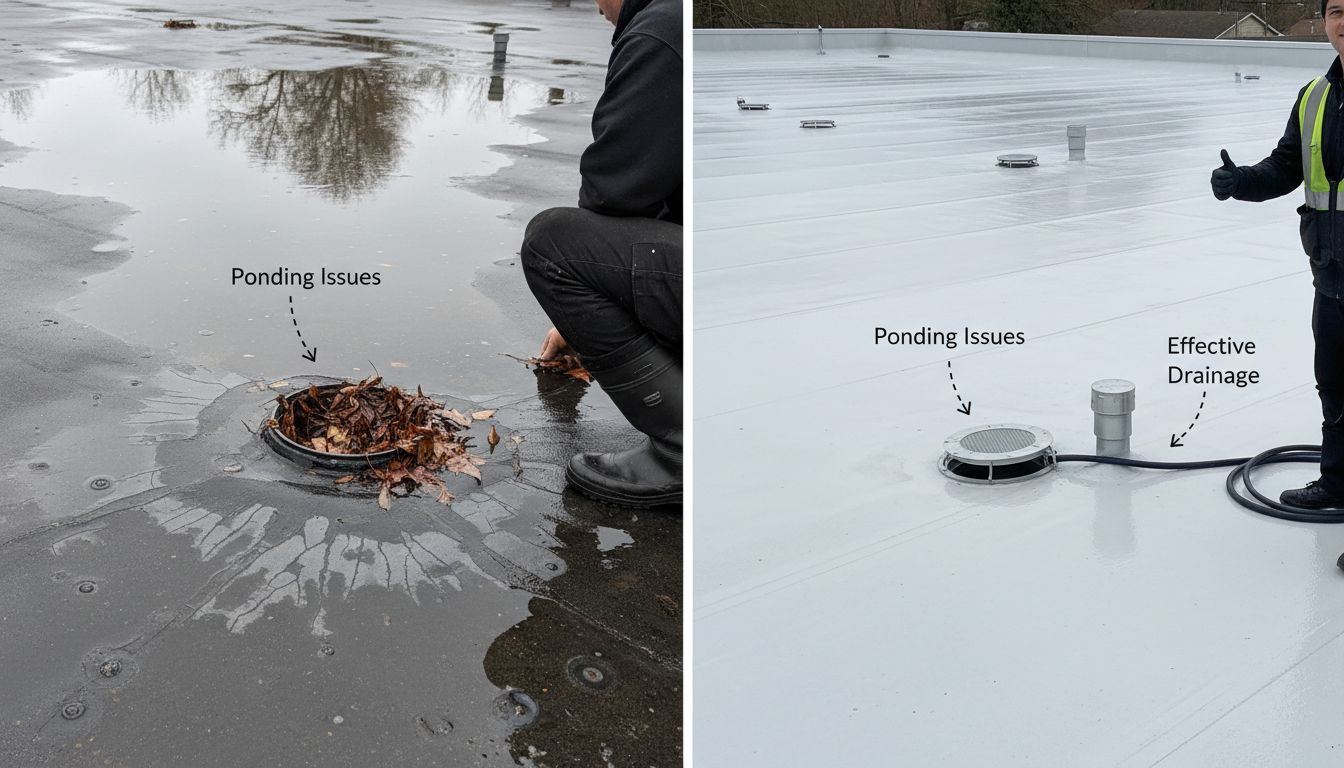
Key types of roof ponding include:
- Structural Ponding: Caused by roof deck sagging or uneven surfaces that prevent proper water runoff
- Drainage-Related Ponding: Result of blocked or undersized drainage systems
- Material-Induced Ponding: Occurs when roofing materials degrade and create uneven surfaces
- Debris-Driven Ponding: Accumulation of leaves, branches, and other materials blocking natural water flow
Understanding these variations is crucial for effective roof maintenance. Understanding the Role of Roof Drainage Systems can provide homeowners with deeper insights into preventing these complex ponding scenarios before they escalate into significant structural challenges.
How Roof Ponding Affects Residential and Commercial Roofs
Roof ponding creates significant challenges for both residential and commercial properties, impacting the structural integrity and longevity of roofing systems. While residential and commercial roofs share similar vulnerabilities, the scale and consequences of water accumulation can differ dramatically depending on the building type and roofing materials.
Residential roofs typically experience ponding issues due to localized problems like improper installation, minor structural shifts, or debris accumulation. Homeowners might notice subtle signs of damage such as water stains, minor sagging, or gradual material deterioration. These issues can compromise roof insulation, create potential entry points for leaks, and accelerate the breakdown of roofing materials.
Commercial roofs face more extensive risks from ponding water. Large flat or low-slope surfaces common in industrial and commercial buildings are particularly susceptible to chronic water retention. The potential damage extends beyond simple material degradation to include:
- Increased structural stress on load-bearing components
- Accelerated membrane deterioration
- Higher risk of comprehensive water damage
- Potential compromise of building insulation systems
- Reduced overall roof lifespan
Understanding Common Commercial Roof Problems Explained provides deeper insights into how these complex roofing challenges can impact building maintenance and long-term structural integrity. Proactive assessment and timely intervention remain the most effective strategies for mitigating ponding-related risks across both residential and commercial roofing systems.
Identifying Signs and Assessing Ponding Damage
Roof ponding damage manifests through a variety of subtle and significant indicators that homeowners and property managers must vigilantly monitor. Early detection is critical in preventing extensive structural deterioration and costly repairs.
Visual signs of ponding damage can be categorized into immediate and progressive indicators. Immediate signs include visible water accumulation lasting more than 48 hours, discoloration around roof surfaces, and noticeable sagging or depression in specific roof areas. Progressive indicators are more insidious and develop over time, such as:
- Membrane Blistering: Bubbling or raised areas in roofing materials
- Surface Cracking: Developing fissures or splits in roofing membranes
- Material Degradation: Soft spots or weakened roofing surfaces
- Vegetation Growth: Moss or algae developing in persistent water retention zones
While visual inspection provides initial insights, professional assessment becomes crucial for comprehensive damage evaluation. 7 Signs You Need a Roof Inspection Soon offers homeowners additional guidance on recognizing when expert intervention becomes necessary. Professional roofers can employ specialized moisture detection equipment and thermal imaging to identify hidden damage that might escape untrained visual inspection.
Risks, Safety Concerns, and Financial Impact
Roof ponding presents a multifaceted threat that extends far beyond simple water accumulation. According to Asphalt Roofing, the adverse effects include structural deformation, surface damage, and the potential for accelerated material deterioration.
Safety risks are particularly alarming. Penn State Engineering warns that prolonged ponding can lead to structural deflection and potentially catastrophic roof collapse. The accumulation of water creates progressive stress that weakens critical load-bearing components, transforming what seems like a minor maintenance issue into a serious structural hazard.
The financial implications of roof ponding are substantial and multidimensional:
- Immediate Repair Costs: Ranging from $500 to $5,000 depending on damage extent
- Structural Reinforcement: Potential expenses of $10,000 to $50,000 for comprehensive repairs
- Property Value Reduction: Unaddressed ponding can decrease property value by up to 15%
- Insurance Complications: Potential policy cancellations or premium increases
- Potential Consequential Damages: Water intrusion leading to interior property damage
Understanding these complex risks requires professional insight.
INFOGRAPHIC:infographic_content] [7 Signs You Need a Roof Inspection Soon can help property owners recognize when expert evaluation becomes critically necessary to mitigate these potential financial and safety challenges.
Prevention Strategies and Repair Solutions
Roof ponding prevention requires a comprehensive, proactive approach to roof maintenance and design. According to Deschutes Roofing, effective strategies include ensuring proper roof slope, conducting regular debris removal, and promptly addressing structural issues that contribute to water accumulation.
Repair solutions are diverse and depend on the specific underlying causes of ponding. DC Taylor recommends several targeted interventions that can mitigate water retention problems:
- Drainage System Enhancement: Installing additional drains at low points
- Structural Corrections: Adjusting roof slope to improve water runoff
- Material Interventions: Using self-leveling compounds to fill shallow ponding areas
- Regular Maintenance: Implementing routine roof inspections and cleaning protocols
- Professional Assessment: Conducting comprehensive evaluations to identify root causes
Understanding Preventative Roofing Maintenance for Your Home can provide homeowners with deeper insights into protecting their roofing investment. Professional intervention remains the most reliable method for developing a tailored strategy that addresses the unique characteristics of your specific roofing system.
Protect Your Roof from Ponding Damage with Expert Care
Roof ponding is more than just standing water. It can lead to serious problems like material deterioration, structural stress, and costly leaks if left unaddressed. If you have noticed water pooling or signs such as sagging or membrane blistering on your roof, it is crucial to act quickly. At Liberty Roofworks, we understand the hidden dangers ponding water poses to both residential and commercial roofs. Our team specializes in repairs and maintenance that tackle the root causes of ponding by improving drainage, reinforcing structures, and restoring roofing materials.
Don”t let ponding water threaten your home or business. Trust a roofing company that goes the extra mile to deliver lasting results. Whether you need a simple roof repair, a full replacement, or preventive maintenance, we provide tailored solutions that protect your investment and peace of mind. Explore how our Residential Roof Repair & Replacements and Commercial Roof Installations can help stop ponding issues before they escalate.
Take control of your roof”s health today. Visit Liberty Roofworks to schedule your inspection and secure expert help that you can rely on. Don`t wait until ponding water causes expensive damage. Get the professional support you need now.
Frequently Asked Questions
What is roof ponding?
Roof ponding is the accumulation of water on a roof surface, especially in flat or low-slope roofing systems, which can lead to material deterioration and structural issues.
What are the common causes of roof ponding?
Common causes of roof ponding include improper roof slope, clogged drainage systems, damaged roofing materials, and debris accumulation that prevents water runoff.
How can I identify if my roof has ponding issues?
Indicators of roof ponding include visible water accumulation lasting more than 48 hours, discoloration or sagging areas, membrane blistering, surface cracking, and vegetation growth in persistent water retention zones.
What are effective prevention strategies for roof ponding?
Effective prevention strategies include ensuring proper roof slope, conducting regular debris removal, enhancing drainage systems, and implementing routine roof inspections and maintenance.
Recommended