Over 60 percent of flat commercial roofs in the United States now use EPDM roofing systems for their proven durability and weather resistance. Property owners face big decisions when it comes to long-term protection and maintenance, especially since a single overlooked issue can spiral into expensive repairs. Understanding EPDM’s unique structure, common vulnerabilities, and essential care steps gives you the confidence to protect your investment and avoid costly surprises down the line.
Table of Contents
- Understanding EPDM Roofing Systems
- Common Types of EPDM Roof Damage
- Essential Tools and Repair Materials
- Step-by-Step EPDM Repair Process
- Safety Precautions and Mistakes to Avoid
Key Takeaways
| Point | Details |
|---|---|
| Durability and Benefits | EPDM roofing systems offer exceptional UV resistance, flexibility, and low maintenance, making them ideal for flat and low-slope applications. |
| Types of Damage | Common EPDM roof damage includes membrane shrinkage, seam separation, and UV degradation, each requiring timely inspection and repair to prevent escalation. |
| Repair Process | Effective EPDM repair involves a systematic approach including surface inspection, cleaning, and patch application to ensure long-lasting results. |
| Safety First | Always prioritize safety by using proper personal protective equipment and adhering to best practices during roof repairs to prevent accidents and injuries. |
Understanding EPDM Roofing Systems
EPDM (Ethylene Propylene Diene Monomer) roofing is a synthetic rubber membrane designed specifically for flat and low-slope commercial and residential roofing applications. According to gsa.gov, these roofing systems are composed of synthetic rubber sheets that provide exceptional durability and weather resistance.
The core characteristics of EPDM roofing make it a popular choice for property owners seeking long-lasting roof protection. As homeinspector.org highlights, these roofing systems offer several distinctive advantages:
- Exceptional resistance to UV radiation
- Superior flexibility across temperature ranges
- Minimal maintenance requirements
- Excellent water and moisture barrier
- Relatively lightweight compared to other roofing materials
Understanding the composition of EPDM roofing helps property owners appreciate its technical sophistication. The membrane is typically manufactured in three primary thicknesses: 45 mil, 60 mil, and 90 mil, with each increment offering increased durability and longevity. Professional installation techniques are crucial to ensuring optimal performance, as the material’s effectiveness depends heavily on proper application and seam management.
While EPDM roofing represents an advanced solution for modern buildings, it requires specialized knowledge for proper maintenance and repair. Understanding its unique properties can help property owners make informed decisions about their roofing investments, balancing performance, cost-effectiveness, and long-term protection.
Common Types of EPDM Roof Damage
EPDM roof damage can manifest in several critical ways that compromise the integrity and performance of your roofing system. According to nist.gov, one of the most significant issues involves problems with roof seams, particularly disbonded areas around buckles and ripples that can dramatically impact overall roof performance.
The primary types of EPDM roof damage include:
- Membrane Shrinkage: As iibec.org explains, this occurs when the synthetic rubber membrane contracts, creating tension and potential structural weaknesses
- Seam Separation: Where the roof’s interconnected sections begin to pull apart
- Punctures and Tears: Physical damage from external impacts or environmental stress
- UV Degradation: Continuous sun exposure breaking down the membrane’s molecular structure
- Water Infiltration: Small gaps or cracks allowing moisture penetration
Understanding the nuanced nature of these damages requires recognizing their progressive potential. Roof damage often starts small but can quickly escalate into more significant structural issues if left unaddressed. Membrane shrinkage, for instance, creates microscopic stress points that gradually expand, potentially compromising the entire roofing system.
Professional assessment becomes crucial when identifying these damage types. While some issues might seem minor, they can represent complex underlying problems that require specialized repair techniques to prevent extensive and costly future renovations. Regular inspections and proactive maintenance remain the most effective strategies for preserving your EPDM roofing investment.

Essential Tools and Repair Materials
EPDM roof repair requires a specialized set of tools and materials that ensure precise and effective maintenance. According to homeinspector.org, professionals emphasize the importance of having the right equipment to address various types of membrane damage effectively.
The essential tools for EPDM roof repair include:
- Roofing Roller: For applying and smoothing patches
- Utility Knife: Sharp blade for precise cutting of membrane materials
- Cleaning Solvent: Specifically designed for EPDM surface preparation
- Measuring Tape: Ensuring accurate patch sizing
- Safety Harness: Critical for working on elevated surfaces
- Protective Gloves: Chemical-resistant hand protection
As rpm.rcabc.org highlights, the primary repair materials are equally crucial.
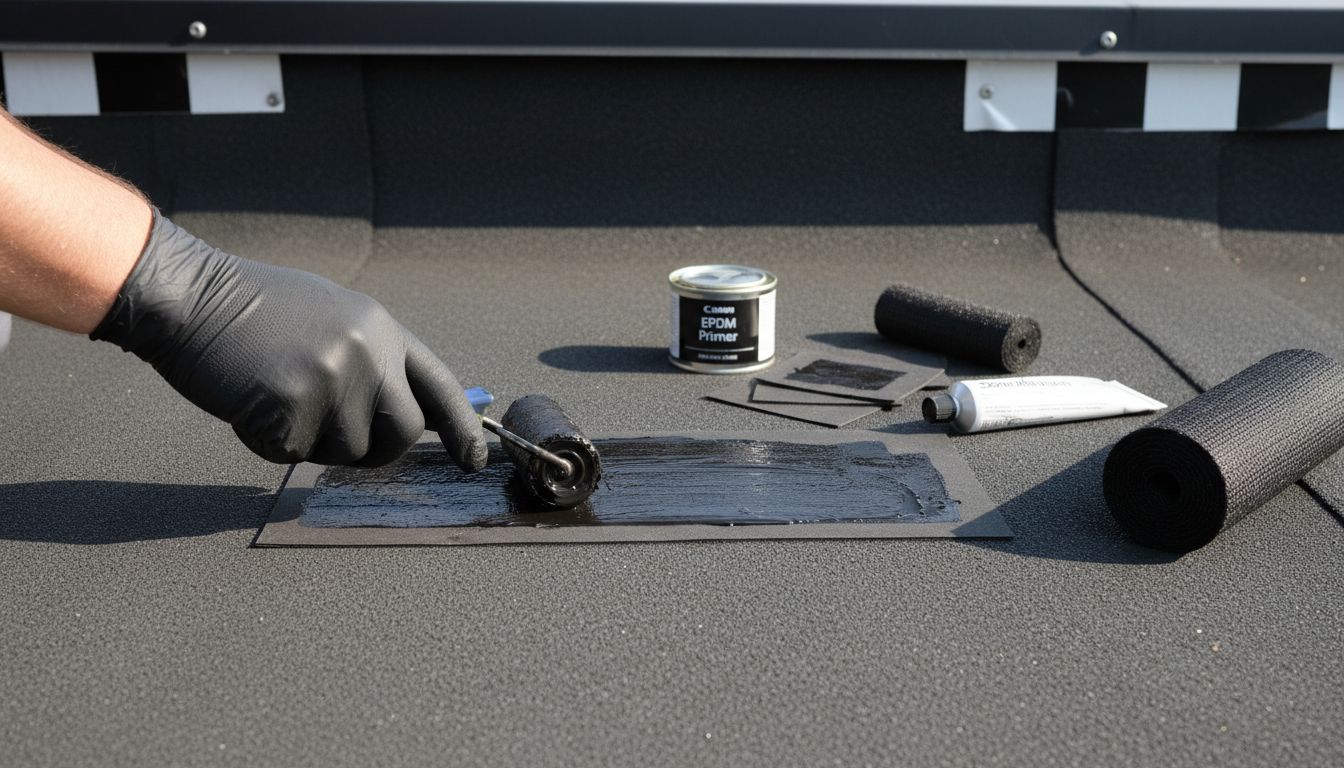 EPDM repair kits typically contain specialized components like:
- Synthetic rubber patch materials
- Primer solutions
- Seam adhesives
- Reinforcement fabrics
Professional-grade repair techniques demand precision and understanding of the membrane’s unique properties.
While DIY repairs might seem tempting, complex damage often requires specialized knowledge to prevent further deterioration. Improper application can lead to more extensive and costly repairs down the line, making professional assessment a wise investment for significant roof damage.
Step-by-Step EPDM Repair Process
EPDM roof repair requires meticulous attention to detail and a systematic approach to ensure long-lasting results. According to homeinspector.org, professional roof repair involves a comprehensive process that goes beyond simple patch application.
The repair process can be broken down into critical stages:
- Surface Inspection: Thoroughly examine the entire roof membrane for damage signs
- Cleaning Preparation: Remove debris, dirt, and ensure a completely dry surface
- Damage Assessment: Measure and mark the exact repair area
- Material Preparation: Cut appropriate patch size with extra margin
- Surface Priming: Apply specialized EPDM primer to ensure strong adhesion
- Patch Application: Carefully place and roll the patch
- Seam Sealing: Apply appropriate adhesive around patch edges
As rpm.rcabc.org highlights, the critical aspect of EPDM repair lies in understanding membrane characteristics and using precise techniques. Professional-grade emergency repair methods can prevent minor issues from escalating into major structural problems.
While the process might seem straightforward, each step requires careful execution. Rushing or skipping steps can compromise the roof’s integrity, potentially leading to more extensive and expensive damage. Homeowners should carefully evaluate their technical skills and comfort level, recognizing when professional intervention becomes necessary to protect their roofing investment.
Safety Precautions and Mistakes to Avoid
Roof repair safety is paramount when working with EPDM roofing systems. According to homeinspector.org, professional home inspectors emphasize that safety isn’t just about personal protection, but also about preventing structural damage during maintenance.
Key safety precautions include:
- Personal Protective Equipment (PPE): – High-grip safety shoes
- Hard hat
- Safety harness
- Chemical-resistant gloves
- Safety glasses
- Equipment Preparation: Ensure all tools are in excellent condition
- Weather Considerations: Avoid repairs during wet, windy, or extreme temperature conditions
- Ladder Safety: Use proper three-point contact method
- Work Area Preparation: Clear debris and create stable working zones
As asce.org highlights, common mistakes can transform a simple repair into a dangerous situation. These mistakes include:
- Ignoring structural load limits
- Using incorrect repair materials
- Skipping comprehensive surface inspection
- Working without proper fall protection
- Attempting repairs beyond personal skill level
Emergency repair methods suggest that while quick action is important, reckless intervention can cause more harm than good. Professional roofers understand that each repair carries inherent risks, requiring methodical approach, technical knowledge, and respect for safety protocols. When in doubt, consulting a professional isn’t just recommended – it’s a crucial step in protecting both personal safety and your roofing investment.
Protect Your Investment with Expert EPDM Roof Repair
If you are facing challenges like membrane shrinkage, seam separation, or punctures in your EPDM roofing system, you know how quickly these issues can escalate without the right care. This guide highlights the importance of precision in patch application and seam sealing to maintain your roof’s durability and avoid costly damages. At Liberty Roofworks, we understand the unique demands of EPDM roofing and are committed to delivering thorough repairs that restore your roof’s flexibility, water resistance, and long-term protection.
Don’t wait until small problems turn into major structural issues. Our team specializes in professional EPDM roofing repairs and understands every detail involved—from proper surface priming to emergency repair methods. Experience peace of mind with the best roofing solutions in Charlotte. Visit Liberty Roofworks to explore how we can help safeguard your home or business. Ready to get started? Contact us today for a skilled repair that ensures your roof performs better and lasts longer.
Frequently Asked Questions
What is EPDM roofing?
EPDM roofing, or Ethylene Propylene Diene Monomer roofing, is a synthetic rubber membrane designed for flat and low-slope roofing applications, known for its durability and weather resistance.
What are the advantages of using EPDM roofing?
EPDM roofing offers several benefits, including excellent UV resistance, flexibility across temperature ranges, low maintenance requirements, and a strong moisture barrier.
How do I repair an EPDM roof?
Repairing an EPDM roof involves a systematic process including surface inspection, cleaning, damage assessment, patch application, and seam sealing to ensure a durable and effective repair.
What tools do I need for EPDM roof repair?
Essential tools for EPDM roof repair include a roofing roller, utility knife, cleaning solvent, measuring tape, safety harness, and protective gloves.