Water spots on the ceiling or shingles slipping out of place can quickly make Charlotte homeowners worry about the next unexpected expense. Deciding between a full roof repair and a targeted patch is more than just a quick fix—it can protect your investment and stretch your budget in the long run. This guide will clarify the key differences between roof repair and patch solutions so you feel confident choosing the smartest and most cost-effective strategy for your home.
Table of Contents
- Defining Roof Repair and Roof Patch Solutions
- Key Differences: Scope, Materials, and Lifespan
- How to Decide: Common Scenarios for Homeowners
- Cost Implications and Insurance Considerations
- Risks of Choosing the Wrong Roof Solution
Key Takeaways
| Point | Details |
|---|---|
| Understanding Damage | Distinguish between roof repair for systemic issues and patching for localized damage to make the best choice. |
| Material Considerations | Ensure compatibility of materials used for repairs or patches to maintain the roof’s integrity and warranty. |
| Cost Evaluation | Weigh the initial costs of patches against potential long-term expenses of multiple repairs for informed financial decisions. |
| Professional Assessment | Schedule a roofing inspection to accurately assess damage before deciding on repairs or patches to avoid costly future problems. |
Defining Roof Repair and Roof Patch Solutions
When it comes to protecting your Charlotte home, understanding the nuanced differences between roof repair and roof patching can save you significant time and money. Roof repair and roof patching are two distinct strategies for addressing roof damage, each serving specific purposes in maintaining your roof’s structural integrity and performance.
A roof repair typically involves more comprehensive work addressing larger areas of damage or systemic issues within the roofing system. According to roofing standards and specifications, roof repairs often include replacing damaged sections, reinforcing structural elements, and resolving underlying moisture or structural problems. This approach goes beyond surface-level fixes, targeting root causes of roof deterioration.
In contrast, a roof patch represents a more targeted, localized solution focusing on smaller areas of damage. Patches are ideal for addressing specific issues like minor leaks, small punctures, or isolated wear spots. Professional roofers use specialized materials and techniques to create seamless patches that restore the roof’s protective capabilities without requiring full-scale replacement. These solutions are most effective when damage is limited and the overall roof structure remains sound.
Pro tip: Before deciding between a repair or patch, always have a professional roofing inspection to accurately assess the extent of damage and recommend the most cost-effective solution.
Here’s a comparison of roof repair and roof patch solutions to help guide your decision:
| Aspect | Roof Repair | Roof Patch |
|---|---|---|
| Typical Use | Addresses widespread or systemic issues | Targets small, isolated problem areas |
| Materials Used | Durable, multi-layered and comprehensive | Quick-seal, surface-specific materials |
| Expected Lifespan | Years to decades depending on scope | Months to a few years as a stopgap |
| Cost Implication | Higher up-front investment; longer-term savings | Lower initial cost, may lead to higher cumulative expenses |
| Insurance Impact | Often covered by insurance for major claims | May not qualify for significant insurance reimbursement |
Key Differences: Scope, Materials, and Lifespan
Understanding the key differences between roof repairs and patches requires a deep dive into their distinct characteristics, particularly regarding scope, materials, and long-term performance. These variations significantly impact the overall effectiveness and durability of your roofing solution in Charlotte’s challenging climate.
Scope is the most critical distinguishing factor between repairs and patches. Roofing life expectancy data reveals that comprehensive repairs address systemic issues across larger roof areas, while patches target specific, localized damage. A full repair might involve replacing multiple shingles, addressing underlying structural problems, or correcting drainage issues. Patches, conversely, focus on small, isolated areas typically less than one square foot, providing a quick, targeted solution for minor damage.
Material selection plays a crucial role in determining the effectiveness of repairs and patches. Professional roofers use specialized materials matched to your specific roof type – whether asphalt shingle, metal, or membrane roofing. Repair materials often include more robust options like full-sheet underlayment, multiple-layer patches, and advanced sealants that provide comprehensive protection. Patch materials tend to be more limited, focusing on immediate water resistance and temporary protection until a more comprehensive solution can be implemented.
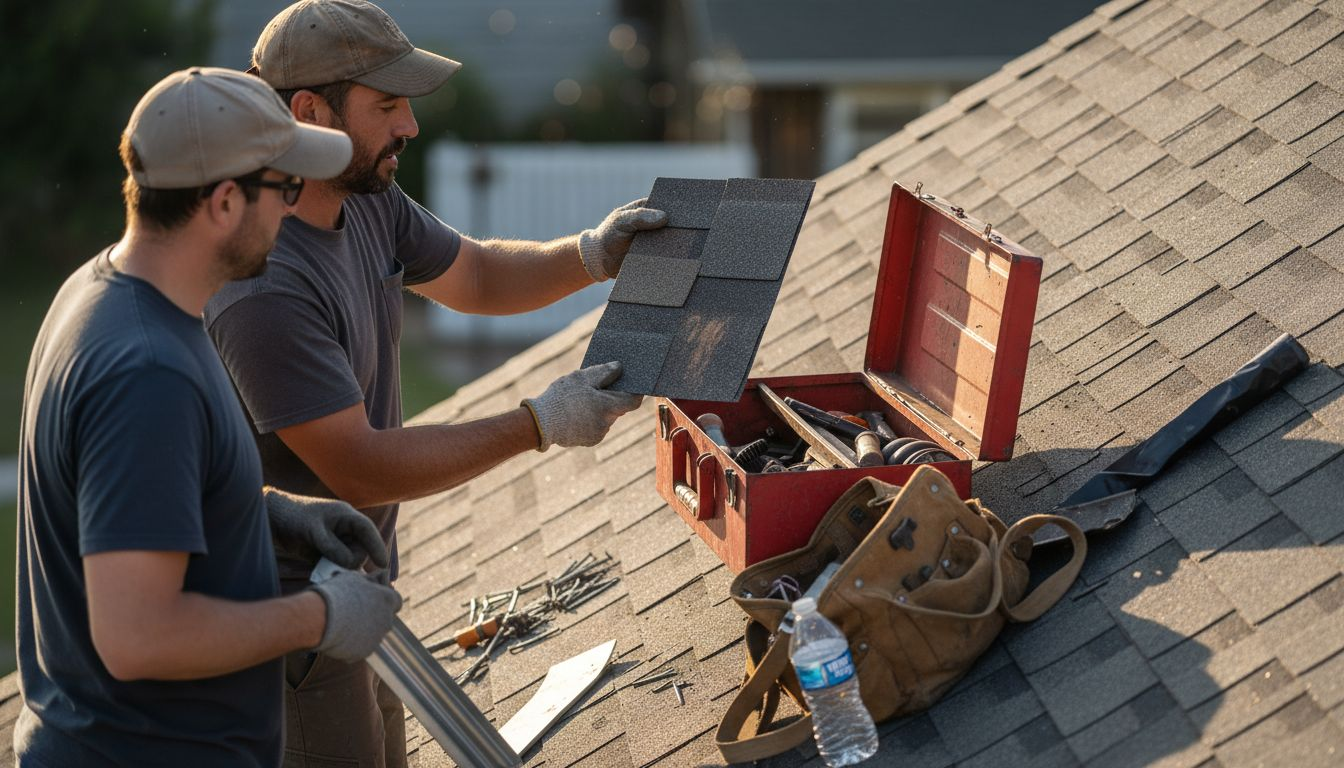
Pro tip: Always request material compatibility documentation from your roofing professional to ensure the repair or patch matches your specific roof system’s requirements and manufacturer specifications.
How to Decide: Common Scenarios for Homeowners
Making the right choice between a roof repair and a patch requires careful evaluation of your specific roofing situation. Homeowners in Charlotte face unique challenges when assessing roof damage, with several key scenarios determining the most appropriate course of action.
Roof damage assessment strategies reveal critical factors that help homeowners make informed decisions. Small, localized damage like a single missing shingle or a minor leak typically calls for a targeted patch. These quick fixes can extend your roof’s life without significant investment. However, when damage spans multiple areas, shows signs of recurring leaks, or indicates underlying structural issues, a comprehensive repair becomes necessary.
The age and overall condition of your roof play a pivotal role in determining the most cost-effective solution. Newer roofs within their warranty period might benefit from targeted patches, while older roofs showing widespread wear might require more extensive repairs. Consider factors like the number of damaged areas, the roof’s age, and the potential for future complications. Multiple small patches across an aging roof could signal that a full repair or replacement might be more economical in the long run.
Pro tip: Schedule a professional roof inspection before making any repair decisions, as expert assessment can reveal hidden damage and prevent costly future problems.
Below is a summary of key decision factors homeowners should weigh before choosing between a repair and a patch:
| Factor | When to Choose Repair | When to Choose Patch |
|---|---|---|
| Roof Age | Roof is over 10 years or past warranty | Roof is new or under warranty |
| Damage Extent | Multiple leaks, widespread issues | Single leak or minor damage |
| Future Risk | Potential for recurring issues | Limited risk of further damage |
| Structural Integrity | Signs of sagging, rot or weak spots | Structure intact, no underlying concerns |
Cost Implications and Insurance Considerations
Understanding the financial landscape of roof repairs and patches is crucial for Charlotte homeowners looking to make informed decisions while protecting their most significant investment. The cost dynamics between repairs and patches can significantly impact your long-term roofing strategy and budget planning.
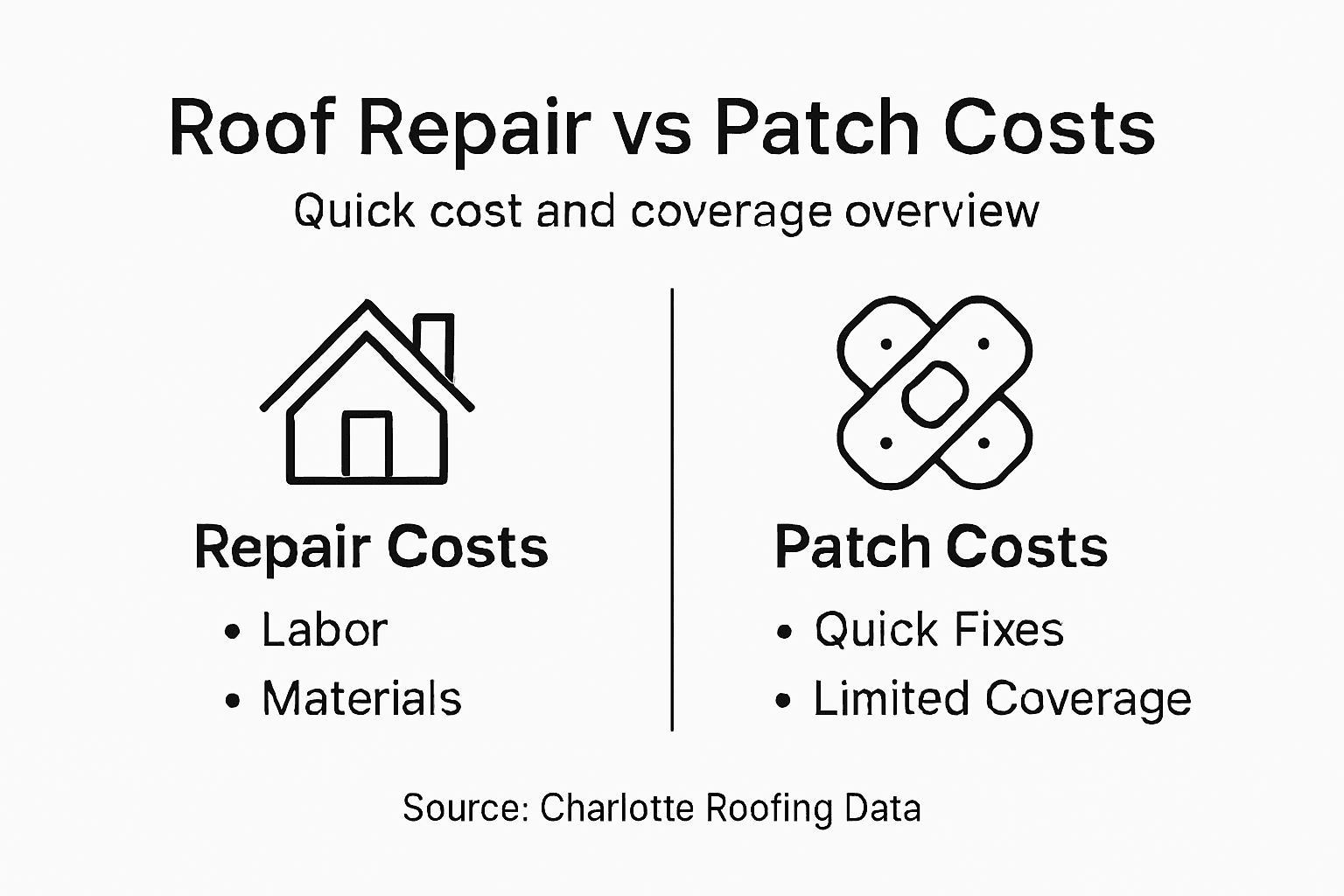
Homeowners insurance coverage details reveal complex considerations that dramatically influence repair costs. Insurance policies typically categorize roof damage under two primary frameworks: replacement cost coverage and actual cash value coverage. Replacement cost policies provide full repair or replacement expenses, while actual cash value policies factor in roof depreciation, potentially leaving homeowners with substantial out-of-pocket expenses. This means a patch might cost significantly less than a full repair, but the long-term protection and insurance implications vary widely.
The financial calculation extends beyond immediate repair costs. Homeowners must consider the potential cumulative expenses of multiple patches versus a comprehensive repair. Frequent small repairs can quickly exceed the cost of a more extensive solution, especially when factoring in potential water damage, structural integrity concerns, and future maintenance requirements. Professional roofers recommend evaluating the cost-effectiveness by considering the roof’s age, existing damage extent, and potential future repair needs.
Pro tip: Request detailed written estimates from roofing professionals that break down potential insurance coverage, out-of-pocket costs, and long-term maintenance implications before making your final repair decision.
Risks of Choosing the Wrong Roof Solution
Making an incorrect decision between roof repair and patching can lead to significant financial and structural consequences for homeowners in Charlotte. Understanding the potential risks is crucial to preventing costly mistakes that could compromise your home’s most critical protective barrier.
Roof repair complications reveal multiple potential hazards associated with improper roofing solutions. Inadequate repairs or patches can create cascading problems, including persistent water intrusion, accelerated structural deterioration, and compromised roof integrity. Water damage can quickly spread beyond the initial repair site, potentially causing extensive internal damage to walls, ceilings, insulation, and electrical systems. What might seem like a minor patch could become a gateway for more significant and expensive structural issues.
Professional roofers emphasize that each roof repair requires precise material selection and technique. Mismatched materials, improper sealing, or incorrect application can void manufacturer warranties, reduce roof lifespan, and create vulnerabilities that compromise your entire roofing system. These risks are particularly pronounced in Charlotte’s variable climate, where temperature fluctuations and severe weather can expose even minor repair weaknesses. Homeowners who attempt DIY repairs or choose unqualified contractors often discover that short-term savings translate into long-term, expensive complications.
Pro tip: Always document any roof repairs with professional photographs and written assessments to maintain a clear maintenance history and protect potential insurance claims.
Choosing the Right Roof Solution for Your Home or Business
Deciding between roof repair and roof patching can be overwhelming, especially when you want to protect your Charlotte property from costly water damage and structural problems. This article highlights the risks of improper repairs, the importance of professional assessment, and the value of using materials compatible with your roof system. At Liberty Roofworks we understand these challenges and are here to help you make the right choice with confidence.
Whether you need a minor patch to stop a small leak or a comprehensive roof repair that addresses widespread damage, our expert team specializes in both residential and commercial roofing solutions. Explore our full range of services including Residential Roof Repair & Replacements and Storm Damage Repair. Don’t wait until small issues escalate into major problems. Visit Liberty Roofworks today to schedule a professional roof inspection and get a detailed evaluation tailored to your roofing needs.
Frequently Asked Questions
What is the difference between roof repair and roof patching?
Roof repair involves comprehensive work addressing larger areas of damage or systemic issues, while roof patching focuses on smaller, localized damage such as minor leaks or small punctures.
When should I choose a roof repair over a patch?
You should opt for a roof repair when you have multiple leaks, widespread damage, or signs of structural issues, especially if your roof is over 10 years old or past its warranty.
How long can I expect a roof patch to last?
A roof patch can last several months to a few years as a stopgap solution, depending on the extent of damage and environmental factors, but it is not a long-term fix compared to a complete repair.
How do insurance considerations affect roof repair and patch costs?
Insurance coverage can vary based on the policy type. Replacement cost coverage may cover full repair expenses, while actual cash value coverage considers depreciation, potentially leaving homeowners with higher out-of-pocket expenses when using patches.