Every Charlotte homeowner knows that tackling a roof replacement or repair can feel overwhelming when you are unsure what to expect. A clear timeline is essential for keeping costs in check and minimizing disruption to daily life. With well-defined phases and expert guidance, you can navigate the process confidently, from the first inspection to the final cleanup. Understanding project planning gives you the tools to set realistic expectations and ensure your roof is replaced or repaired efficiently.
Table of Contents
- Defining The Roofing Project Timeline
- Phases Of Roof Replacement And Repair
- Roof Types And Impact On Scheduling
- Permits And Regulations In Charlotte, NC
- Key Factors Affecting Project Duration
- Costs, Delays, And How To Avoid Mistakes
Key Takeaways
| Point | Details |
|---|---|
| Understand the Roofing Project Timeline | Homeowners should recognize the phases of their roofing project to set realistic expectations and ensure smooth execution. |
| Consider Roof Type and Impact on Duration | The choice of roofing material significantly affects installation time; homeowners should discuss this with contractors. |
| Navigate Permits and Regulations | Compliance with local building codes is essential; homeowners should ensure all permits are obtained before starting the project. |
| Address Potential Delays Proactively | Anticipating weather disruptions and maintaining clear communication with contractors can help avoid costly delays. |
Defining the Roofing Project Timeline
Understanding the roofing project timeline is crucial for Charlotte homeowners planning a roof replacement or repair. Project planning determines the overall success, efficiency, and cost management of your roofing project. By breaking down the timeline into distinct phases, you can set realistic expectations and ensure a smooth process from start to finish.
Roofing project timelines typically involve multiple critical stages that construction planning techniques help structure effectively. These stages generally include:
- Initial consultation and assessment
- Detailed project scope definition
- Material selection and procurement
- Preparation and setup
- Actual roof installation
- Final inspection and cleanup
- Post-project follow-up
Each stage requires careful coordination and precise scheduling. Homeowners should understand that project duration can vary significantly depending on several factors, including roof size, complexity, weather conditions, and chosen roofing materials. A typical residential roof replacement in Charlotte might range from 2-5 days for straightforward projects to 1-2 weeks for more complex installations.
The Project Definition Rating Index provides a structured approach to evaluating project completeness and identifying potential scheduling challenges. This methodology helps contractors and homeowners anticipate potential delays and create more accurate project timelines.
Pro tip: Always build a 2-3 day buffer into your expected project timeline to account for unexpected weather conditions or minor complications.
Phases of Roof Replacement and Repair
Roofing projects in Charlotte involve complex stages that require meticulous planning and execution. Systematic project management ensures homeowners receive a high-quality roof replacement or repair that protects their most valuable asset. Understanding these phases helps set realistic expectations and prepares you for the entire roofing process.
Roof repair and replacement projects typically encompass several critical stages:
- Initial Inspection and Assessment
- Comprehensive roof condition evaluation
- Identification of damage extent
- Determining repair or replacement needs
- Project Planning and Preparation
- Detailed scope definition
- Material selection
- Obtaining necessary permits
- Scheduling work timeline
- Removal and Preparation
- Existing roofing material removal
- Surface preparation
- Structural damage repair
- Installation Phase
- New roofing material placement
- Moisture barrier installation
- Flashing and edge detailing
- Final Inspection and Cleanup
- Quality verification
- Debris removal
- Site restoration
The installation process demands precision and expertise. Professional contractors follow systematic roofing design standards to ensure each phase meets industry requirements and local building codes.
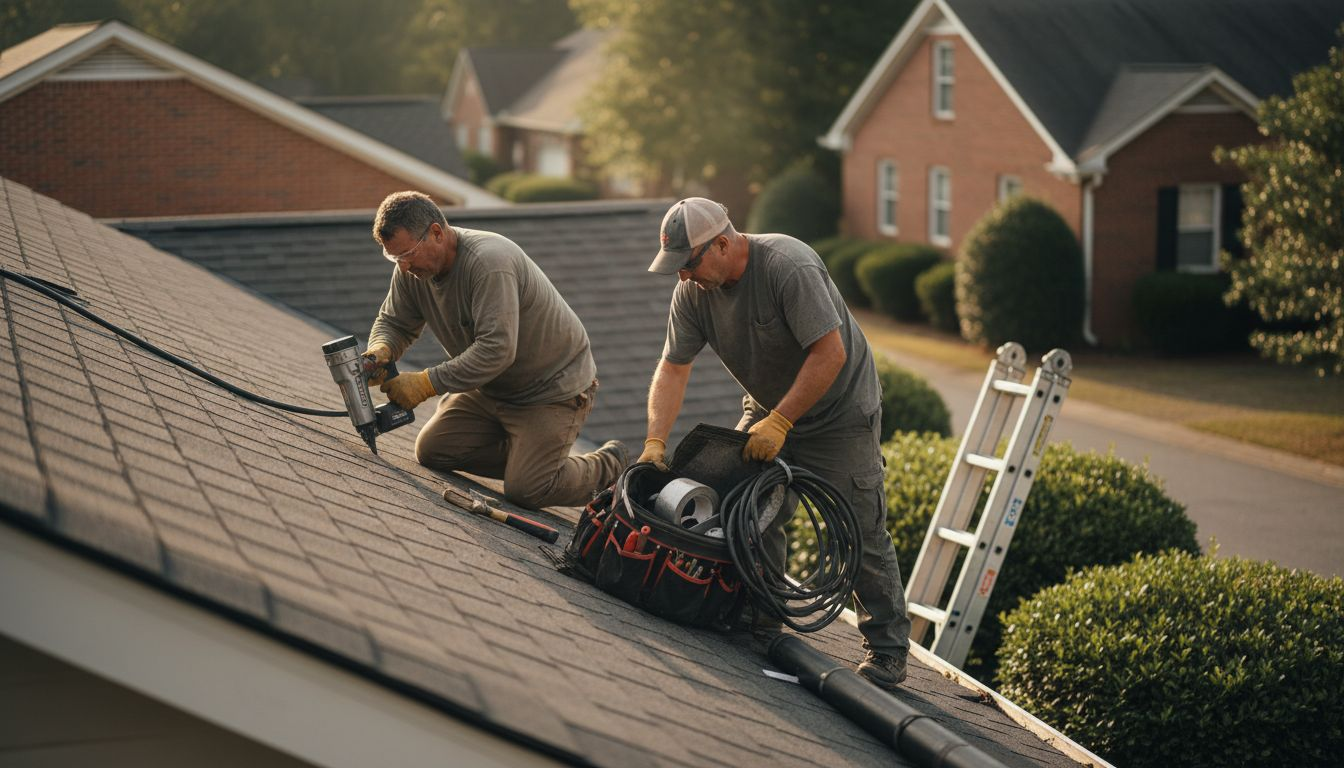
Weather conditions, roof complexity, and material selection significantly impact project duration. A typical residential roof replacement in Charlotte can range from 2-5 days for straightforward projects to 1-2 weeks for more intricate installations.
Pro tip: Always request a detailed written timeline from your roofing contractor that outlines each project phase and potential contingencies.
Roof Types and Impact on Scheduling
Roof types play a critical role in determining the overall timeline and complexity of a roofing project in Charlotte. Different roofing materials require unique installation approaches, directly influencing project duration and labor requirements. Homeowners should understand how their chosen roof type can significantly impact the scheduling and execution of their roofing project.
Roofing materials and installation standards vary considerably across different roof types:
- Asphalt Shingles
- Quickest installation
- 2-3 days for average home
- Most common residential roofing material
- Metal Roofing
- More complex installation
- 3-5 days for average home
- Requires specialized skills and tools
- Slate Roofing
- Most time-intensive
- 5-7 days for average home
- Requires expert craftsmanship
- Green Roofs
- Longest installation process
- 7-10 days for average home
- Involves multiple specialized layers
The roof slope complexity significantly impacts project scheduling. Steep-slope roofs demand more labor-intensive techniques and additional safety measures, which can extend project timelines by 1-2 days compared to low-slope installations.
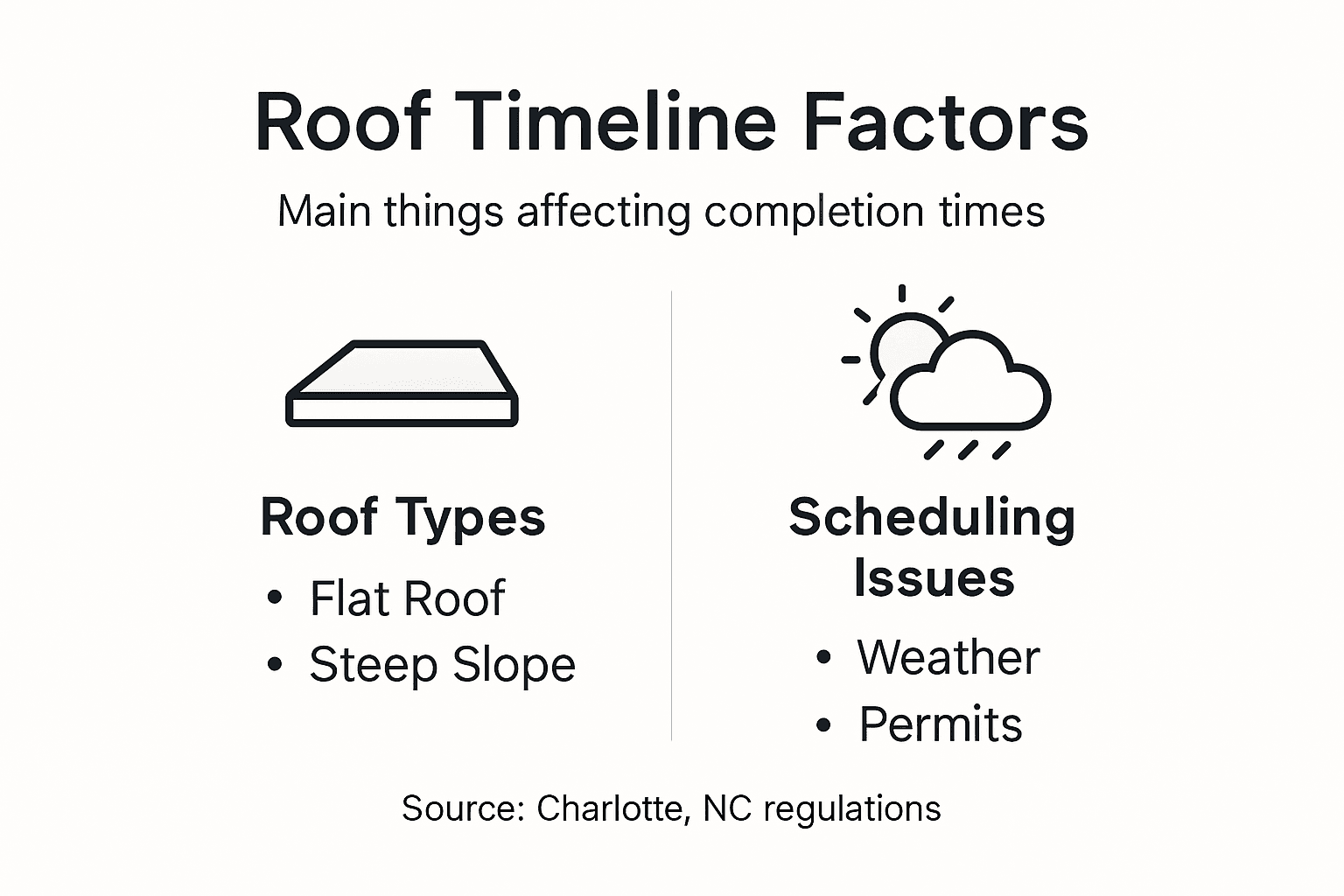
Weather conditions in Charlotte further complicate scheduling. Unexpected rain, humidity, or temperature fluctuations can pause work, potentially adding days or even weeks to the original project timeline. Experienced contractors build contingency time into their estimates to account for these potential disruptions.
Here’s a quick overview of how roof types differ in scheduling and project demands:
| Roof Type | Average Duration | Project Complexity | Specialist Skills Required |
|---|---|---|---|
| Asphalt Shingles | 2-3 days | Low | General roofing knowledge |
| Metal Roofing | 3-5 days | Moderate | Metalworking, advanced safety |
| Slate Roofing | 5-7 days | High | Precision craftsmanship |
| Green Roofs | 7-10 days | Very High | Specialized environmental skills |
Pro tip: Request a detailed written timeline that breaks down installation expectations for your specific roof type, including potential weather-related contingencies.
Permits and Regulations in Charlotte, NC
Roofing projects in Charlotte require careful navigation of local building regulations and permit requirements. Municipal compliance is crucial for homeowners to ensure their roofing project meets all legal standards and avoids potential fines or reconstruction mandates. Understanding the permit process helps streamline your roofing project and prevent unnecessary complications.
Navigating city permit systems involves several critical steps:
- Permit Research
- Check specific roofing project requirements
- Determine permit classification
- Identify required documentation
- Documentation Preparation
- Gather project specifications
- Create detailed roof replacement plans
- Collect contractor licensing information
- Submission Process
- File application with City of Charlotte
- Pay required permit fees
- Schedule mandatory inspections
Mecklenburg County Code Enforcement mandates specific permit requirements for roofing projects. Different types of work require distinct permits:
- Minor repairs: Often require simplified permitting
- Full roof replacement: Comprehensive permit process
- Structural modifications: Additional engineering documentation
The permit process typically involves multiple layers of review. Building inspectors will assess the project for compliance with:
- Structural integrity standards
- Energy efficiency requirements
- Safety code regulations
- Zoning restrictions
Homeowners should budget both time and money for the permitting process. Permit fees in Charlotte can range from $100 to $500, depending on project complexity and total roof area.
Pro tip: Always request a copy of your contractor’s current license and ensure they will handle all permit applications and municipal communications on your behalf.
Key Factors Affecting Project Duration
Roofing project timelines in Charlotte are influenced by a complex interplay of critical scheduling variables. Understanding these factors helps homeowners set realistic expectations and work effectively with their roofing contractors. Each project presents unique challenges that can significantly impact overall completion time.
Construction project scheduling reveals multiple interconnected elements affecting project duration:
External Factors:
- Weather conditions
- Seasonal temperature variations
- Material availability
- Supply chain disruptions
- Local permit processing times
Project-Specific Factors:
- Roof size and complexity
- Number of layers to be removed
- Structural repair requirements
- Chosen roofing material
- Existing roof condition
Activity duration estimation requires careful consideration of several key parameters. Experienced contractors use sophisticated techniques to predict project timelines, including:
- Historical project data analysis
- Expert professional judgment
- Parametric estimation models
- Comprehensive risk assessment
Complex roofing projects can experience significant time variations. A standard residential roof replacement might take 3-5 days under ideal conditions, but challenging scenarios could extend the timeline to 1-2 weeks. Factors like unexpected structural damage, severe weather, or material complications can dramatically alter initial project estimates.
Accurate timeline prediction requires flexibility and comprehensive planning from both homeowners and roofing professionals.
Pro tip: Always build a 30% time buffer into your expected project timeline to account for unexpected complications and potential delays.
Costs, Delays, and How to Avoid Mistakes
Roofing projects in Charlotte can quickly become expensive and time-consuming without proper planning and strategic management. Financial risks are inherent in any construction project, and understanding potential pitfalls is crucial for homeowners to protect their investment and maintain project momentum.
Construction project delays typically stem from several key sources:
Contractor-Related Causes:
- Inadequate project planning
- Poor communication
- Insufficient workforce
- Lack of technical expertise
- Improper resource allocation
Owner-Related Causes:
- Delayed decision-making
- Frequent design changes
- Insufficient budget
- Unrealistic timeline expectations
- Poor contractor selection
Preventing project delays requires a proactive and comprehensive approach. Successful roofing projects depend on:
- Thorough initial project assessment
- Clear communication channels
- Flexible scheduling
- Multiple material supplier relationships
- Comprehensive risk management
Typical cost overruns in roofing projects can range from 10% to 30% of the original budget. These additional expenses often result from unexpected structural issues, material price fluctuations, or complex repair requirements. Homeowners can mitigate financial risks by requesting detailed, itemized contracts and maintaining a contingency fund.
The following table summarizes project delay sources and key prevention strategies:
| Cause of Delay | Typical Impact | Prevention Strategy |
|---|---|---|
| Weather Disruptions | Schedule extension | Flexible timeline, buffers |
| Permit Processing Delays | Work stoppage | Early application, monitoring |
| Material Shortages | Installation pause | Multiple suppliers, planning |
| Contractor Errors | Quality or time loss | Vetting, clear contracts |
Effective project management is less about avoiding problems and more about anticipating and quickly resolving them.
Pro tip: Request a comprehensive written contract that includes detailed cost breakdowns, potential additional expense scenarios, and clear protocols for handling unexpected project complications.
Plan Your Charlotte Roofing Project with Confidence and Expert Support
Understanding the roofing project timeline is essential to avoid unexpected delays, costly mistakes, and frustration during your roof repair or replacement. At Liberty Roofworks, we recognize the challenges Charlotte homeowners face such as navigating permit requirements, managing weather disruptions, and selecting the right materials for your roof type. Our professional team is dedicated to clear communication, detailed project planning, and delivering quality craftsmanship that aligns with your unique schedule and budget.
Trust Liberty Roofworks for residential roof repair and replacements or storm damage repair to ensure your project stays on track from inspection to final cleanup. We handle all the complexities including permitting and precise scheduling so you can relax knowing your home is in expert hands. Ready to experience hassle-free roofing with a clear, reliable timeline? Visit Liberty Roofworks today to request your free consultation and get your roofing project started on the right foot.
Frequently Asked Questions
What is the typical timeline for a roofing project?
A typical residential roof replacement can take anywhere from 2 to 5 days for simple projects, while more complex installations may extend to 1 to 2 weeks.
What factors can delay a roofing project?
Factors that can cause delays include weather conditions, roof complexity, material availability, unexpected structural issues, and permit processing times.
How can I prepare for a roofing project to minimize disruptions?
Homeowners can prepare by developing a clear project timeline with their contractor, understanding the roof type implications on scheduling, and building a buffer for unexpected delays.
Why is it important to choose the right roofing material?
Choosing the right roofing material impacts both the installation duration and the project’s cost. Different materials have varying installation complexities, which can significantly affect the overall project timeline.