Storms in North Carolina can leave Charlotte business owners with tough choices for roof repairs and upgrades. When it comes to protecting your commercial spaces, single ply roofing now covers more than one third of all American low slope buildings thanks to its durability and energy-saving benefits. If you are weighing options after a storm or planning renovations, understanding these advanced roofing systems gives you practical knowledge to make confident property decisions.
Table of Contents
- Defining Single Ply Roofing Systems
- Types of Single Ply Roof Membranes Explained
- How Single Ply Roofing Is Installed
- Durability, Lifespan, and Maintenance Concerns
- Cost, Energy Savings, and Comparing Alternatives
Key Takeaways
| Point | Details |
|---|---|
| Single Ply Roofing | A modern roofing solution that consists of a single layer of flexible membrane, providing robust protection for both commercial and residential properties. |
| Types of Membranes | The primary categories include Thermoset (EPDM) and Thermoplastic (TPO, PVC), each offering unique durability and performance characteristics. |
| Installation Methods | Proper installation methods such as mechanical attachment, fully adhered, or ballasted systems are crucial for guaranteeing the roofing’s effectiveness and longevity. |
| Cost and Energy Efficiency | Single ply roofs typically range from $4.50 to $13.50 per square foot, providing significant energy savings, particularly in warmer climates, with potential reductions in cooling costs by up to 30%. |
Defining Single Ply Roofing Systems
Single ply roofing represents a modern, efficient approach to commercial and residential roof coverings that have transformed the construction industry since the early 1960s. These roofing systems consist of a single layer of flexible, synthetic membrane installed across the entire roof surface, providing robust protection against environmental elements. Single ply roofing systems emerged as a groundbreaking solution for low slope buildings, offering exceptional durability and performance.
The two primary categories of single ply roofing are thermoset and thermoplastic membranes, each with unique characteristics. Thermoset membranes like EPDM (ethylene propylene diene monomer) are rubber-based materials known for their exceptional resistance to ozone, UV rays, and extreme temperatures. Thermoplastic membranes such as TPO (thermoplastic polyolefin) and PVC (polyvinyl chloride) feature heat-welded seams and superior resistance to weathering, chemicals, and mechanical stress.
Single ply roofing systems offer several key advantages for Charlotte property owners. These membranes are lightweight, which reduces structural stress, and can be installed quickly with minimal disruption. They provide excellent thermal performance, helping regulate indoor temperatures and potentially reducing energy costs. The membranes are also highly reflective, especially in white or light colors, which can contribute to lower cooling expenses during hot North Carolina summers.
Pro tip: Before selecting a single ply roofing system, consult with a professional roofing contractor who can assess your specific building requirements and recommend the most suitable membrane type for your property’s unique characteristics.
Types of Single Ply Roof Membranes Explained
Single ply roofing membranes represent a sophisticated approach to protecting buildings, with three primary categories that offer unique performance characteristics. Membrane roofing technologies have evolved to provide robust solutions for commercial and residential properties, addressing diverse environmental challenges and structural requirements.
The first category, thermoset membranes, includes EPDM (ethylene propylene diene monomer) as its most prominent example. These rubber-based materials are renowned for their exceptional durability and resistance to environmental stressors. EPDM membranes excel in withstanding ultraviolet radiation, ozone exposure, and extreme temperature variations. They are typically black or white, offering flexibility in thermal performance and aesthetic preferences for Charlotte property owners.
Thermoplastic membranes, the second category, include TPO (thermoplastic polyolefin) and PVC (polyvinyl chloride). These plastic-based materials are distinguished by their heat-welded seams, which create exceptionally strong and watertight connections. Thermoplastic membranes offer superior resistance to chemicals, punctures, and mechanical stress. Their reflective surfaces can significantly reduce cooling costs, making them an energy-efficient choice for buildings in warm climates like North Carolina.
The third category, modified bitumen membranes, combines traditional roofing techniques with modern synthetic materials. These membranes integrate asphalt with rubber or plastic polymers, creating a hybrid solution that offers enhanced flexibility and strength. Modified bitumen provides an excellent alternative for property owners seeking a robust roofing system that bridges traditional and contemporary roofing technologies.
Here is a quick comparison of the main single ply roofing membrane types and their key features:
| Membrane Type | Material Base | Durability Highlights | Common Application |
|---|---|---|---|
| EPDM | Synthetic Rubber | Strong UV and ozone resistance | Commercial buildings |
| TPO | Plastic (Polyolefin) | Excellent chemical resistance | Energy-efficient roofs |
| PVC | Plastic (Chloride blend) | Superior seam strength and welds | Restaurants, factories |
| Modified Bitumen | Asphalt with polymers | Enhanced flexibility, strong seams | Retrofit projects |
Pro tip: Consult with a local roofing professional to determine which membrane type best suits your specific building’s architectural design, local climate conditions, and energy efficiency goals.
How Single Ply Roofing Is Installed
Single ply roofing installation is a sophisticated process that requires precision, expertise, and careful adherence to specific technical standards. Roof assembly regulations guide professionals through multiple critical steps to ensure optimal performance and longevity of the roofing system. The installation method varies depending on the specific membrane type and building requirements, with three primary attachment techniques used in the roofing industry.
The first installation method is mechanical attachment, where roofing professionals secure the membrane directly to the roof deck using specialized fasteners. These fasteners are strategically placed to create a wind-resistant connection, typically installed in specific patterns that distribute stress evenly across the roof surface. This method works particularly well for buildings in regions with significant wind exposure, providing a secure and reliable roofing solution that can withstand challenging environmental conditions.
Fully adhered and ballasted installation methods represent the two alternative approaches to single ply roofing. In fully adhered installations, professional roofers apply a comprehensive layer of specialized adhesive across the entire roof deck, creating a seamless bond between the membrane and substrate. Ballasted systems, by contrast, involve placing heavy materials like gravel or concrete pavers on top of the membrane to hold it in place, which can provide additional weight and stability for the roofing system.
Seam treatment represents a critical aspect of single ply roofing installation. Thermoplastic membranes like TPO and PVC require heat welding to create watertight connections, while EPDM membranes typically use pressure-sensitive tapes or liquid adhesives to seal their joints. Proper seam preparation and treatment are essential to prevent water infiltration and ensure the long-term integrity of the roofing system, making professional installation crucial for maximizing the membrane’s performance and lifespan.
Pro tip: Always request detailed documentation of the installation process, including specific attachment methods and seam treatment techniques, to ensure your single ply roofing meets industry standards and manufacturer warranties.
Durability, Lifespan, and Maintenance Concerns
Single ply roofing systems represent an exceptional investment for Charlotte property owners, offering remarkable durability and long-term performance. Roofing membrane lifespans typically range between 20 to 30 years when properly maintained, making them a robust solution for commercial and residential properties facing diverse environmental challenges.
The durability of single ply roofing depends on several critical factors, including material composition, installation quality, local climate conditions, and ongoing maintenance practices. EPDM and TPO membranes demonstrate exceptional resistance to ultraviolet radiation, temperature fluctuations, and mechanical stress. In the challenging North Carolina climate, these membranes can withstand intense summer heat, occasional hailstorms, and significant temperature variations without compromising structural integrity.
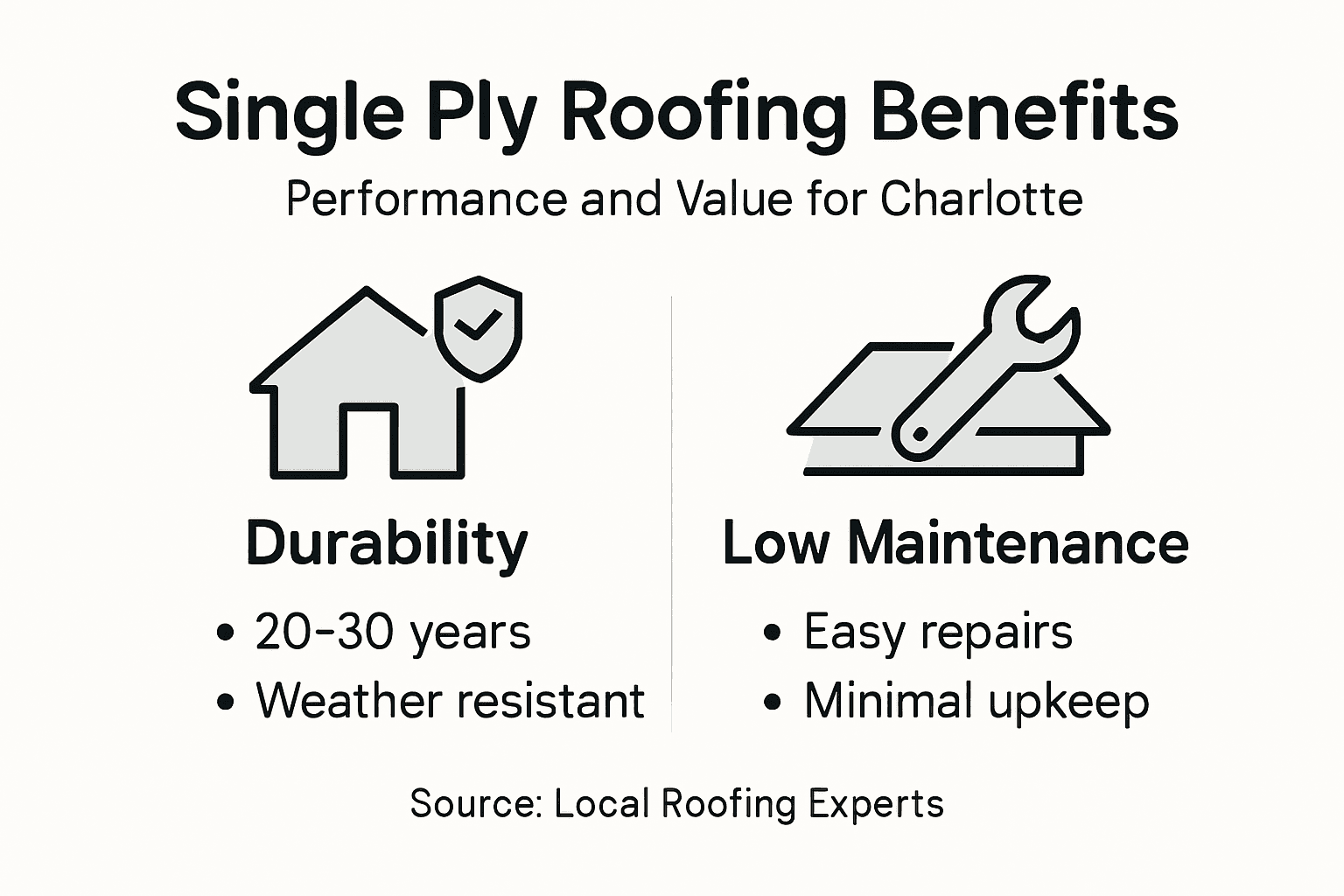
Routine maintenance is crucial for maximizing the lifespan of single ply roofing systems. Property owners should implement a comprehensive inspection strategy that includes bi-annual professional assessments, focusing on critical areas such as membrane seams, flashings, and potential puncture points. Regular cleaning to remove debris, prompt repair of minor damages, and ensuring proper drainage can significantly extend the roof’s service life. Professional roofers recommend addressing any signs of wear or damage immediately to prevent more extensive and costly repairs.
The economic value of single ply roofing becomes evident through its long-term performance and relatively low maintenance requirements. Compared to traditional roofing materials, these membranes offer superior cost-effectiveness, with lower lifetime maintenance expenses and excellent energy efficiency. Their reflective surfaces can help reduce cooling costs, particularly in warm climates like Charlotte, where solar heat gain can significantly impact building energy consumption.
Pro tip: Schedule professional roof inspections twice annually and maintain detailed documentation of all maintenance activities to preserve your warranty and maximize your single ply roofing system’s performance.
Cost, Energy Savings, and Comparing Alternatives
Navigating the financial landscape of roofing solutions requires a comprehensive understanding of both upfront costs and long-term economic benefits. Energy efficiency in buildings reveals that single ply roofing represents a strategic investment for property owners seeking to optimize their operational expenses. Installation costs for these roofing systems typically range from $4.50 to $13.50 per square foot, depending on specific membrane types and installation complexities.
Comparative analysis demonstrates the significant advantages of single ply roofing over traditional roofing alternatives. TPO and PVC membranes offer superior energy efficiency, particularly in warm climates like Charlotte, where reflective surfaces can dramatically reduce cooling expenses. These membranes typically reflect a substantial percentage of solar radiation, creating a cooling effect that can lower air conditioning costs by up to 30% during peak summer months. The cool roof technology inherent in these membranes provides an additional economic benefit through reduced energy consumption and improved building comfort.
The environmental impact of roofing materials has become increasingly important for conscientious property owners. Single ply roofing systems demonstrate lower embodied carbon compared to traditional roofing materials, making them an environmentally responsible choice. Certifications like ENERGY STAR and Cool Roof Rating Council (CRRC) validate the ecological and economic benefits of these roofing solutions. The lightweight nature of single ply membranes also reduces structural stress, potentially extending the overall lifespan of the building infrastructure and providing additional long-term cost savings.
When comparing alternatives, single ply roofing consistently outperforms traditional roofing systems in multiple economic and performance metrics. Built-up roofing and asphalt shingles typically require more frequent maintenance and replacement, resulting in higher lifetime costs. The durability, energy efficiency, and lower maintenance requirements of single ply membranes make them an increasingly attractive option for budget-conscious property owners in Charlotte and beyond.
Compare key cost, energy efficiency, and maintenance factors between single ply and traditional roofing:
| Feature | Single Ply Roofing | Traditional Roofing (Asphalt/BUR) |
|---|---|---|
| Installation Cost | $4.50-$13.50 per sq ft | $3.50-$7.00 per sq ft |
| Energy Savings | Up to 30% cooling reduction | Minimal insulation benefits |
| Maintenance Needs | Bi-annual inspection | Annual or more frequent repairs |
| Expected Lifespan | 20–30 years | 10–20 years |
Pro tip: Request comprehensive cost-benefit analysis from roofing professionals that includes projected energy savings, maintenance costs, and potential tax incentives for energy-efficient roofing systems.
Secure Your Charlotte Property with Expert Single Ply Roofing Solutions
If you are facing challenges with choosing the right single ply roofing membrane or concerned about durability and energy savings, Liberty Roofworks understands your needs. We know how important it is to have a roofing system that combines strength, weather resistance, and cost efficiency, especially in Charlotte’s climate. Whether you need professional TPO roofing or trusted EPDM roofing and repair, our team is ready to deliver superior results that protect your investment and reduce energy costs.
Take the next step toward a reliable roof that stands up to North Carolina’s weather extremes. Explore our full range of commercial roof installations and residential roof repair and replacements services. Contact Liberty Roofworks today to schedule your consultation and experience roofing done better than anyone else in Charlotte. Visit Liberty Roofworks now to get started on your stress-free roofing upgrade.
Frequently Asked Questions
What is single ply roofing?
Single ply roofing is a modern roof covering system made from a single layer of synthetic membrane, offering durable protection against environmental elements for both commercial and residential buildings.
What are the benefits of single ply roofing for property owners?
Single ply roofing systems are lightweight, easy to install, energy-efficient, and reflective, reducing cooling costs. They also have a long lifespan and require minimal maintenance compared to traditional roofing systems.
How long does a single ply roofing system last?
With proper maintenance, single ply roofing systems typically last between 20 to 30 years, making them a reliable investment for property owners.
What are the main types of single ply roofing membranes?
The main types of single ply roofing membranes are thermoset membranes like EPDM, thermoplastic membranes such as TPO and PVC, and modified bitumen membranes, each offering unique performance benefits.