Over 65 percent of major roofing damage could have been prevented with early inspections. Many homeowners only think about their roofs when visible leaks or damage appear, missing the chance to catch small issues before they become expensive problems. Understanding the full roof inspection process makes it easier to protect your investment and ensure your home stays safe, sturdy, and worry-free year-round.
Table of Contents
- Defining The Roof Inspection Process
- Types Of Roof Inspections Explained
- Key Steps In A Professional Roof Inspection
- Identifying Common Roofing Issues
- Tools And Technology Used For Inspections
- Risks, Costs, And What To Avoid
Key Takeaways
| Point | Details |
|---|---|
| Importance of Inspections | Regular roof inspections are crucial for identifying potential issues early and maintaining roof longevity. Biannual assessments are recommended to prevent costly repairs. |
| Types of Inspections | Different inspection types, such as routine maintenance, storm damage, and real estate transactions, focus on specific needs and conditions of the roof. |
| Technology in Inspections | Modern roofing inspections utilize advanced tools like drones and thermal imaging to enhance accuracy and provide detailed assessments. |
| Consequences of Neglect | Skipping inspections can lead to serious structural damage, increased repair costs, and potential safety hazards, underscoring the need for proactive maintenance. |
Defining the Roof Inspection Process
A roof inspection is a comprehensive evaluation of your roof’s current condition, designed to identify potential issues, assess structural integrity, and prevent future damage. According to the National Roofing Contractors Association, these systematic assessments are critical for maintaining your roof’s longevity and performance.
The roof inspection process involves a detailed visual examination of multiple roof components. As recommended by HomeInspector.org, professional inspectors typically focus on several key areas:
- Roof Coverings: Checking shingles, tiles, or membrane for damage
- Structural Framing: Assessing roof deck and support structures
- Drainage Systems: Evaluating gutters, downspouts, and water flow
- Flashing Areas: Inspecting seals around chimneys, vents, and joints
- Ventilation: Examining attic and roof space for proper air circulation
Professional roof inspections are not just about identifying current problems but preventing potential future issues. Nachi emphasizes that a thorough inspection can help homeowners catch minor concerns before they escalate into expensive repairs. Most experts recommend scheduling biannual inspections to maintain your roof’s optimal condition and catch any developing problems early.
For homeowners seeking a comprehensive roof assessment, working with a professional roofing contractor like Liberty Roofworks ensures a detailed and expert evaluation of your roof’s health and structural integrity.
Types of Roof Inspections Explained
Roof inspections are not one-size-fits-all procedures. Professional roofers recognize multiple specialized inspection types tailored to different scenarios and specific homeowner needs. Nachi highlights that understanding these variations is crucial for comprehensive roof maintenance and damage prevention.
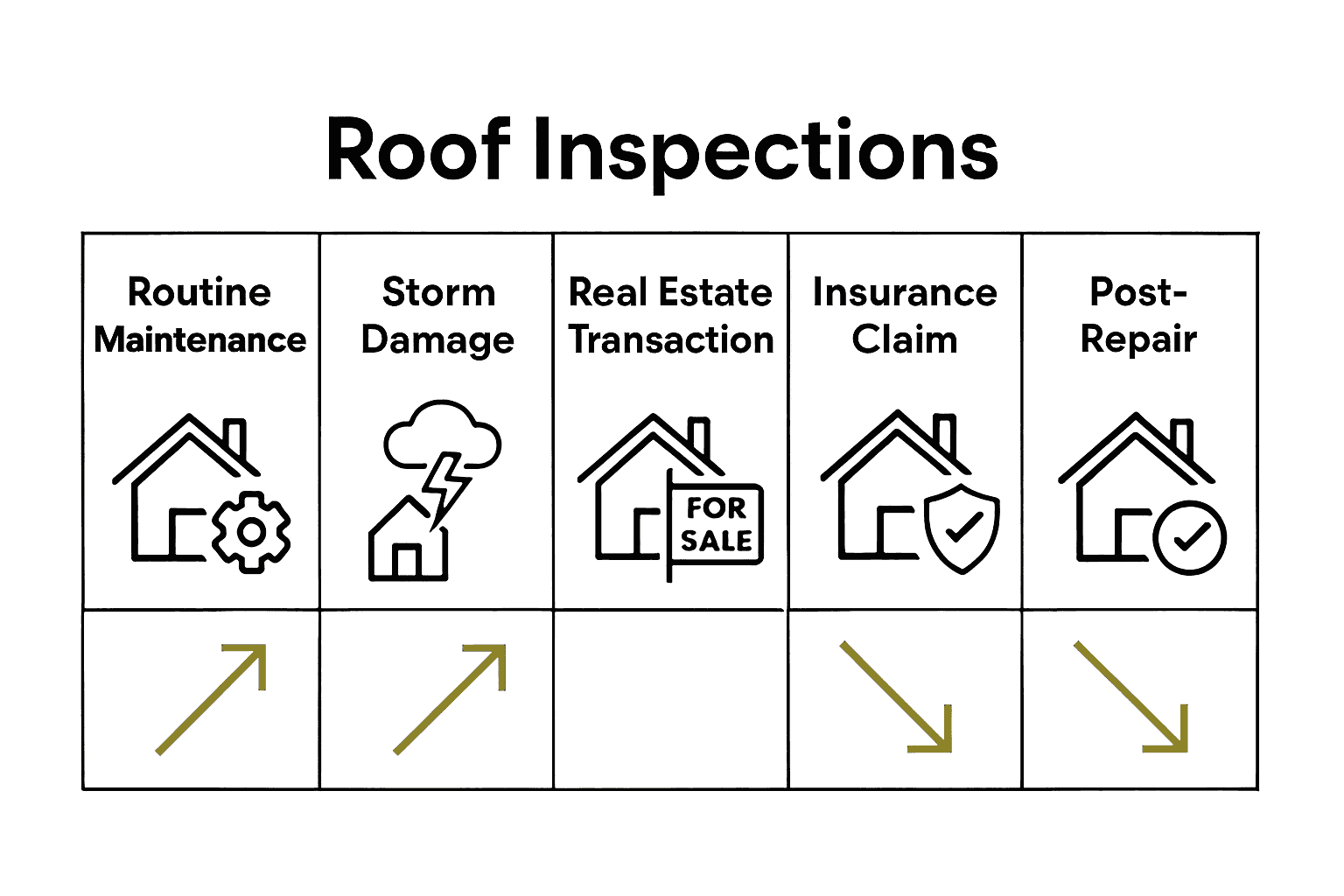
The primary types of roof inspections include:
Here’s how the main types of roof inspections compare:
| Inspection Type | Primary Purpose | When to Schedule | Key Focus Areas |
|---|---|---|---|
| Routine Maintenance | General roof health | Twice a year | Shingles Drainage Ventilation |
| Storm Damage | Assess weather impacts | After severe weather | Structural framing Leaks Flashing |
| Real Estate Transaction | Verify roof for buyers/sellers | During property sale | Overall condition Documentation |
| Insurance Claim | Document damage for claims | After damage occurs | Damage extent Photos Reports |
| Post-Repair | Confirm quality of repairs | After major repairs | Repaired areas General inspection |
- Routine Maintenance Inspections: Standard evaluations performed biannually to assess general roof condition
- Storm Damage Inspections: Specialized assessments after severe weather events to identify potential structural compromises
- Real Estate Transaction Inspections: Comprehensive evaluations conducted during property sales to verify roof integrity
- Insurance Claim Inspections: Detailed examinations required for documenting roof damage and supporting insurance claims
- Post-Repair Inspections: Verification checks performed after significant roof repairs or replacements
Professional roof inspectors utilize specialized techniques for different roof types. Nachi’s Mastering Roof Inspections emphasizes the importance of understanding specific roofing materials and structural components during these assessments. Inspectors carefully examine steep-slope residential roofs, analyzing everything from roofing materials to underlying framing and potential environmental stress factors.
For homeowners seeking a comprehensive understanding of their roof’s condition, understanding storm damage inspections can provide critical insights into potential vulnerabilities and necessary maintenance strategies.
Key Steps in a Professional Roof Inspection
A professional roof inspection is a systematic process designed to thoroughly assess your roof’s condition and identify potential issues before they become costly problems. According to Tasbrmf, a comprehensive preventive maintenance program should include at least two detailed annual roof inspections to ensure ongoing structural integrity.
The key steps in a professional roof inspection typically involve a structured approach:
- Interior Preliminary Assessment
- Examining interior ceiling for water stains
- Checking attic space for moisture signs
- Inspecting insulation and ventilation conditions
- Exterior Perimeter Evaluation
- Walking around the building’s exterior
- Identifying visible damage from ground level
- Checking gutter systems and drainage
- Roof Surface Examination
- Climbing onto the roof safely
- Inspecting shingle condition and alignment
- Checking for punctures, cracks, or loose materials
- Evaluating flashing around chimneys and vents
Files.eric.ed.gov emphasizes the importance of developing a consistent inspection checklist to ensure thoroughness and enable effective long-term tracking of roof conditions. Professional inspectors use standardized documentation to record findings, compare against previous assessments, and recommend precise maintenance or repair strategies.
For homeowners looking to understand potential warning signs, 7 signs you need a roof inspection soon can provide additional insights into when professional assessment becomes critical.
Identifying Common Roofing Issues
Roofing problems can develop gradually, often becoming serious if left unaddressed. Nachi emphasizes the critical importance of recognizing and understanding the seriousness of different roofing issues to prevent extensive damage and costly repairs.
Common roofing issues typically fall into several key categories:
- Shingle Damage
- Cracked or missing shingles
- Curling or buckling edges
- Granule loss on asphalt shingles
- Water-Related Problems
- Leaks and water stains
- Poor drainage
- Moisture accumulation in attic spaces
- Structural Concerns
- Sagging roof sections
- Rotting or deteriorating roof deck
- Improper ventilation
Nachi’s metal roofing guide highlights that different roofing materials can present unique challenges. Metal roofs installed as panels or designed to mimic traditional materials require specialized inspection techniques to identify potential structural or installation issues.
Understanding these common problems can help homeowners take proactive maintenance steps. To gain deeper insights into potential roof damage, 7 common causes of roof damage every homeowner should know provides comprehensive guidance on recognizing and addressing potential roofing vulnerabilities before they escalate into major repairs.
Tools and Technology Used for Inspections
Modern roof inspections have evolved far beyond simple visual assessments, incorporating sophisticated technological tools that provide unprecedented insights into roof conditions. Nachi’s Roof Home Inspection Textbook emphasizes the critical importance of using appropriate technological equipment to conduct comprehensive and accurate roof evaluations.
Professional roof inspectors utilize an array of advanced tools and technologies:
- Visual Inspection Tools
- High-resolution digital cameras
- Thermal imaging cameras
- Drone photography equipment
- Infrared scanning devices
- Measurement and Detection Technologies
- Moisture meters
- Electronic leak detection systems
- Ultrasonic testing equipment
- Laser measurement tools
- Safety and Access Technologies
- Telescopic inspection poles
- Advanced harness and safety equipment
- Portable lighting systems
- Stabilization and climbing gear
Nachi’s Mastering Roof Inspections highlights that these technological advancements allow inspectors to recognize proper and improper roof conditions with unprecedented accuracy. Thermal imaging, for instance, can reveal hidden moisture problems invisible to the naked eye, while drone technology enables safe inspection of hard-to-reach roof sections.

Homeowners seeking to understand the complexities of professional roof assessments can explore signs that a roofing job was done poorly to gain insights into the sophisticated diagnostic processes used by professional roofing experts.
Risks, Costs, and What to Avoid
Roof inspections are more than routine maintenance – they’re critical investments in your property’s long-term health and value. Tasbrmf emphasizes that proactive roof inspections are essential for extending roof life, identifying potential damage early, and complying with critical warranty requirements.
Key financial and structural risks associated with neglecting roof inspections include:
- Potential Repair Costs
- Minor issues becoming major structural damage
- Water damage to interior spaces
- Potential complete roof replacement
- Decreased property value
- Safety Risks
- Compromised roof structural integrity
- Potential collapse risks
- Mold and moisture-related health hazards
- Electrical system damage
- Warranty Complications
- Voided manufacturer warranties
- Loss of potential insurance claims
- Reduced property insurance coverage
- Increased long-term maintenance expenses
HomeInspector.org reports that the National Roofing Contractors Association recommends biannual inspections specifically to prevent serious damage and avoid costly repairs. Professional inspections can help homeowners catch potential problems before they transform into expensive, extensive renovation projects.
To better understand potential roof vulnerabilities and save substantial repair costs, homeowners can explore 7 common roofing problems and how to fix them, providing crucial insights into proactive roof maintenance strategies.
Protect Your Home with Expert Roof Inspections and Repairs
Understanding the roof inspection process is essential to preventing costly damage and maintaining the safety of your home. If you have noticed signs like damaged shingles or poor drainage it is crucial to address these issues promptly. At Liberty Roofworks we specialize in thorough roof inspections and tailored repair solutions that match the specific needs described in the article such as storm damage assessments and post-repair checks.
Take control of your roof’s health today by trusting a team dedicated to high-quality residential and commercial roofing services. Whether you need a detailed inspection or immediate repair for storm damage visit Liberty Roofworks to schedule your service. Don’t wait for small problems to become expensive repairs protect your investment with expert care now.
Frequently Asked Questions
What is involved in the roof inspection process?
The roof inspection process involves a comprehensive evaluation of various components, including roof coverings, structural framing, drainage systems, flashing areas, and ventilation. Inspectors visually assess for damage, leaks, and overall structural integrity.
How often should I schedule a roof inspection?
It is recommended to schedule a roof inspection at least twice a year, ideally in the spring and fall, to maintain your roof’s optimal condition and catch any potential issues early.
What are the common issues identified during a roof inspection?
Common issues include shingle damage, water-related problems such as leaks, and structural concerns like sagging roof sections or improper ventilation. Regular inspections help identify and address these issues before they escalate.
What tools do professionals use during roof inspections?
Professionals use various tools including high-resolution cameras, thermal imaging cameras, moisture meters, and drones to conduct thorough evaluations. These tools help identify hidden problems and ensure safety during the inspection.